
Tasting History
Mesopotamia on the plate
By Adhid Miri, PhD
Long before cookbooks, before sugar or tomatoes or even the idea of a “dessert course,” the people of ancient Mesopotamia were cooking with remarkable sophistication. Between the Tigris and Euphrates rivers—often called the cradle of civilization—food was not merely sustenance. It was ritual, identity and an offering to the gods.
Mesopotamian cuisine, with roots stretching back more than 10,000 years, is the oldest documented food tradition in the world. Clay tablets inscribed in cuneiform record recipes, ingredients and kitchen inventories that reveal a culinary culture both inventive and refined. Many of the flavors described on those tablets still appear on Iraqi tables today.
Where Civilization Learned to Cook
Upper Mesopotamia was one of the first places on Earth where humans domesticated crops and animals. Barley and wheat were cultivated here, along with sheep, goats and cattle. Dates, lentils, onions, garlic and grapes formed the backbone of the Mesopotamian diet—ingredients that remain essential in Middle Eastern cooking.
These early societies baked bread, brewed beer and simmered stews long before similar practices appeared elsewhere. Archaeological records show meals that included fish from the rivers, meat from domesticated animals, dairy products and a surprising variety of vegetables, herbs and spices.
Food also carried religious meaning. Temples maintained kitchens that prepared elaborate meals for the gods, who were believed to dine several times a day. The finest cuts of meat, the most fragrant spices and the richest sweets were reserved for divine offerings.
Recipes Written in Clay
The world’s oldest known recipes date to about 2200 B.C. One calls for a stew made with beer and dried plums; another describes the brewing of beer itself. Babylonian tablets now housed at Yale University list dozens of dishes, including stews of goat, pigeon and mutton flavored with garlic, onions and sour milk.
A Sumerian-Akkadian culinary lexicon from around 1900 B.C. lists more than 800 foods and beverages—among them 300 types of bread and more than 100 soups. Assyrian reliefs depict grilled meats, sausages stuffed into animal intestines and skewered delicacies that resemble modern kebabs.
These records paint a picture of abundance and innovation, fueled by fertile land, complex irrigation systems and far-reaching trade networks.
Kleicha: Iraq’s National Cookie
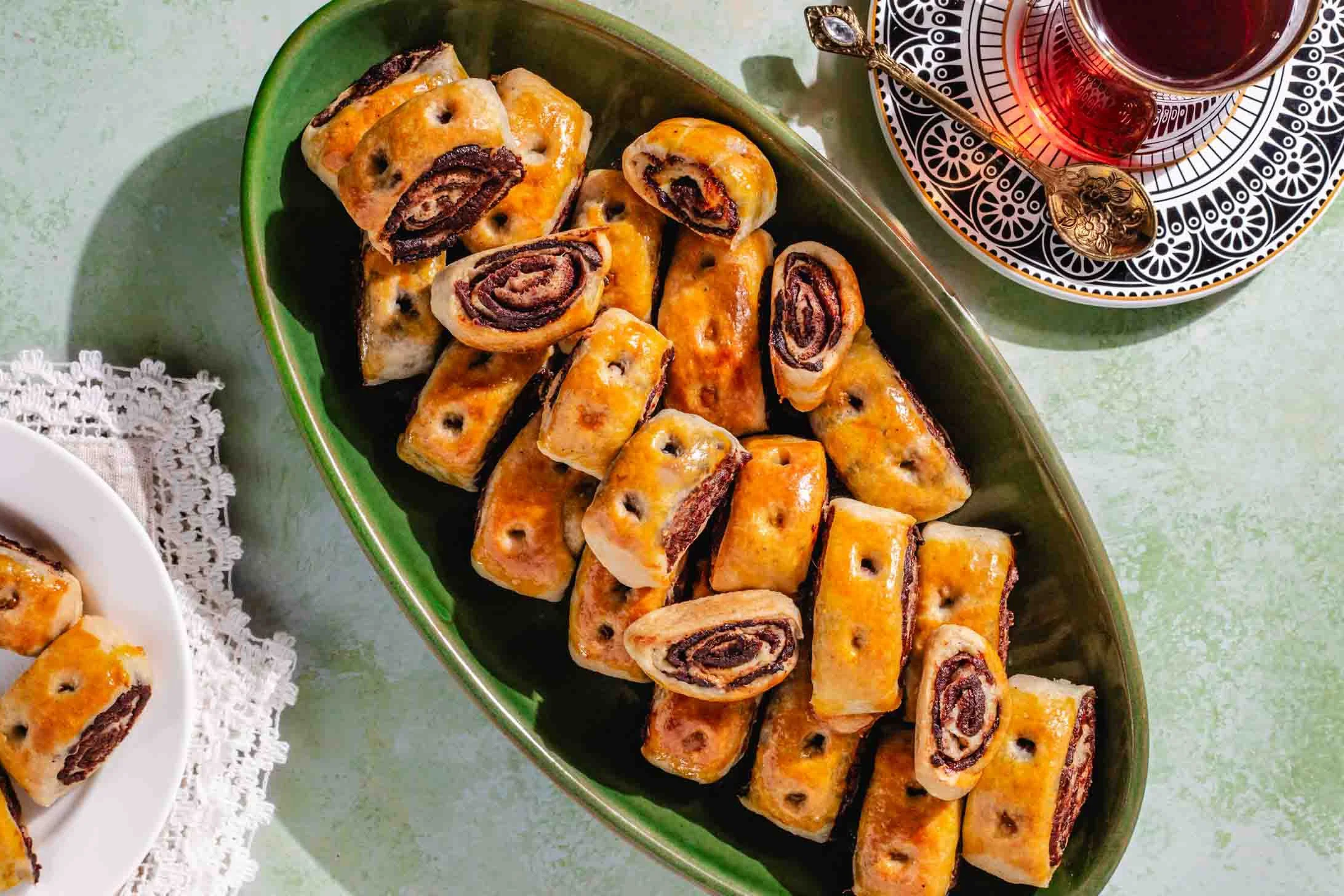
No Iraqi celebration is complete without kleicha. Crisp, aromatic and gently sweet, the cookie is a fixture at weddings, religious holidays and family gatherings across Iraq. Muslims, Christians, Chaldeans, Assyrians and Kurds alike claim it as their own.
Kleicha’s origins reach back to qullupu, an ancient Mesopotamian pastry prepared for spring festivals honoring the goddess Ishtar. Made with dates or raisins and baked in clay ovens, these early cookies symbolized renewal, prosperity and community.
Modern kleicha is typically filled with spiced dates or walnuts scented with cardamom and rosewater. Shaped into crescents or rounds and served with strong Iraqi tea, it is both a comfort food and a cultural emblem—linking modern households to ancient ritual.
Masgouf: The Taste of the Rivers
If kleicha represents celebration, masgouf represents place. Often called Iraq’s national dish, masgouf is freshwater carp grilled slowly over open flames, traditionally along the banks of the Tigris.
The fish is butterflied, seasoned and propped upright near a wood fire, absorbing smoke and heat over several hours. This method, believed to date back to Sumerian times, produces a dish that is smoky, tender and deeply tied to Iraq’s river culture.
Masgouf is never rushed. Ordering it is a social commitment—a meal meant to be shared, discussed and savored. In this way, it preserves not just a recipe, but a way of life.
Mersu: The World’s Oldest Dessert
Long before sugar, Mesopotamians satisfied their sweet tooth with dates. From them came mersu, the oldest recorded dessert in history, documented nearly 4,000 years ago.
Mersu was made by pounding dates into a paste and mixing them with nuts, sesame and butter. Rolled into small balls, it was served at royal feasts and temple ceremonies. Sweetened entirely by fruit, it symbolized fertility, abundance and divine favor.
Today, its descendant lives on in madgouga, a traditional Iraqi date pudding prepared through communal pounding—a ritual as meaningful as the dessert itself.
Kabab: Fire and Flame
The word kabab comes from the Akkadian kebabu, meaning “to roast.” Ancient Assyrian reliefs show soldiers grilling skewered meat over open flames, a technique that has endured for thousands of years.
Modern Iraqi kabab—often made from beef or lamb and served with flatbread and yogurt—remains true to its origins. Its global journey, from Turkey to India and beyond, underscores Mesopotamia’s lasting influence on world cuisine.
A Living Culinary Legacy
Iraqi cuisine is not a relic of the past. It is a living tradition, carried forward in kitchens, markets and family gatherings. Each dish—whether sweet or savory, simple or elaborate—tells a story of ingenuity, resilience and community.
To taste these foods is to taste history. From ancient temple kitchens to modern Chaldean and Iraqi homes, Mesopotamian cuisine endures—one bite at a time.
References: Julia Najor, Babylonian Cuisine (1979, 1981); Samira Yako Choulagh, Treasured Middle Eastern Cookbook (1998); Amira Daboul, Awafi from Amira’s Kitchen (2020); John Lawton and Laura Kelley; Aramco World (2011); Shannon Cothran; CNN; Encyclopedia Britannica; Wikipedia.
Masgouf Preparation
Butterfly the Fish: Split the fish lengthwise down the back, clean it, and open it like a butterfly. Season simply with rock salt, tamarind, or olive oil to highlight the fish’s natural flavor.
Mount on a Spike: Clamp the flattened fish to a sturdy wooden spike or vertical metal frame.
Grill Vertically: Place the spike around a semi-circular pit of hot embers, usually fueled with fruit-tree wood (apricot, citrus), which imparts a subtle smoky-sweet aroma.
Slow-Roast: Let the fish cook for two to three hours. This indirect heat crisps the skin while keeping the flesh moist and tender—a patient, artful process often performed in open-air riverbank restaurants.