
Representation Matters
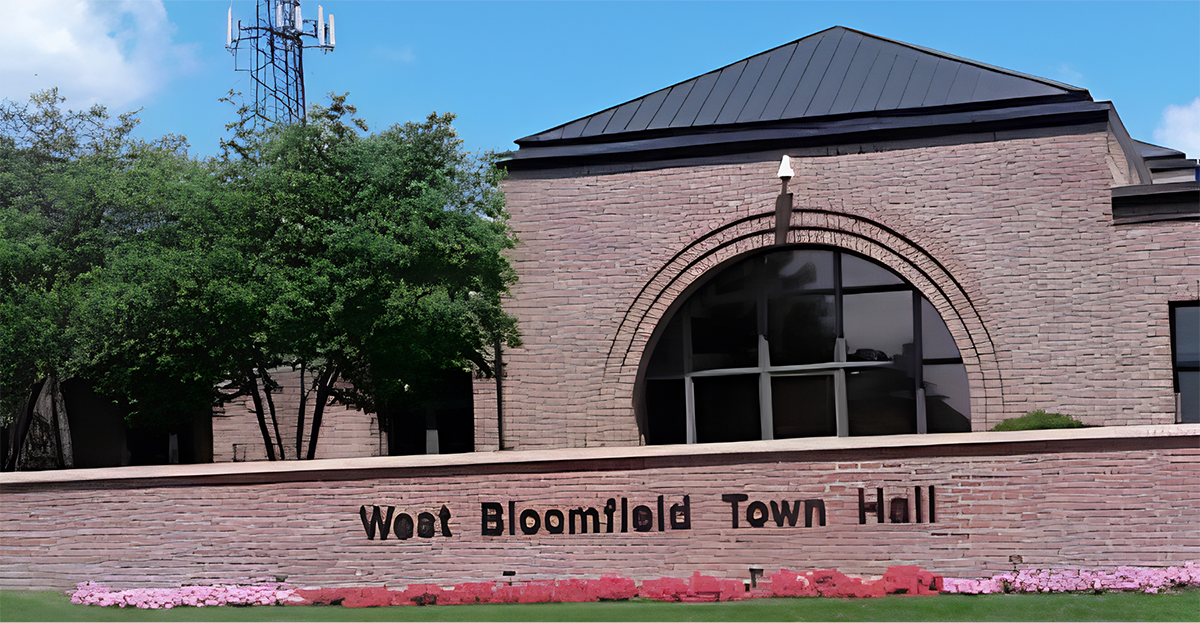
Politics in West Bloomfield
By Sarah Kittle
Residents of West Bloomfield may be experiencing déjà vu. Once again, a vacancy on the Township Board of Trustees has raised questions about transparency, public participation, and who gets a seat at the decision-making table.
The situation recalls December 2024, when Trustee Jonathan Warshay was appointed to fill the position of West Bloomfield Township Supervisor after Steve Kaplan resigned. Now, with the departure of Trustee Jibran “Jim” Manna, the Board has appointed former Police Chief Mike Patton to fill another vacancy—prompting renewed discussion about representation and the process used to select township leaders.
For some residents, the concern extends beyond the qualifications of any individual appointee. It is about whether the appointment process provides meaningful opportunities for residents to participate and whether the Township’s leadership reflects the diverse community it serves.
A Familiar Pattern
Kaplan, who had won election to a third term in November 2024, announced his resignation the following month after accepting a position with the Wayne County Prosecutor’s Office.
At a special meeting on December 9, 2024, the Board voted 5-1 to appoint Warshay as supervisor. Manna cast the lone dissenting vote, arguing that the public deserved greater notice and an opportunity to weigh in before such an important decision was made.
The meeting had been scheduled for 2 p.m., a time when many residents were at work and unable to attend.
According to contemporaneous reporting by the West Bloomfield Beacon, Manna questioned both the timing of the meeting and the Board’s decision-making process.
“Scheduling this meeting at the last minute at 2 p.m. shows total disrespect to the residents of West Bloomfield,” Manna said at the time. He argued that an evening meeting would give residents a better opportunity to attend, watch, and voice their concerns.
Township Clerk Debbie Binder defended the timing, saying the Township needed to restore leadership and maintain continuity in its operations. She also explained that failure to appoint a successor would have resulted in a special election at the Township’s expense.
“So this is a much more prudent way to handle it,” Binder said, according to the Beacon. “We need to get leadership in place.”
Warshay’s appointment created a vacancy on the Board of Trustees. In January 2025, the Board appointed retired Police Chief Mike Patton to fill that seat.
Manna, the Board’s only known Chaldean American member, was the sole dissenter in the earlier appointment of Warshay as supervisor. His departure from the Board would eventually bring the question of Chaldean American representation back into focus.
Rinse and Repeat?
In September 2026, Manna’s resignation due to legal matters created another vacancy on the Board. The Township had 45 days to appoint a successor to complete the remainder of his term, which was scheduled to end December 1, 2028.
Patton, who had already been appointed to the Board once, emerged as the Board’s choice again.
On October 19, 2026, the Board voted 5-1 to appoint Patton to the vacant trustee seat. The Township maintains that the appointment was conducted transparently and in accordance with state law.
Brian Burch, communications specialist for West Bloomfield Township, said the appointment was made through a public vote at a properly noticed regular meeting, consistent with Michigan Election Law, the Michigan Open Meetings Act, and applicable state and federal laws.
Burch also pointed to the Elliott-Larsen Civil Rights Act, which prohibits discrimination based on protected characteristics, including race, ethnicity, national origin, and religion.
Meeting agendas and minutes are available through the Township’s website, wbtownship.org, and recordings of meetings are available at civiccentertv.com.
The public vote, however, has not ended questions about how the Board reached its decision or how residents were able to participate in the process.
West Bloomfield resident Joel Hechler questioned the Board’s decision to appoint Patton rather than select a new candidate.
“Mike Patton is a good guy, but Warshay, Binder, and Weingarden made a clandestine decision behind closed doors without considering other candidates,” Hechler said. “There was a lack of transparency in the decision-making process.”
He added that the outcome was disappointing because it left the Board without a Chaldean American member.
“It is disappointing that they couldn’t have found someone from the Chaldean community to replace the only Chaldean trustee,” Hechler said.
The distinction between the Board’s deliberations and its final vote is important. The Township says the appointment itself occurred publicly. Residents’ concerns, meanwhile, center on whether the selection process offered enough transparency, access, and opportunity for qualified candidates to be considered.
Why Patton?
One question raised by residents is why Patton was selected for a second trustee appointment, particularly when he could have sought reelection in the 2026 primary but did not.
In response to questions about the appointment, Supervisor Jonathan Warshay said the Board did consider other candidates before reaching its decision.
“The Board did consider other candidates; however, a majority (in a 5-1 vote) felt Trustee Patton was the best choice,” Warshay said.
Warshay cited Patton’s more than 40 years with the West Bloomfield Police Department, including 15 years as police chief, as well as his performance as a trustee.
“His years of experience, coupled with his insight, preparedness, and attention to detail have been invaluable,” Warshay said.
According to Warshay, the Township received communications from approximately half a dozen people expressing interest in filling the vacancy. He said the Board considered experience, continuity of government, familiarity with Township operations, and the limited duration of the remaining term.
Warshay also acknowledged that, after personally meeting with prospective candidates, there were individuals he believed would have been good choices. Ultimately, however, the Board selected Patton.
The Board’s explanation provides insight into its stated priorities: experience, familiarity with Township operations, and continuity of government. But the decision also raises a broader question for residents: How can the Township ensure that its appointment process is both legally compliant and sufficiently open to encourage participation from people with different backgrounds and experiences?
Who Has a Seat at the Table?
The stakes are particularly significant for West Bloomfield’s Chaldean American community, which community estimates suggest accounts for more than 20% of the Township’s population.
Chaldean Americans have longstanding ties to West Bloomfield, contributing to its business community, religious institutions, neighborhoods, and civic life. With Manna’s departure, the Board no longer has a Chaldean American member.
State Representative Noah Arbit, whose district includes West Bloomfield, emphasized the importance of ensuring that the community’s voices are heard throughout government.
“I know how much our Chaldean community helps define what West Bloomfield is and the amazing community we are,” Arbit said. “As state representative, I work hard to be an inclusive leader, dignifying and speaking to the concerns of the diverse communities that comprise our wonderful township, including the Chaldean community.”
He concluded, “That kind of representation matters at all levels of government.”
To be clear, representation is not simply a matter of filling a seat. It is about ensuring that government recognizes and responds to the people it serves.
Stephanie Crider, founder of Agape Social Justice, similarly called on township leaders to use the appointment as an opportunity to rebuild trust and encourage broader participation.
“I have admired Chief Patton’s engagement with the community as our former Chief of Police and I have maintained respect for him,” Crider said. “In fact, it is my hope that Mr. Patton, and other trustees, will use their leadership to increase engagement, ensure our Township reflects the demographics of the community, and takes immediate action to improve any broken trust that exists.”
Crider stressed the importance of holding conversations with Chaldean residents to address concerns about representation.
“It’s our responsibility as leaders to further promote the uplifting of new voices and have fair, transparent processes that invite diverse candidates to submit their interests for appointment,” she said.
She also called for greater public access to the policies, practices, and criteria used to evaluate candidates.
“Based on my observations, there is definitely room for growth in this area,” Crider said.
Her comments reflect a concern shared by some residents: Even when appointments follow the law, public confidence can suffer if people do not understand how candidates are evaluated or how they can put themselves forward for consideration.
Representation and the Law
The Township has emphasized that it cannot use race, ethnicity, national origin, religion, or other protected characteristics as criteria for making appointments to public office.
That legal restriction is central to the debate. Advocates for greater representation are not necessarily arguing that an individual should be appointed solely because of their ethnic background. Rather, they are asking whether the Township can create a process that encourages a broad range of qualified residents to participate and makes its selection criteria clear.
Warshay said all Board members represent the entire Township, regardless of their backgrounds or affiliations.
“While diversity is important, all Board members represent everyone in the Township, regardless of their background, race, religious or cultural affiliation,” he said.
He also said that the Board considered all residents who expressed interest in the trustee position and welcomed further communication from residents, businesspeople, and community leaders.
“Several people shared their concerns and perspectives about the vacant Board position, and I appreciated their input,” Warshay said. “This kind of communication helps us become more responsive to the people who live, work, and operate businesses in our Township, and I hope to have more of these conversations in the future.”
Looking ahead, Warshay said the Township Board would provide opportunities for community members to become involved in local government before the 2028 election.
In his closing remarks, he underscored the importance of the Chaldean community to the Township.
“Our Chaldean community is an important part of our Township’s identity,” Warshay said. “Their families, businesses, faith institutions, and civic leaders have contributed enormously to the community we share. Their voices matter and their participation in Township government is both welcome and encouraged.”
The challenge now is turning those words into opportunities residents can see and access.
A Community Candidate Steps Forward
The discussion surrounding the vacancy also included support for Omar Kallabat, a candidate whose community involvement and interest in public service were highlighted in a letter to the Board from Father Pierre Konja of St. Thomas Chaldean Catholic Church.
In his letter, Father Pierre urged the Board to give Kallabat serious consideration for the vacant trustee seat, citing his approximately ten years of service to the Chaldean community and his commitment to public service.
Father Pierre described Kallabat as someone who could bring valuable experience and perspective to township government while serving residents of every background.
“Representation matters because local government makes decisions that directly affect families, neighborhoods, businesses, places of worship, and the future of our community,” Father Pierre wrote. “When residents from different backgrounds have opportunities to participate in public service, the entire township benefits from a broader range of experiences and perspectives.”
He also noted that Kallabat was one of three individuals who stepped forward to run for the trustee position and finished second in the Democratic primary.
For Father Pierre, Kallabat’s candidacy represented an opportunity not only to recognize community service but also to encourage civic engagement among younger residents.
“Although Omar’s service to the Chaldean community is an important part of his background, I want to emphasize that his ambition extends well beyond any single community,” Father Pierre wrote. “His desire is to serve West Bloomfield as a whole.”
The letter illustrates that residents are interested in more than symbolic representation. They want qualified people with records of service to have a meaningful opportunity to contribute to local government.
The Township has said that it considered all residents who expressed interest in the vacancy. The question for future appointments is how the process can make those opportunities widely known, accessible, and understandable to the public.
What Comes Next?
West Bloomfield’s current Board of Trustees includes Supervisor Jonathan Warshay, Clerk Debbie Binder, Treasurer Teri Weingarden, and Trustees Diane Rosenfeld Swimmer, Vincent Kirkwood, and Mike Patton. The CN reached out to the entire Board and Supervisor Warshay was the only one to respond.
Following Manna’s departure, a special election for the open trustee seat is scheduled for November 3, 2026, between Amy Mindell, a Democrat, and Sean Lavine, an independent. The election offers residents another opportunity to weigh in on the Township’s leadership.
Mindell, a Planning and Parks Commissioner, is running on a platform that includes environmental protection, balanced development, and public safety support. Lavine, a software engineer, emphasizes transparency, support for first responders, and neighborhood preservation.
Regardless of the election’s outcome, the broader conversation about representation is unlikely to end with the appointment of one trustee or the election of another.
The Township has pointed to its legal obligations and the experience of its chosen candidate. Residents and community advocates, meanwhile, have asked for greater clarity about the process, more consistent engagement, and a stronger effort to encourage participation from the Township’s diverse communities.
These concerns are not mutually exclusive. A government can evaluate candidates on their qualifications while also ensuring that residents from across the community know about opportunities to serve and understand how appointments are made.
That means publishing clear selection criteria, communicating vacancies broadly, explaining how candidates are evaluated, and creating opportunities for residents to engage with their elected officials before decisions are finalized.
The issue is not whether Mike Patton is qualified to serve. The question is whether West Bloomfield’s appointment process inspires confidence that all qualified residents have a fair opportunity to be considered.
For a community in which Chaldean Americans make up a significant share of the population, the absence of a Chaldean American trustee is an opportunity to reflect on how local government can strengthen public trust without compromising its legal responsibilities.
Representation matters at every level of government. The question facing West Bloomfield is how to ensure that its residents not only hear that message but also see meaningful opportunities to participate in the government that serves them.