
Speak Like an Iraqi
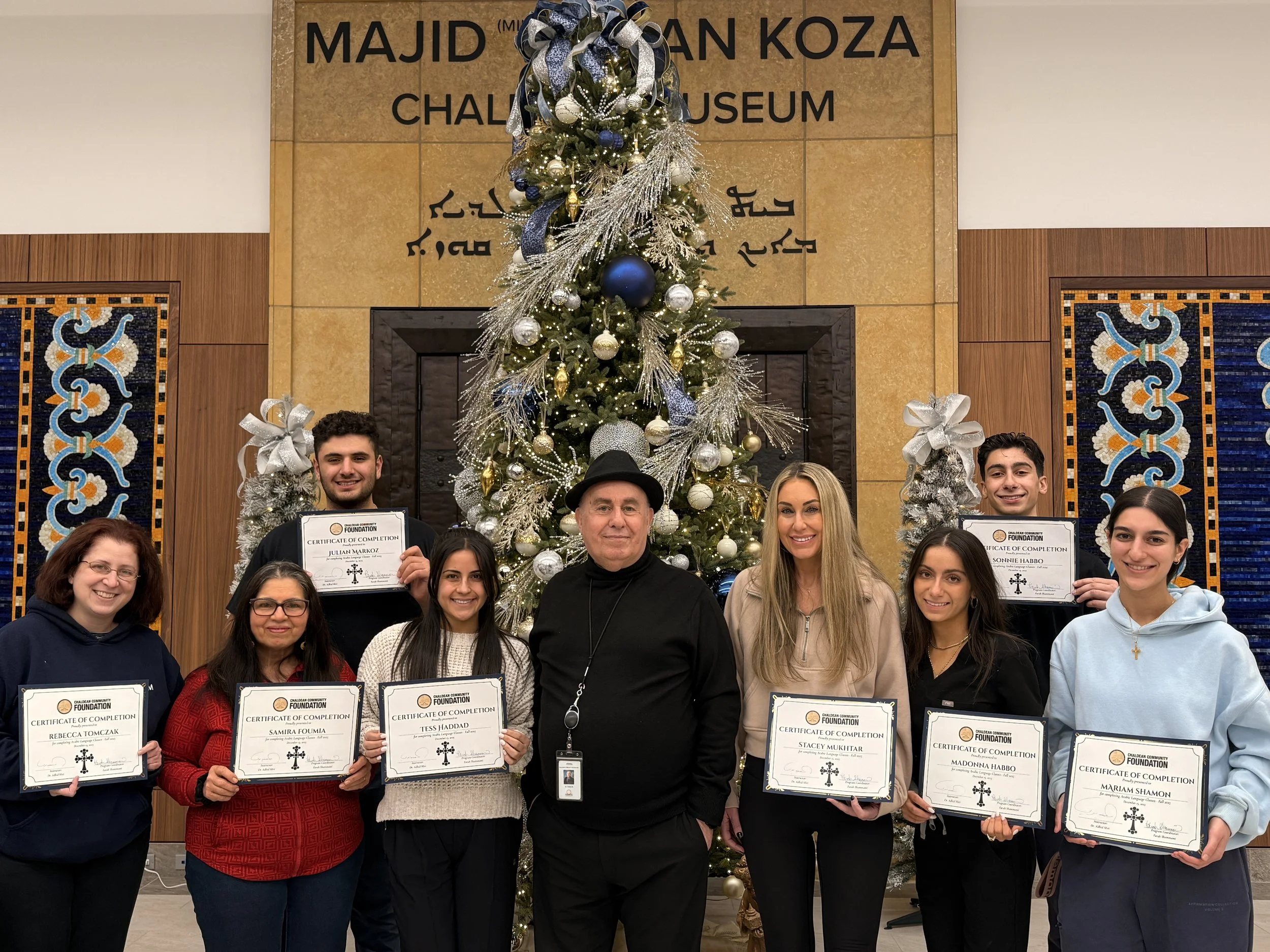
Students receive a certificate of completion at the end of their classes.
Learn the dialect with classes
By Adhid Miri, PhD
Iraqi Arabic, also known as Mesopotamian Arabic, is the everyday language of millions of Iraqis and Iraqi Americans. It is the language of family conversations, humor, storytelling, and daily life. While Modern Standard Arabic is used in formal settings, Iraqi Arabic is what people actually speak at home and in the community.
Today, many young Iraqi and Chaldean Americans do not speak Arabic fluently, or at all. English has become the dominant language of daily communication, and without consistent practice, heritage languages such as Iraqi Arabic and Sureth risk fading from use. The “Learn Iraqi Arabic” program at Chaldean Community Foundation West was created to address this gap by offering practical, accessible conversational language instruction rooted in real-life usage.
The goal of the program is simple and realistic: to help students learn enough conversational Iraqi Arabic to communicate comfortably about everyday topics such as family, work, daily routines, and social interactions. The objective is not perfection or eloquence, but confidence—being understood and understanding others in common situations.
Students will gain:
• Functional conversational vocabulary
• Familiarity with Iraqi pronunciation and rhythm
• The ability to follow and participate in everyday dialogue
• Cultural context that supports meaningful communication
While students may retain an accent, the emphasis is on communication rather than formal grammar or literary style.
Why Iraqi Arabic?
Arabic is classified by the U.S. Foreign Service Institute as a Category V language—among the most challenging for native English speakers. This difficulty is compounded by the fact that conversational Arabic is not a single language, but a collection of regional dialects. Iraqi Arabic differs significantly from Levantine, Egyptian, or Gulf Arabic in vocabulary, pronunciation, and verb forms.
Learning Iraqi Arabic specifically allows students to communicate directly with Iraqi and Chaldean family members, understand community conversations and cultural references, and preserve a vital part of Iraqi and Chaldean heritage.
Understanding Conversational Iraqi Arabic
Conversational Arabic is the language of daily life. It is used in homes, markets, social gatherings, and popular media. Unlike Modern Standard Arabic (MSA), it is informal, expressive, and deeply tied to local culture.
This program emphasizes:
• Listening and speaking skills
• Practical phrases and real-world scenarios
• Cultural norms and social usage
Lessons include dialogues, pronunciation practice, and everyday expressions, all supported by English translations and phonetic guidance.
Key Aspects Students Will Learn
• Greetings and Pleasantries: Common phrases such as Marhaba (hello) and Shlounak/Shlounich (how are you?)
• Essential Vocabulary: Everyday words for yes, no, please, thank you, and common responses.
• Pronouns and Titles: Understanding gendered speech and respectful forms of address.
• Common Expressions and Slang: Words like Yallah (let’s go) that make speech sound natural.
• Pronunciation: Exposure to Iraqi-specific sounds such as ch, p, g, and distinct verb conjugations.
Students are strongly encouraged to practice outside the classroom and, when possible, engage with native speakers such as family members, friends, or community members to reinforce learning.
Program Structure
The program follows a structured yet approachable format, meeting for two hours per week over three-month sessions, with homework review, guided dialogue practice, pronunciation correction, and instructor-led instruction.
Materials are presented in both English and Arabic, allowing students of varying educational backgrounds to follow along comfortably. The curriculum includes:
• Iraqi Arabic vocabulary
• Proverbs and commonly used expressions
• Sample conversations with translations
The language used in instruction is intentionally clear and straightforward, making the program accessible to beginners as well as those with some prior exposure.
Baghdadi Arabic is the primary focus of the course, as it is widely understood throughout Iraq. Students are also introduced to regional variations, such as Moslawi and Basrawi differences, to build awareness and listening comprehension.
Special attention is given to sounds unique to Iraqi Arabic and letters that differ in pronunciation from other dialects. Understanding these distinctions helps students sound more natural and improves comprehension.
Why Enroll?
Languages survive only when they are spoken. Without active use, Iraqi Arabic and Sureth risk becoming symbolic rather than living languages—remembered through food and tradition but no longer spoken fluently.
The main goal of these classes is preservation through participation. By equipping new generations with basic conversational skills, the program helps ensure that Iraqi Arabic remains a living, shared language within the community.
Adults (18+) are invited to join future Conversational Iraqi Arabic Classes and take part in a meaningful educational experience. The sessions cover selected topics from 30 lessons, including exercises and assessments designed to reinforce progress.
Students are encouraged to see themselves as active participants in preserving their language and culture, building skills that connect generations.
To register or for more information, contact: Farah Shammami, Program Director at 248-851-1200 ext. 118 or farah.shammami@chaldeanfoundation.org.