
Power, Rivalries, and Uncertainty: Inside Iraq’s Presidential Vote
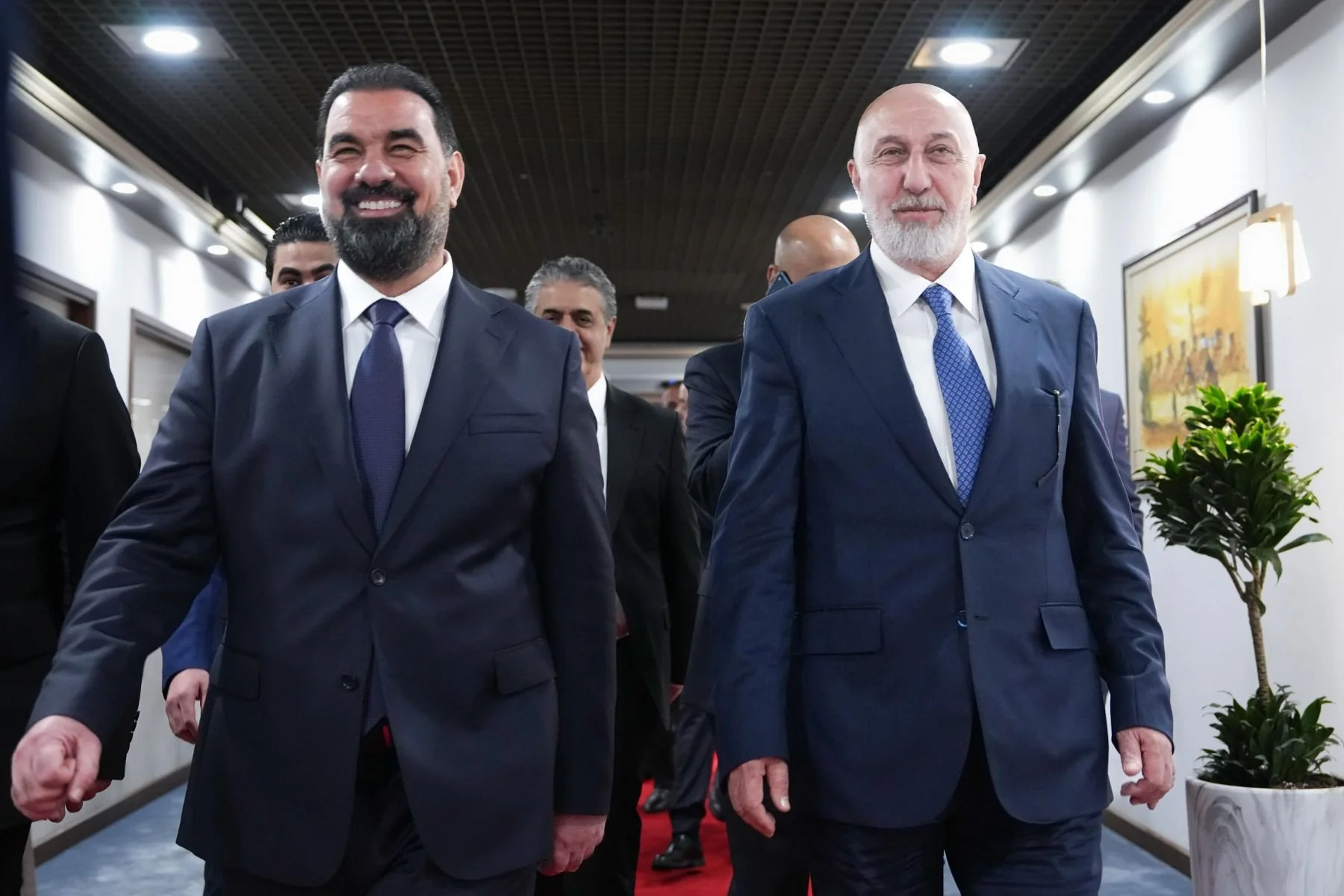
In this photo provided by the Iraqi Parliament Media Office, President Nizar Mohammed Saeed Amidi, right, and Parliament Speaker Haibet Al-Halbousi, left, walked inside the Iraqi Parliament in Baghdad, Iraq, Saturday, April 11, 2026. (Iraqi Parliament Media Office via AP)
The election of Nizar Amidi—a Kurdish politician nominated by the Patriotic Union of Kurdistan (PUK)—has formally ended Iraq’s months-long political deadlock but also exposed deep divisions. Amidi, now the country’s sixth president since 2003, won 227 votes and has positioned himself as a consensus figure, pledging to govern under an “Iraq First” approach and work across political lines.
However, his victory was heavily contested. Major factions led by Masoud Barzani and Nouri al-Maliki boycotted or rejected the vote, raising concerns about legitimacy and highlighting ongoing Kurdish rivalries and broader political fragmentation.
Attention now shifts to forming a government—particularly selecting a prime minister, the most powerful role in Iraq’s system. That process is expected to be contentious due to disputes over the largest parliamentary bloc and divisions within Shiite factions, including resistance to Maliki’s possible return.
Ultimately, while Amidi’s election marks progress, it is more of a reset than a resolution, with Iraq’s stability hinging on whether political leaders can overcome their divisions to form a functioning government.