
Celebrating 250 Years of America
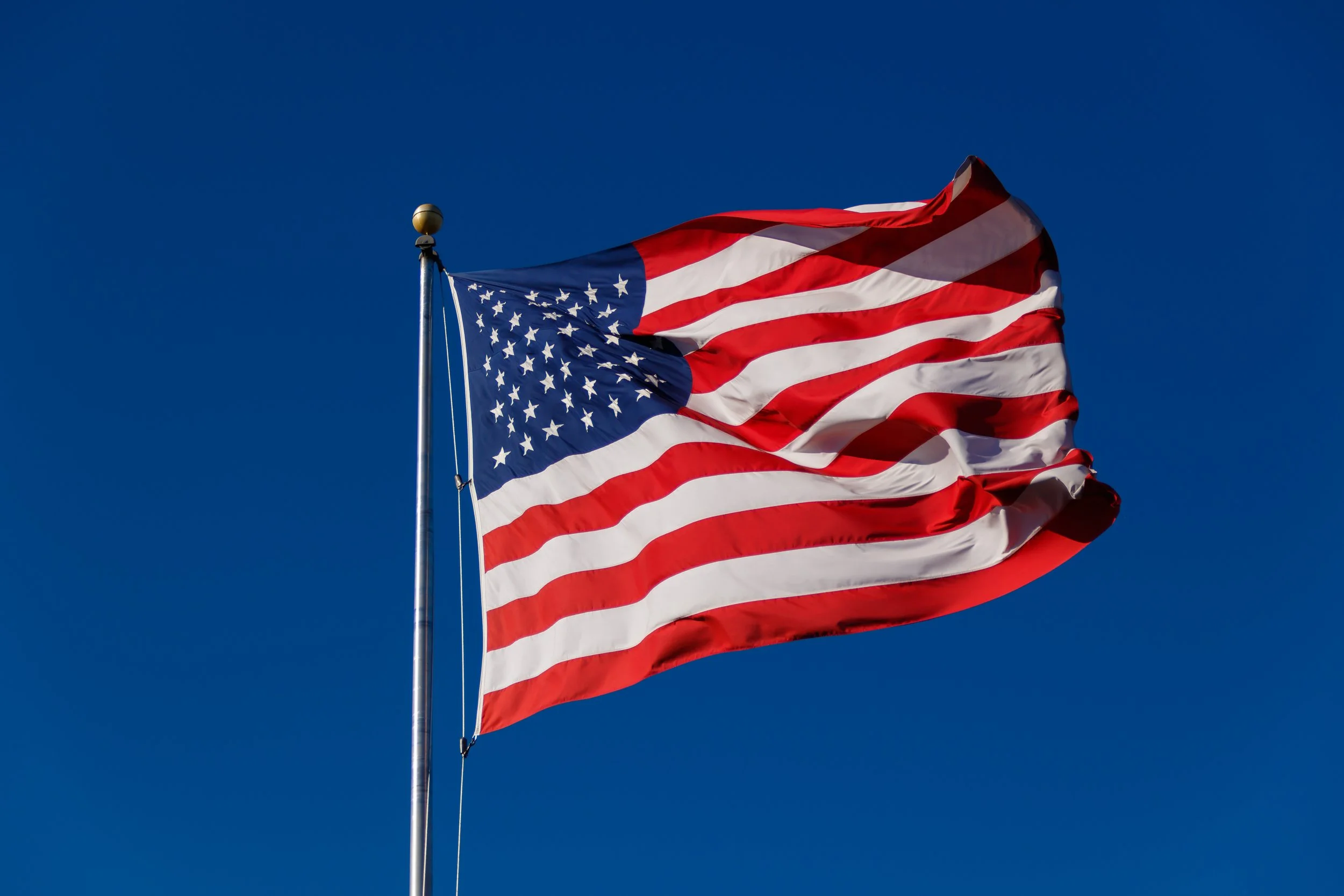
A nation built around an ideal
By Sarah Kittle
Ever since I was a little girl, one of the final lines in my evening prayers has been, “Thank You for making me an American.” Even then, small and sheltered as I was, I sensed there was something special about this country. (I also thanked God for making me female, but that’s a topic for another day.)
Throughout history, countless nations have risen and fallen, each leaving its mark on the world. Yet the United States occupies a unique place in human history. Every country has its own culture, traditions and accomplishments, but America stands apart for the extraordinary way it was founded, the organic way it developed, and its remarkable ability to continually reinvent itself.
Unlike most nations, which were formed around a common ethnicity, language or religion, the United States was built around an idea—an ideal, really. Thirteen British colonies declared independence, defeated a global empire, and established a nation grounded in Enlightenment principles of individual liberty and self-government.
Those principles became the foundation of a country where citizenship was not defined by ancestry or bloodline, but by a shared commitment to freedom, opportunity, and democratic self-rule.
Different is Good
America’s diversity is one of its defining characteristics. Over the centuries, millions of immigrants have arrived from every corner of the globe seeking freedom, economic opportunity, and the chance to build a better life. They brought with them different languages, customs, and beliefs, creating a society unlike any other in history.
Where else can you find neighborhoods where the smells of shawarma, tacos, and spaghetti mingle down the same street?
One could argue that the Roman Empire was also remarkably diverse, but it became that way through expansion and conquest. It absorbed people from Britain, North Africa, the Middle East, and beyond, yet there remained a clear hierarchy. “Oh, to be a Roman,” may well have been the aspiration of many conquered peoples, but becoming Roman came with expectations: adopt Roman laws, embrace Roman institutions and, if possible, learn enough Latin not to embarrass yourself at the forum.
America took a different path. It has never had a single ethnic identity, nor was it founded on one. Its greatest distinction is the belief that a person’s future is not predetermined by birthplace, bloodline, or social status.
From the nation’s earliest days, people have come to the United States with little more than dreams, determination, and a suitcase that may have been held together by string. They believed they could create opportunities unavailable elsewhere. While the American Dream has evolved over time—and whether it is still fully attainable is the subject of endless debate—the idea itself continues to inspire millions.
That enduring belief may be America’s greatest strength: the conviction that no matter where you come from, your story is still being written.
Immigration Today
In today’s immigration debate, the conversation often centers on policies, borders, and statistics. For many Chaldean immigrants, however, immigration is not an abstract political issue or a talking point for cable news. It is a deeply personal story of survival, lived faith, and hope for the future.
For generations, Chaldeans lived in Iraq as one of the world’s oldest Christian communities, tracing their roots in Mesopotamia back thousands of years—long before there was an Iraq, and long before anyone was arguing or trolling on social media.
Yet despite their ancient presence in the region, many endured discrimination, instability, and periods of religious persecution that made daily life increasingly uncertain, if not impossible.
Those who ultimately came to the United States did not leave because they no longer loved their homeland—quite the opposite. They left because they felt they had no choice. Like so many immigrant communities throughout American history, they carried with them not wealth or political influence, but memories, traditions, and the strength of character to begin again.
“We didn’t come looking for a handout,” is a sentiment echoed by many first-generation Chaldean Americans. “We came looking for freedom.”
And in America, they found something precious: the ability to worship openly, raise their families in safety, and build a future that their ancestors could scarcely imagine.
The decision to leave was often heartbreaking. Families left behind homes, businesses, relatives, and the only life they had ever known. Many arrived in America with little more than their most meager possessions, a few dollars, and an unwavering determination to create a better future for their children. As so many immigrant parents have proven, hope fits into even the smallest suitcase.
Making Michigan Home
The Chaldean community in Michigan experienced its most significant growth following the passage of the Immigration and Nationality Act of 1965, which opened the door for more than 1,000 Chaldean families to establish new lives in the Detroit area. What began as a small immigrant population has grown into one of the largest Chaldean communities outside of Iraq, with an estimated 200,000 Chaldeans now calling Michigan home.
According to Chaldean Catholic Church, a 2025 book by Bishop Bawai Soro and Jacob Bacall, the first Chaldean born in the United States was Daisy Kory in 1917, marking an early milestone in the community’s American story.
Today, that story continues to be defined by the same values that sustained the earliest immigrants: faith, family, and an enduring entrepreneurial spirit (let’s not forget food).
The community remains deeply rooted in family life. The average Chaldean household in Michigan consists of 4.08 people, significantly larger than the national average of 3.13. In practical terms, that means Chaldean family gatherings have more chairs, more food, and almost certainly, more opinions.
As immigration continues to shape the Chaldean-American experience, recent federal policy changes have introduced renewed uncertainty for many immigrant families pursuing permanent residency. A new guidance memo issued by the Trump administration gives immigration officers broader discretion to require some green card applicants to leave the United States and complete the process from their country of origin, rather than adjusting their status while remaining in the country. The change could affect hundreds of thousands of immigrants annually.
The policy shift comes at a time when the nation’s immigration system is already under historic strain. The active backlog in U.S. immigration courts has surpassed 3.2 million cases, while more than 2.3 million immigrants are awaiting formal asylum hearings. For many families, this means life continues in a kind of prolonged uncertainty—working, raising children, and contributing to their communities while legal outcomes remain years away (four years on average).
At the same time, researchers at the Migration Policy Institute have warned that slowing immigration is contributing to broader U.S. population stagnation. Immigrants and their American-born children have accounted for the majority of growth in the nation’s prime working-age population since 2000, underscoring the critical role immigration plays in sustaining the American workforce and economy.
For communities like the Chaldeans—fleeing religious persecution, violence, and political instability—these trends are more than statistics. They reflect the ongoing challenges and opportunities that have defined the immigrant experience for ages.
From the earliest arrivals who established roots in Detroit to the estimated 200,000 Chaldeans living in Michigan today, immigration has not only shaped the community’s growth but also contributed to the economic vitality and cultural fabric of both the state and the nation.
The American Dream Still Exists
Like countless immigrant groups before them, Chaldeans often started at the bottom of the economic ladder. Language barriers, cultural differences, and financial struggles were common challenges. Many worked long hours in small family-owned businesses—convenience stores, gas stations, grocery markets, and restaurants. Entire families contributed, with parents and children working side by side, sacrificing together to build stability and opportunity from the ground up.
What emerged from those sacrifices is a remarkable success story.
Today, Chaldean Americans own thousands of businesses across the country and have become major contributors to local and regional economies. In Michigan alone, Chaldean-owned businesses generate billions of dollars in economic activity, employ tens of thousands of people, and serve communities of every background—proof that entrepreneurship speaks every language, even when the owner is still learning English.
At the same time, Chaldean immigrants have worked diligently to preserve their heritage. Churches became more than places of worship; they became community centers, cultural institutions, and support networks for newly arriving families. Through faith and fellowship, immigrants found comfort while navigating an unfamiliar country.
According to stories shared with the Chaldean Cultural Center’s executive director, Mary Romaya, by her father, Chaldeans were already discussing how to maintain and preserve their identity as early as the 1920s. “They certainly didn’t want to lose the faith or the language,” she recalled of conversations her father had with other Chaldean pioneers—proof that cultural preservation has long been part of the community’s survival strategy, not merely a recent concern.
For first-generation immigrants, gratitude toward the United States remains a defining theme.
“We were fortunate America opened its doors for us,” said Fred Najor in an interview about his military service, noting that many Chaldeans attributed their welcome in the United States to the fact that they were Christian. Ironically, he added, that same identity made them targets in Iraq. “If we had stayed there,” Fred said, “we would be dead.”
America provided the unique chance to start over. It allowed families fleeing persecution to rebuild their lives—opening businesses, educating their children, purchasing homes, and contributing to their communities. The success achieved by many Chaldean Americans is not viewed simply as personal accomplishment, but as the fulfillment of the promise that drew them here in the first place.
Amir Kassab, a retired grocer, investor, and former US Department of Defense Military Interpreter/Linguist, explained, “I got my freedom, I got better opportunities, and I got my lifestyle, with no fear of government brutality. What we did here, we couldn’t do in Iraq in the 1960s. The main thing is our freedom!”
Their story serves as a reminder that immigration is often about more than economics. It is about people seeking security, dignity and the freedom to live according to their beliefs—things most people do not fully appreciate until they have had to do without them.
The late Thomas Denha immigrated from Iraq when he was 19 years old. “I was the first one in my family to come to the United States,” he said in a past interview. “It took me three months to come to America.” In today’s world of instant flights and next-day delivery, that journey alone feels like its own test of faith and patience.
By 2003, Chaldeans had already been in the United States for more than a century, quietly building roots that would eventually grow into one of the most vibrant diaspora communities in the country.
The Chaldean experience reflects a broader American tradition: individuals arriving with little, working tirelessly and building lives that benefit not only their own families, but the communities around them.
Two hundred and fifty years after its founding, America remains an experiment unlike any other—a nation united not by bloodline or ancient history, but by a shared belief in freedom, opportunity, and the possibility of a better future. It is a system that has always been equal parts ideal and work-in-progress.
That enduring idea still makes America one of the most remarkable nations in history. Despite its shortcomings, it remains a place where hope brings millions to its shores and where the belief that tomorrow can be better than today still endures.
We are fortunate to be part of that story.