
Between Washington and Baghdad
Hello, World!
A dialogue on citizenship, return, and the future of the Christian presence in Iraq
By Hanan Qia
Not all official meetings are alike. Some conclude as soon as the formalities end, while others open the door to conversations whose significance extends far beyond the meeting room.
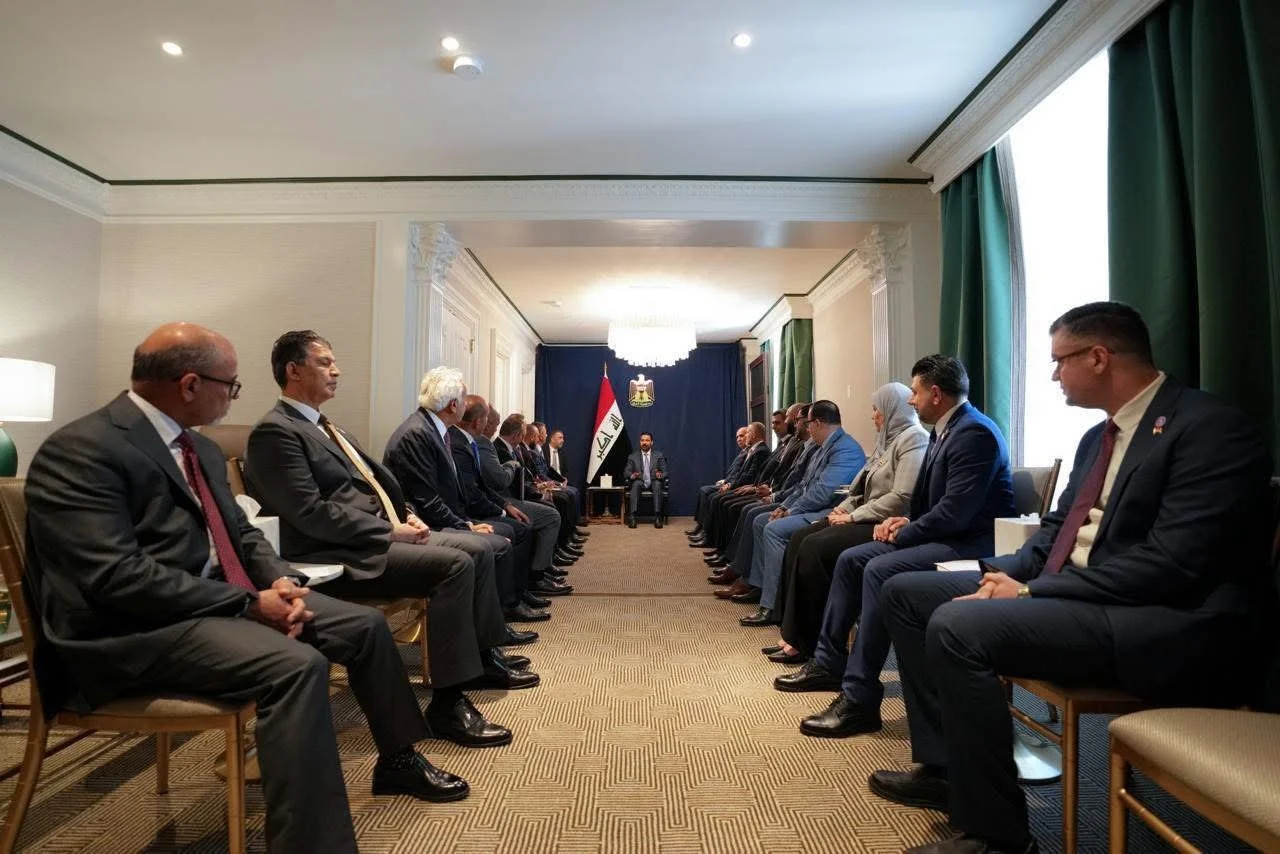
It was in this spirit that the meeting between a delegation from the Chaldean Community Foundation and H.E. Ali Falih Al-Zaidi, Prime Minister of the Republic of Iraq, held in Washington, D.C., on July 13, 2026, assumed particular importance. The meeting took place at the outset of the Prime Minister’s official visit to the United States and was the first formal engagement following his arrival in the U.S. capital.
I had the privilege of participating in the meeting as Deputy Director of the Iraq Office of the Chaldean Community Foundation, as part of a delegation led by the Foundation’s president, Martin Manna, and comprising several members of the Foundation and its Iraq Office.
Representing the Iraqi government were Deputy Prime Minister and Minister of Foreign Affairs Dr. Fuad Hussein; Dr. Mohammed Tamim, former Minister of Planning and Member of the Council of Representatives; MP Murad Ismail, a member of the Council of Representatives representing the Yazidi component; and Nineveh Governor Abdul Qader Al-Dakhil, together with a number of senior advisers to the Prime Minister and Iraqi diplomats.
The meeting was far more than a ceremonial exchange of greetings. It was a candid and substantive discussion of the issues facing Chaldeans and other Christians in Iraq at a time when continued emigration is placing increasing pressure on this historic community, all the while political, administrative, and economic challenges continue to affect daily life, particularly in the Nineveh Plain.
The Foundation’s delegation focused on several priorities that it considers essential to addressing these challenges. Chief among them were the implementation of Article 125 of the Iraqi Constitution; the establishment of administrative units in the Nineveh Plain; fair political representation; the continuation of reconstruction efforts; equitable land allocation within the legal framework; creating conditions conducive to the return of displaced families; and safeguarding constitutional rights, religious freedom, and the principles of equal citizenship and the rule of law.
The Nineveh Plain occupied a central place in the discussion, given its historic significance for Iraq’s Christian communities and the administrative complexities arising from overlapping authorities. These challenges continue to affect public services, stability, and long-term development. It was evident throughout the discussion that resolving these issues is essential to rebuilding confidence and creating an environment in which families may choose to remain or return.
During the meeting, the Prime Minister reaffirmed that Iraq’s religious and cultural diversity constitutes one of the country’s greatest strengths. He emphasized his government’s commitment to protecting the rights of all Iraqi citizens without discrimination, strengthening equal citizenship and the rule of law, continuing the reconstruction of the Nineveh Plain, encouraging the return of displaced Christian families to their ancestral towns, preserving Iraq’s historic Christian presence, and maintaining regular communication with Christian representatives and institution.
Among the issues discussed was the importance of creating conditions that encourage Iraqi Christians living abroad to consider returning—through greater stability, continued reconstruction efforts, practical support for returning families, and policies that encourage Iraqi entrepreneurs and businesses in the diaspora to invest in their homeland.
In this context, the Prime Minister reiterated his government’s commitment to reconstruction, stability, and preserving Iraq’s Christian presence.
This vision carries particular significance because Iraqi communities abroad represent far more than an extension of the country’s social and cultural fabric; they possess professional expertise, financial resources, and international networks that could make a meaningful contribution to Iraq’s development—provided that a stable legal environment, effective governance, and credible guarantees for both citizens and investors are in place.
At the same time, the success of any initiative aimed at encouraging return will ultimately depend on realities on the ground. Those who left Iraq did not do so by choice, but under the weight of complex security, political, and economic circumstances. Their return requires more than encouragement; it depends upon security, confidence in state institutions, and genuine opportunities for employment, investment, and a dignified life.
The meeting in Washington has concluded, but the issues it addressed remain unresolved until they are translated into practical action. Between Washington, where the dialogue took place, and Baghdad, where policies are shaped and decisions are made, lies the true measure of success. If these commitments evolve into tangible policies, they can strengthen confidence, promote stability, and encourage Iraqi Christians, both at home and abroad, to contribute to the country’s future.
Preserving Iraq’s Christian presence is not a matter concerning one community alone. It is an integral part of safeguarding Iraq’s historical identity and its rich cultural and religious diversity. Ultimately, Iraq’s future will depend on its ability to remain a country in which all its citizens, regardless of their backgrounds, enjoy equal rights, share equal responsibilities, and participate fully in shaping the nation’s future.
Hanan Qia is the Deputy Director, Iraq Office for the Chaldean Community Foundation.