
Serve Us, Not Replace Us
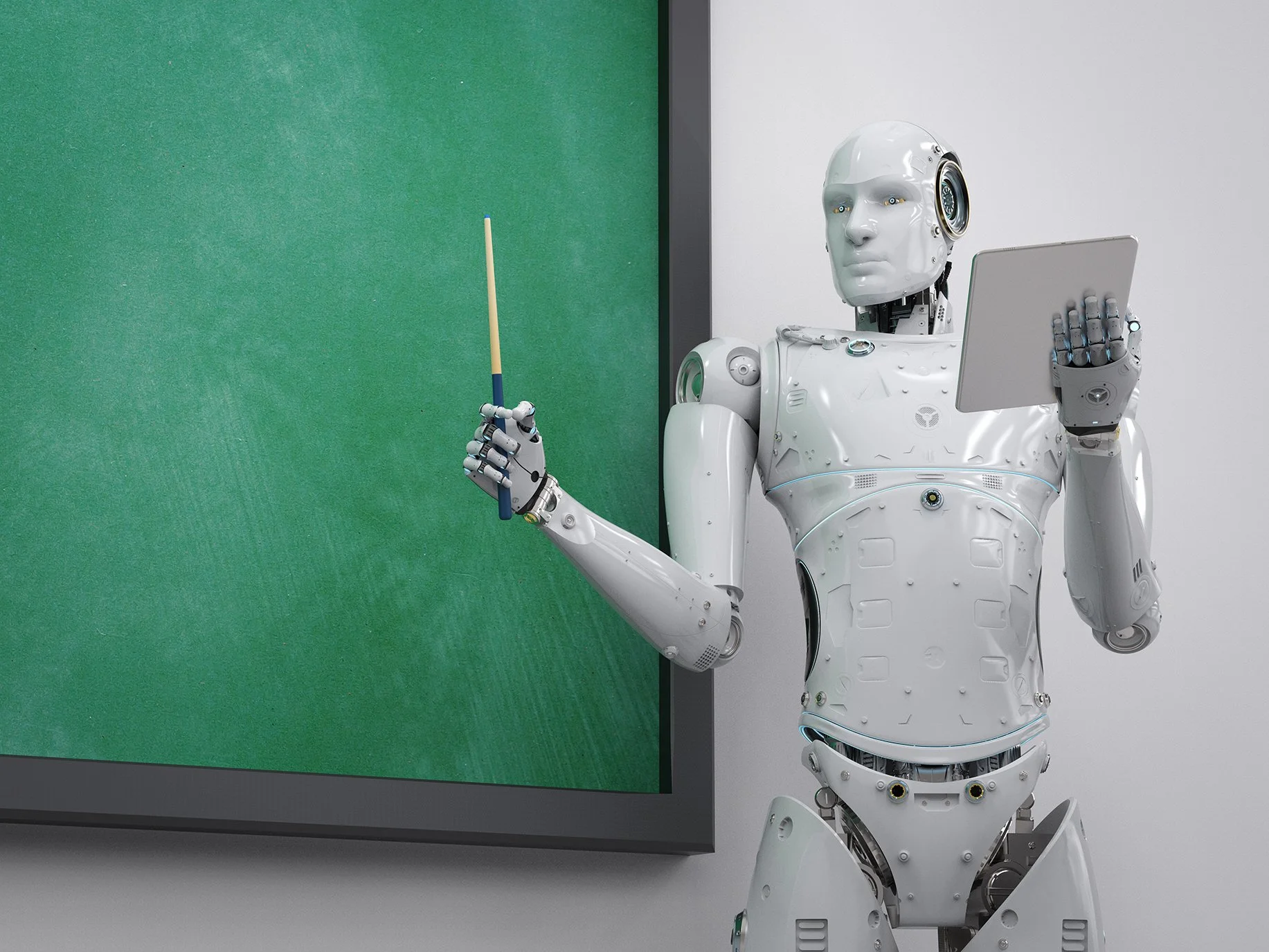
Educators on AI in the classroom
By Jenna Abroo
Artificial intelligence, or AI, is one of today’s hottest topics of conversation in tech. “Narrow AI” includes single tasks such as voice assistants and spam filters, and “Generative AI,” which is what most people think of as AI, creates new texts and images based on prompts.
We see the use of ChatGPT increasing every single day. This AI software tool can create images, texts, or code, all based on prompts a user puts into the program. Many businesses utilize AI software in their everyday functions, such as sorting through potential applicants for job openings, reviewing resumes, or creating programs to analyze efficiency data.
Voices from the Classroom
One place that AI usage is becoming more prevalent is in our schools and classrooms.
Tina Schleyer, a Great Start Readiness Program Preschool teacher at Warren Consolidated Schools, had a few things to say about AI usage in the classroom.
“Children need to learn how to think before we can give them tools that think for them,” Schleyer said. “However, technology is advancing and I respect the fact that we want to prepare our students for the future.”
The preschool setting may not be where AI is most prevalent, but kids as young as 4 are already glued to their tablets.
“So much of what we learn is through hands-on experiences,” explained Schleyer. “Play, imagination, building relationships, and emotional regulation.” Her students are navigating these new skills all while they are learning how to adapt to the setup of a regimented and structured classroom.
A substantial portion of a preschool classroom is adjusting from an at-home or daycare routine to a traditional classroom. Learning to develop the skills to think efficiently and solve problems on their own is the starting point for the rest of their academic career, and she believes the lessons taught should be reflective of that.
AI usage in her day-to-day student’s routine is not necessarily a thing, said Schleyer. “I have not found a place for AI in my everyday teaching, but I am not opposed to using it as a resource for lesson planning.”
Erin Reardon, who has not only served as elementary secretary in Warren Consolidated Schools for the past 5 years but also has a student in 5th grade, has a bit more rigid stance on AI’s place in our students’ classrooms. She starts with stating something many of us already know: “ChatGPT and AI are presented as tools to get work done efficiently. We are relying heavily on the easy route of computer thought.”
While this is true and often serves a level of convenience, it begs the question: With more and more AI usage, what will then happen to our students’ critical thinking skills?
It is important that students develop skills through their own tangible experiences instead of using AI shortcuts. “We must teach our kids that by taking the easy route to solve their problems they are missing the opportunity to develop the critical thinking skills that they will need to be adequately independent and sufficient adults,” said Reardon. “By continuing to depend on the information that AI auto-generates, we are showing the next generation of students that the easier way is the better way, and that whatever they read online is gospel.”
Finding the Balance
For many staff members working in the public school system, the change in student behavior is already noticeable and rapidly increasing. According to a 2025 scientific online journal published by The National Library of Medicine and National Center for Biotechnology Information¹, the use of AI by young students raises concerns of “digital fatigue, loneliness, technostress, and reduced face-to-face interactions.”
Students who over-rely on AI without proper supervision may also inadvertently diminish interpersonal skills and emotional intelligence, leading to social isolation and anxiety, according to the study.
Reardon echoes these concerns. “We are already seeing a social change in our students for the worse, especially in the way they communicate with each other,” she said. “Our continued reliance on AI in schools puts the privacy and well-being of our students at risk and will bring out the worst instead of enhancing our society the way to which it was intended. It will become the new ‘anti-logic’ if our society is not mindful of its usage, and the impact it has on our students; especially unmonitored or unregulated.”
When asked about the possibility of AI replacing teachers in the classroom, Schleyer said, “That is not possible. No matter what, human connection is the most valuable tool we have. AI usage should proceed with caution and thoughtfulness to serve us, not replace us.”
Sources: Klimova B, Pikhart M. Exploring the effects of artificial intelligence on student and academic well-being in higher education: a mini-review. Front Psychol. 2025 Feb 3;16:1498132. doi: 10.3389/fpsyg.2025.1498132. PMID: 39963679; PMCID: PMC11830699.


