
A Faith That Endured
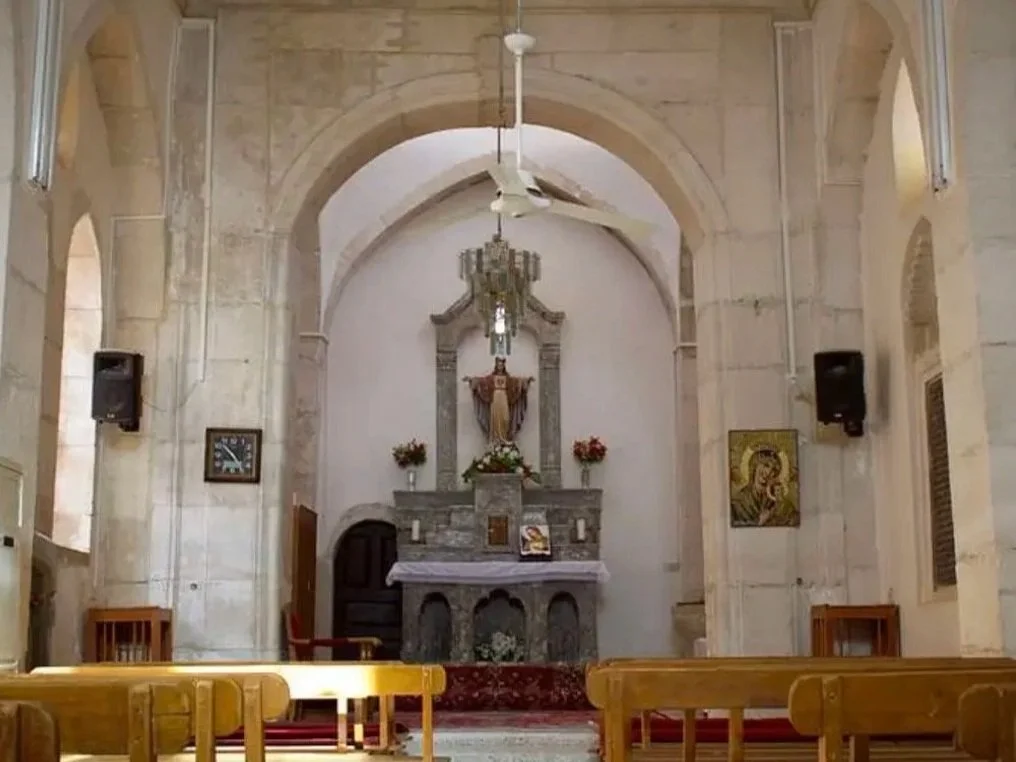
The Ancient Roots of the Church of the East
By Jaclyn Bolis
Jacob Bacall’s book Chaldean Catholic Church uncovers a remarkable historical throughline—from the Magi who journeyed from the East to offer gifts to the Lord, to the formation of the Church of the East through the work of apostles such as St. Jude, and through centuries of violent persecution as rulers sought to strip the Church of the East of its ability to practice the faith. Through it all, one enduring truth emerges: an unshakeable belief that Jesus Christ is Lord.
St. Joan of Arc tells us that “One life is all we have, and we live as we believe in living it. But to sacrifice what you are and to live without belief is a fate more terrible than dying.”
From its beginning, the Church of the East was a living display of these words: they chose to give up their lives and defend their faith in Christ rather than lose what clearly meant everything to them. Secret meetings were established to help people continue to live out the Catholic faith safely.
A bishop named Papa bar Aggai went through trials for his beliefs as well, as the Chaldean Catholic Church reveals to its readers. Papa bar Aggai had to persevere with great trust in Christ and even somehow find help from Rome to keep his authority over the whole Church of the East to serve the people well.
The fact that many Jews lived in Mesopotamia was beneficial for the Church of the East and its growth. The apostles did their best with courage and love to share that Jesus is their Messiah; It was appealing to the Jewish community because of this, and the fact that the apostles built the foundation for the Church of the East using scripture, prayers, etc., from the Jewish faith.
It all began with saints we venerate today like Thomas and Jude, who made Christian communities in areas with many Jewish people; from there the faith spread to others in Mesopotamia. It was before St. Thomas went into India to evangelize, as he is well known for doing, that he spread the Gospel to those in Mesopotamia.
The Jews knew the language Aramaic well because of living in Mesopotamia for some time until they were allowed to return to Jerusalem; they would continue to speak Aramaic there. This is significant because Jesus spoke and preached in that same language, and the Chaldean Catholic Church still speaks this language today.
The Church of the East again faced difficulty, this time because of disagreements on Christ’s human and divine natures. It happened at the Council of Ephesus in 431 C.E. Although the Church was not the main figure in this dispute, they were greatly affected because of it—and for centuries their good standing was tarnished.
The Church of the East’s missionary work even made its way to China. In the mid-600 CE, many were traveling to China to share the faith; this led a priest named Alopen to do so. His work, and that of many others of the Church of the East, had a great impact in Chang’an (known today as Xi’an), so much so that a monument was built with inscriptions in both Aramaic and Chinese. The monument is recognized as the Nestorian Stele.
The early spreading of Islam came with some challenges for the Church of the East: they were under what was called dihimmi status—this allowed them to practice their faith but not freely. Their protection and ability to have some religious freedom was only granted in return for allegiance to the Islamic State and paying the jizya, a historic yearly tax for non-Muslims.
Not only was their faith affected, but their status socially and economically was lowered. One good thing about being under the dihimmi status for the Church of the East, and all Christians, was the relief of not having to face persecution.
The tax was very high, and it was a hardship on Christians, especially combined with little religious and social freedom. Christian communities in Persia and Mesopotamia suffered so much in these areas of life that many converted to Islam as a solution.
Some of what these Christians faced daily: having to wear certain identifying clothing; riding only on donkeys rather than horses and having to sit sideways on them to degrade their dignity; the forbiddance of wearing or exhibiting crosses; the banning of processions and building churches; on top of all that, they were also marginalized.
However, this peaceful time allowed the Nestorian Christians, who were under the Church of the East, to be great aids in the realms of medicine, art, and language. Christians were great contributors to what is known as the “Golden Age of Islam.”
They translated Greek texts to Arabic and cultivated advancements in other areas such as philosophy, math, and astronomy throughout this period. Interestingly, one Nestorian Christian, Hunayn ibn Ishaq, a physician and translator, would not abandon the lessons of his faith and profession when asked by the Islamic leader of his time to poison an adversary, knowing the risk was the possibility of his death.
Without the history of the Chaldean Catholic Church’s creation and the ability to look back at it, our Church would be missing its essential beauty and richness—a bold and lively faith seen through the charity of the lay and religious in the Chaldean community, and through the early martyrs’ bravery and confidence in Christ.