
All Hallows’ Eve
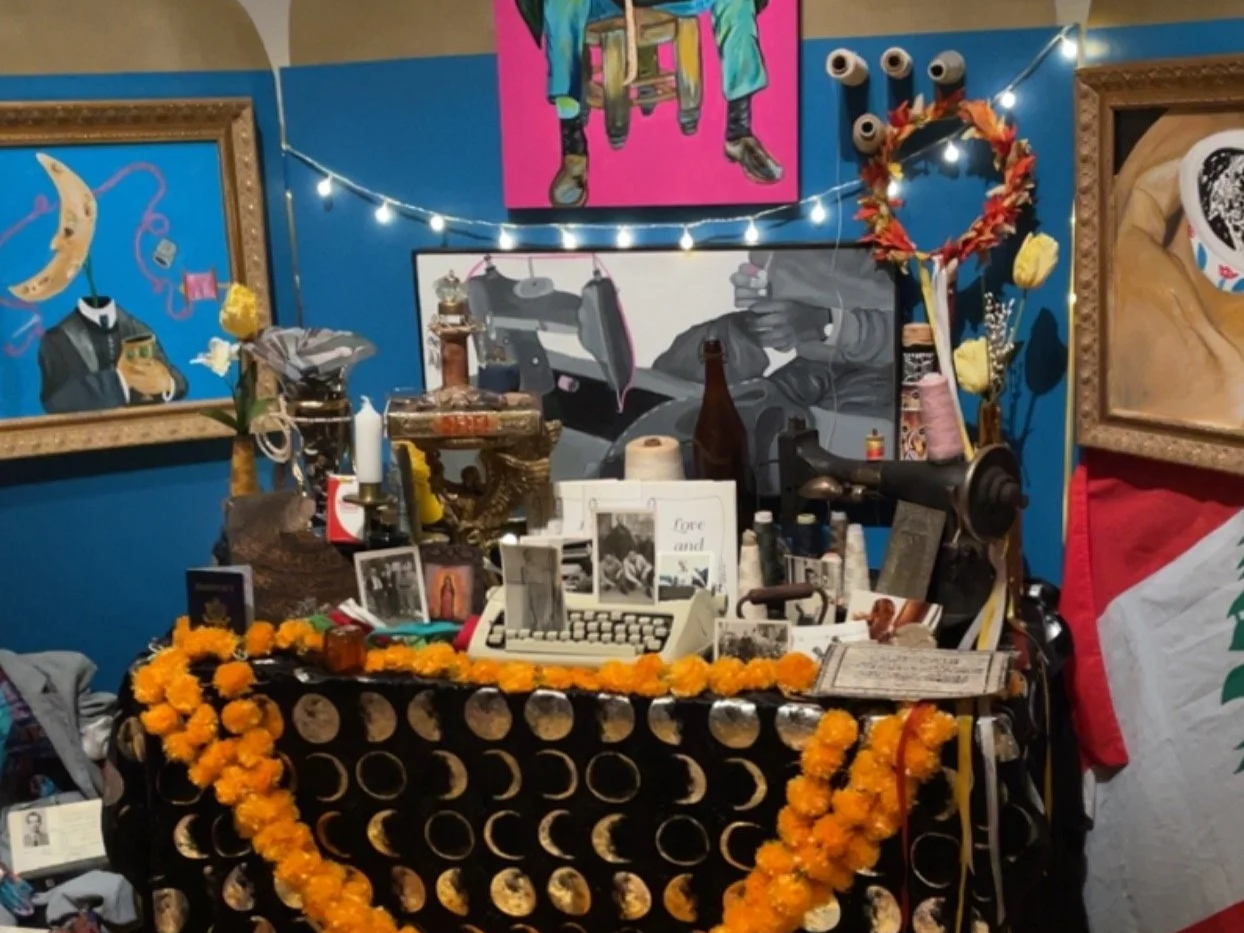
This photo is from the Día de Los Muertos (Day of the Dead) exhibit at the Detroit Institute of Arts. These offrendas (or offerings) were created by local artists for the 2023 exhibition. Offrendas are ritual altars often created with pictures, food, or mementos of past loved ones, honoring their lives in a festive and celebratory way.
Rediscovering the Catholic side of Halloween
By Jenna Abroo
Halloween is a tradition many Americans enjoy from early childhood into adulthood, when they pass it on to children of their own. It brings to mind jack-o’-lanterns, flashes of orange and black, spooky decorations, endless costume possibilities, and mountains of candy.
Growing up with these autumn festivities is almost a rite of passage for American children. But Halloween did not begin in America. The holiday traces back to Samhain, a Celtic festival held at the end of October to mark the turn of the seasons toward the colder winter months.
For the Celts, Samhain carried deep spiritual significance. They believed the veil between the living and the dead was thinnest at this time of year, and their observances included bonfires and religious rituals meant to protect people from supernatural forces. So where do All Saints’ Day and All Souls’ Day fit in?
As Catholics, we observe All Saints’ Day on Nov. 1 and All Souls’ Day on Nov. 2. All Saints’ Day honors the saints and martyrs in Heaven, both known and unknown, and is a holy day of obligation in the Roman Catholic Church. All Souls’ Day is dedicated to praying for and remembering our loved ones who have died and are being purified in purgatory in preparation for Heaven.
The roots of these observances reach back to the earliest centuries of our faith, when the first Christians honored martyrs who had been persecuted and killed for their faith, typically on the anniversaries of their deaths. As the Western Church and its traditions developed over the centuries, feast days honoring the saints and the faithful departed became more widespread.
But how does this relate to Halloween?
As Catholics living in the Western diaspora, we often find ourselves at a crossroads between the traditions of our faith and those of the land we now call home.
Many Christians choose not to celebrate Halloween because of its pagan roots, yet it shares more with All Saints’ and All Souls’ Day than one might expect. All of them have a spiritual connection to the dead, fall at the same point in the year as autumn gives way to winter, are associated with saints or spiritual beings, and include traditions that honor those who have passed into the afterlife.
Although modern Halloween has become lighthearted fun for children, its spiritual significance is not so different from what Catholics celebrate. Even the name reflects this: “Halloween” comes from “All Hallows’ Eve,” the evening before All Saints’ Day.
Still, because Halloween did not originate as a Christian holiday, Christians have long debated whether to take part. Some Christian groups see participation as glorifying the occult and placing faith in things our religion rejects. In my research, however, I found far more nuance.
In 2009, the Vatican’s official newspaper, L’Osservatore Romano, quoted Spanish priest Father Joan María Canals as saying, “Hallowe’en has an undercurrent of occultism and is absolutely anti-Christian.” Yet no official papal document from the Vatican, nor any statement from our Patriarchs, bans or condemns celebrating Halloween.
The holiday certainly includes elements of the supernatural, the occult, and the frightening, but those elements are not the whole of it. Rather than calling for a ban, the article focuses on warning Catholics to be wary of Halloween’s occult and macabre side, such as an excessive emphasis on gruesome horror and death, and to keep celebrations centered on innocent, wholesome fun.
Father Canals’ main concern is the occult imagery and practices that have become linked to the modern holiday. He encourages parents to redirect celebrations toward “wholesomeness and beauty.”
Discernment matters when navigating spiritual questions like these. It helps to remember what these days are truly about, especially since All Saints’ Day and All Souls’ Day follow immediately after Halloween.
Mexico’s Día de los Muertos (“Day of the Dead”) offers a striking example of how different traditions can coexist, blending Indigenous customs of honoring the dead with Catholic practices introduced during the colonial period.
Many of the traditions we celebrate today have grown and changed far beyond their origins. Who would have guessed that an ancient Celtic festival would become a night when millions of Americans dress up as their favorite characters and knock on their neighbors’ doors hoping for a sweet treat?
For Catholic Americans, though, the story doesn’t end on Oct. 31. Halloween is, after all, an eve: the doorway into two days set aside for the saints who have gone before us and for the loved ones we still pray for. Seen that way, the costumes and candy don’t have to compete with our faith. They can lead into it.
From Celtic bonfires to Mexican ofrendas to the candles lit in our own parishes, people across cultures and faiths have always sought ways to remember their dead. With discernment and the right intentions, we can make room for all of it: an evening of wholesome fun, followed by a day honoring the saints and a day of prayer for the souls we love.