
Mesopotamian Myths
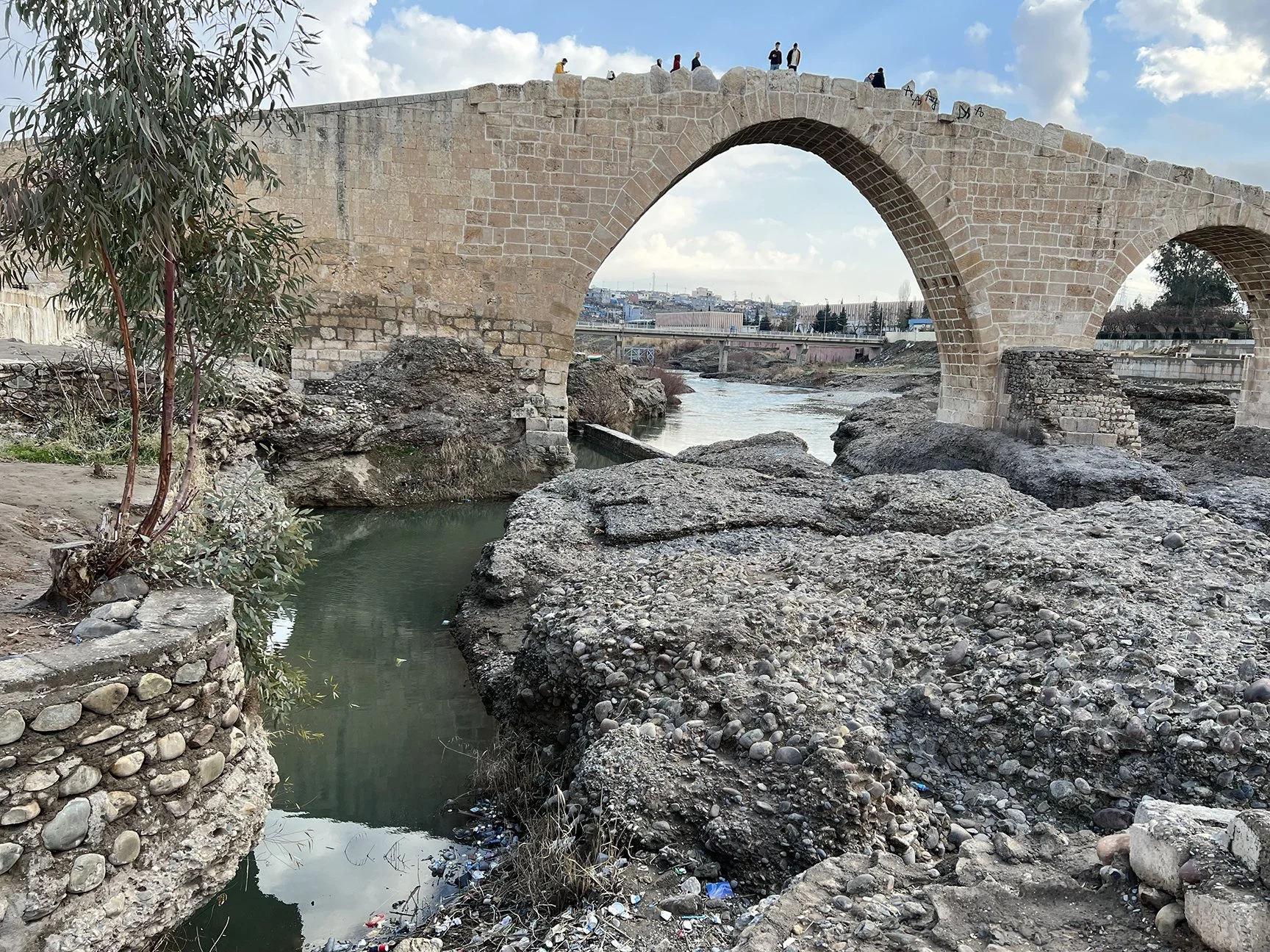
The legend of the “Sacrificial Girl”
By Adhid Miri, Ph.D.
Old bridges and arches are living monuments that carry the weight of history. They are not merely structures to cross rivers and roads—they have facilitated communication, trade, and human interaction between friends and foes alike. Over time, they have shaped culture, geography, and historical memory.
Few bridges illustrate this as vividly as Pira Dalal, or the Dalal Bridge, in Zakho, northern Iraq.
Zakho and Its Iconic Bridge
Zakho sits in Iraqi Kurdistan, near the borders of Turkey and Syria, with the Judi Mountains to the north. The city is rich in history and religious significance, mentioned in both the Quran and the Gospels due to its association with the flood of Noah. Its population is diverse: Kurds, Arabs, Chaldeans, Assyrians, and Syriacs live together peacefully.
The Dalal Bridge spans the Khabur River, a tributary of the Tigris, dividing Zakho’s banks. The bridge is 114 meters long, 4.7 meters wide, and 15.5 meters above the river, built from limestone and carved stones, forming five graceful arches. It has become a symbol of the city, adopted by the University of Zakho and local authorities alike.
The bridge—sometimes called the Abbasid Bridge, Delal Bridge, Pira Dalal, or Gishra—likely dates back to antiquity, with some medieval rebuilding. It has become an emblem of Zakho, adopted as the official logo of the University of Zakho and by municipal authorities.
Construction History
The origins of Pira Dalal are debated. Archaeologists suggest it dates back to the Byzantine-Eastern Roman Empire, approximately 1,520 years ago. Analysis of limestone samples, sent to Heidelberg University, supports this. Its precise construction techniques remain mysterious.
Architectural style suggests Roman influence, while local legends attribute parts of its construction to the Abbasid Era, in the eighth century. The bridge served dual purposes: a military route during Sassanid-Byzantine conflicts and a segment of the ancient Silk Road connecting China and Europe.
Mohammed Al-Yousefi, director of the Department of Antiquities of Zakho, notes that archaeological evidence suggests construction during the reign of Byzantine Emperor Zeno. However, the lack of inscriptions or symbols leaves its exact origins uncertain.
Pira Dalal was registered as an archaeological site in the 1930s and has undergone restorations, most recently in 2013, 2017, and 2019. The Kurdistan Regional Government employed laser scanning technology, restoring buried sections and building a miniature Roman amphitheater to accommodate tourists.
The Legend of the “Sacrificial Girl”
A local legend surrounds the bridge’s construction. Builders reportedly found that each night, whatever they had built would collapse by morning. Puzzled, they sought the counsel of an astrologer, who instructed that a living sacrifice must be buried in the bridge’s foundation to stabilize it.
The builder decided to sleep near the site, allowing the first creature to cross the river at dawn to be chosen. That morning, his granddaughter Dalal, carrying breakfast, arrived with a dog nearby. The builder’s heart froze as guards moved to seize her, and despite his efforts, Dalal was buried under heavy stones.
From that moment, construction progressed smoothly. The bridge took her name, Pira Dalal, and local legend claims her voice still mingles with birdsong each dawn.
In another version, Dalal’s husband discovers her fate and attempts to dig her out, only to hear her voice urging him to stop. Dalal becomes a supernatural guardian of the bridge, preserving her agency and presence while ensuring the bridge remains intact.
The Name “Dalal”
In Arabic, Dalal () signifies affection, fondness, and heart. It historically refers to girls with vivacity, flair, and joy. The name connotes luxury, wonder, and pride, reflecting the cultural significance and enduring legacy of Dalal in the region.
Dalal in Folklore and Song
The legend inspired songs across Mesopotamia and beyond. In Mardin, Turkey, a song called “Oy Oy Dalal” tells the story of a postman named Dalal and his beloved Souad. After Dalal’s imprisonment and Souad’s death, the young man wanders in grief, singing:
“If you love God, don’t say Souad has died.”
The song spread to Mosul and Baghdad, popularized by Iraqi Jewish musician Saleh Al-Kuwaiti and singer Salima Pasha Murad. It remains a classic, bridging geography, history, and human emotion.
Pira Dalal: The Lovers’ Bridge
Today, Pira Dalal continues to connect people—not armies or trade caravans, but hearts. Lovers hang locks on the bridge as a symbol of eternal connection. Newlyweds take photographs, and visitors come from across Iraq to experience its beauty and mythology firsthand.
Residents honor Dalal by growing two long plants in the bridge’s gaps, calling them her “braids,” a living tribute to the legendary girl who gave the bridge its name.
Enduring Cultural Significance
The bridge encapsulates Zakho’s social and historical memory. Its stones, arches, and stories reflect the ingenuity, suffering, and hope of generations. Pira Dalal is not only an architectural achievement but also a testament to the relationship between people and nature, geography and history, myth and memory.
The myths of Dalal offer insight into the daily life, beliefs, and social history of Zakho’s inhabitants, preserving their cultural heritage for centuries to come.
Sources: Wikipedia; Dr. Qabat Sheikh Nawaf – Zagros TV; IQ News; Saja Sherzad; Amin Younis; University of Cambridge; AINA – Assyrian International Agency