
Chaldeans in Basra
Bishop Mar Habib Nawfli on history and identity
By Hanan Qia
As part of our coverage of the history of the Chaldean people and the regions where they have lived, I had the honor of interviewing His Excellency Bishop Mar Habib Hormuz Nawfli, shepherd of the Chaldean Diocese of Basra and the South, and apostolic visitor to Europe. He shared insights into the Chaldean community’s historical presence in Basra, its spiritual and cultural life, and the challenges it faces today.
His Excellency emphasizes that the Chaldean presence in Basra and the South represents a long-standing symbol of Christian faith and Chaldean culture in this part of Iraq. This presence is not limited to Basra alone; it extends to Amarah, where an active parish exists, and to Nasiriyah, which hosts a church, along with a small number of families in other cities.
Bishop Nawfli notes that this presence is not merely ecclesiastical but also a source of hope and openness, respected by Muslims and Sabians alike, who see churches as part of the region’s spiritual and cultural landscape. He said many turn to these spaces for prayer—particularly at shrines dedicated to the Virgin Mary—and take part in public events, lectures and exhibitions, as well as services at sister churches in the city.
On the community’s historical roots, he said Chaldean identity was particularly strong and well established between the fourth and 12th centuries, with a revival in the 19th and 20th centuries. That trajectory, he noted, was shaped by major regional changes, beginning with the arrival of Muslims in the seventh century—a development viewed at the time as a significant historical shift—and later by the fall of the Abbasid state and the political and social upheavals that followed. While these events affected Christian life in the region, they did not erase its depth or continuity.
At the family level, Basra has historically been home to prominent Chaldean families who played an important role in the city’s social and economic life. Among them are the Al-Burjuni, Jory Michael, Al-Saour, Kaja Ji, Arabo and Zebari families, with the Al-Oweid family considered one of the oldest.
The Chaldean Church in Basra also plays a central role in pastoral and social life. Its work includes charitable efforts such as the annual Good Samaritan Ecumenical Market held during the Christmas season, regular liturgies and a range of community services. The diocese is also active in preserving heritage and documenting the history of Christians in the South, most notably through the Basra and Southern Chaldean Diocese Museum, which safeguards the community’s collective memory for future generations.
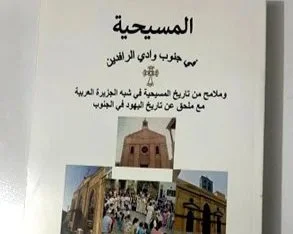
In this context, Bishop Nawfli’s scholarly and historical contributions are particularly noteworthy. He has authored several significant works, most notably Christianity in Southern Mesopotamia, which offers comprehensive, well-documented research on the history of Christians and Chaldeans in Basra and the South and serves as an essential reference for scholars and others interested in the region’s history.
The Chaldean community in Basra has been profoundly affected by successive waves of migration, particularly after 1980 with the onset of the Iran-Iraq War, followed by years of sanctions, the 2003 U.S.-led invasion and subsequent sectarian violence. These developments eroded confidence in the prospects for a just political system capable of ensuring peace and stability, leaving many Christians feeling marginalized and facing inequalities in civic life.
Despite these challenges, Chaldeans in Basra maintain generally positive relations with other religious and ethnic groups and are respected within the broader community. At the same time, demographic shifts—particularly the arrival of migrants from southern rural areas with limited exposure to Christian life—have reshaped the city’s social landscape. These groups are estimated to make up about a quarter of Basra’s population, though the proportion varies in other cities.
Most organized initiatives remain church-led, including efforts once carried out by the local branch of the Chaldean League. There are no local branches of Chaldean political parties, aside from some church-supported Christian organizations based in Europe and local entities such as the Hammurabi Organization.
Chaldean identity today is expressed through daily life, including language, dress, cuisine, arts, literature, values and social customs. However, the community’s small size has limited its ability to establish a dedicated social club, leaving most gatherings centered on church services and religious celebrations. Living among predominantly Arab families has also led to some unintentional cultural assimilation.
Despite these challenges, the diocese has reached several important milestones, including the opening of the diocesan museum in 2014; a primary school and a Christian education institute in 2017; the Divine Mercy House; and two event halls. In liturgical life, more than 10 altar servers have been trained and ordained after learning the Chaldean language.
On family life, Bishop Nawfli said education and employment opportunities are generally accessible, with unemployment remaining low. Housing, however, is the primary challenge. The diocese has provided semi-subsidized housing for dozens of families, while roughly one-third own their homes and about 60% rent at high rates, contributing to delayed marriages and lower birth rates. As a result, the number of families is not expected to grow significantly, and the church continues its pastoral care for both longstanding residents and newcomers.
The diocese places strong emphasis on archiving and documentation. In 2015, it published a comprehensive history of Christianity in southern Mesopotamia, reprinted in 2021, and has digitized records of baptisms, deaths and marriages from 1880 to the present, encompassing the historical, ecclesiastical, cultural and social dimensions of Chaldean life.
Bishop Nawfli highlighted two key requirements for sustaining the Chaldean presence: providing housing for young couples to encourage marriage, and promoting a culture of prudence and economic planning. He noted that current conditions reflect decades of war and religious extremism.
Among notable church landmarks, the oldest surviving church is St. Thomas, built in 1880 in old Basra, followed by a large cathedral constructed in 1930 under the patronage of the Virgin Mary. Each church contains a shrine visited by many city residents for prayer, with 20 recorded cases of miracles attributed to the Virgin’s intercession; His Excellency is preparing a booklet on this subject.
The diocese also operates a kindergarten established 34 years ago, a primary school since 2017 with over 1,000 graduates, and a Christian education institute attended by Muslim students earning diplomas in religious sciences. For more than 11 years, cultural and educational lectures have been delivered to university and secondary school students, reaching roughly 500 students annually.
In conclusion, the paternal and pastoral leadership of Bishop Mar Habib Nawfli merits special recognition for his tireless efforts to guide the faithful and preserve their identity under challenging circumstances. The dedication of priests Father Emad Albanna and Father Aram Pano, serving under his guidance, is equally notable. They continue their spiritual and humanitarian work with patience and commitment, despite the small number of believers and the many challenges they face, including limited community awareness, rising extremism, and daily pressures. Their service stands as a living testament to faith, perseverance and love, embodying the church’s mission of steadfastness and witness.