
Historic Marker Honors Detroit Neighborhood
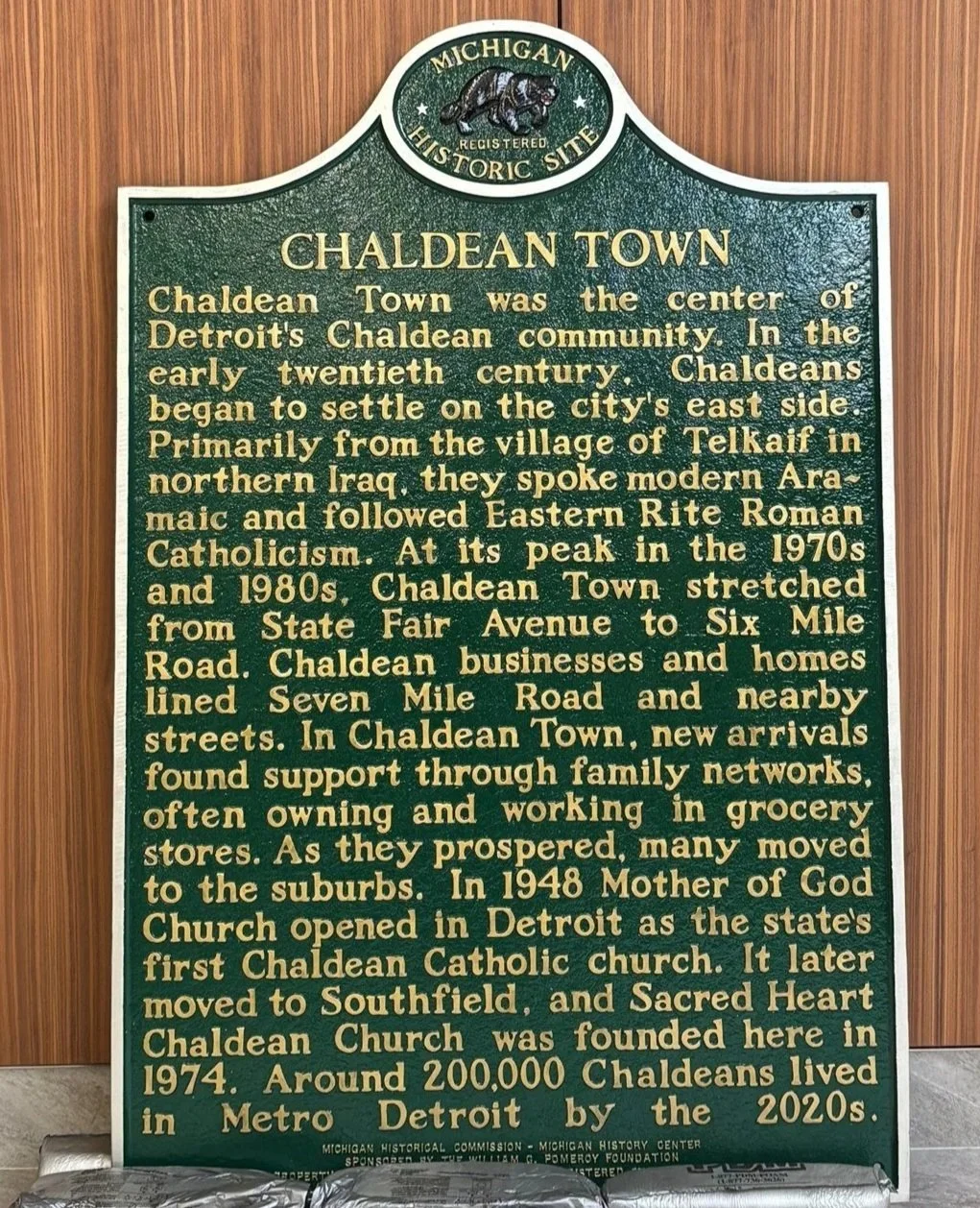
A new Michigan Historical Marker to be unveiled along Seven Mile Road will formally recognize the area as Chaldean Town, honoring the neighborhood that served as the cultural and economic heart of Detroit’s Chaldean community for much of the 20th century. Beginning in the early 1900s, Chaldean immigrants—primarily from the village of Telkaif in northern Iraq—settled on Detroit’s east side, drawn by opportunity and sustained by close family networks. They brought with them the Chaldean language, a form of modern Aramaic, and the traditions of the Eastern Rite Roman Catholic Church, laying the foundation for a tightly knit community that would shape the area for generations.
At its height in the 1970s and 1980s, Chaldean Town stretched from State Fair Avenue to Six Mile Road, with Seven Mile lined by Chaldean-owned businesses, homes, and churches. Grocery stores became an economic backbone, offering new arrivals both employment and a path to stability. Institutions such as Mother of God Church—opened in 1948 as Michigan’s first Chaldean Catholic church—and Sacred Heart Chaldean Church, founded in 1974, anchored community life. While many families later moved to the suburbs as they prospered, the legacy of Chaldean Town endures. The marker, sponsored by the William G. Pomeroy Foundation and to be installed by the Michigan History Center sometime in 2026, will stand as a permanent acknowledgment of the neighborhood’s role in Detroit history and of the nearly 200,000 Chaldeans who now call metro Detroit home. The marker is currently being stored at CCF West.