
Homily of His Beatitude Mar Polis III Nona
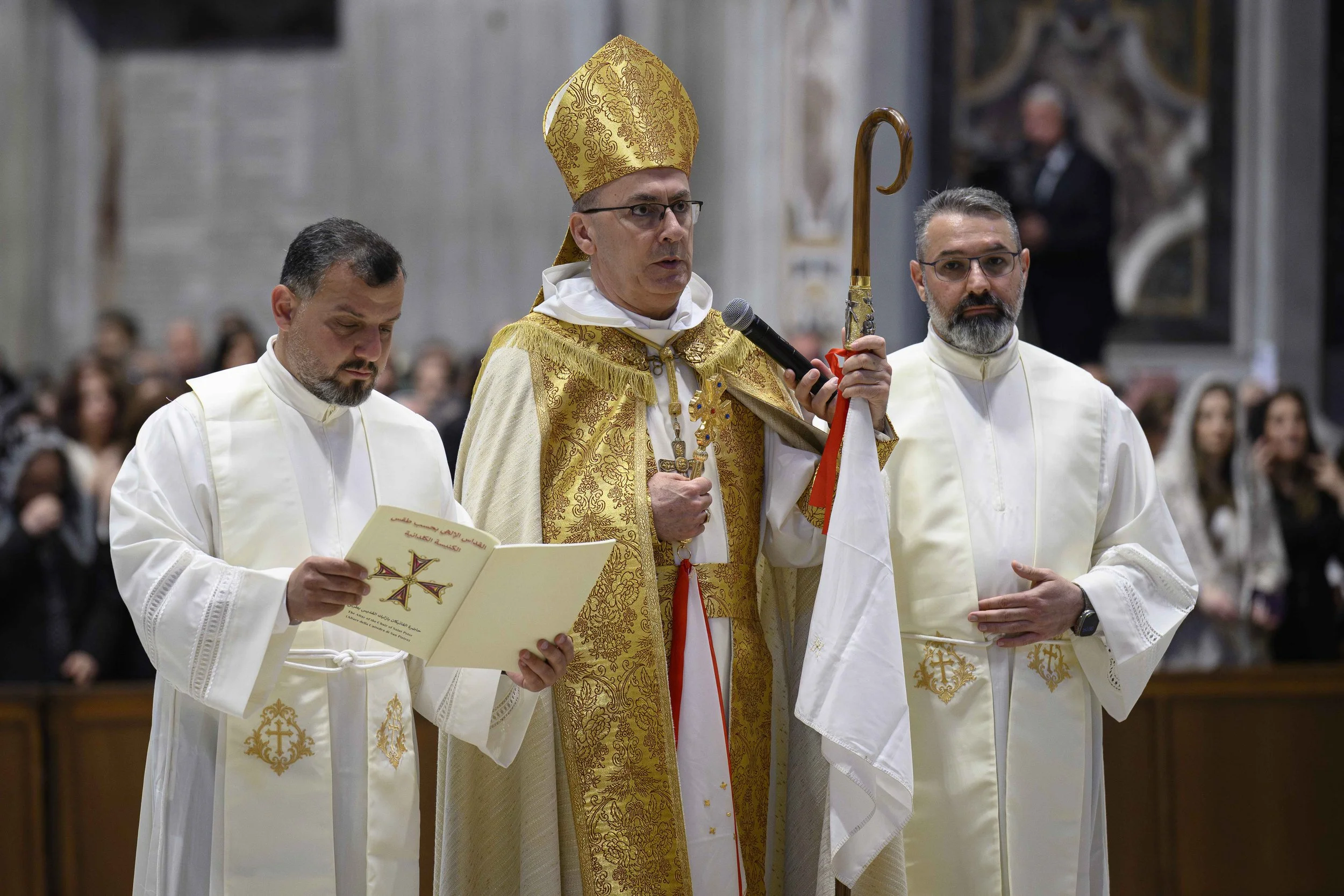
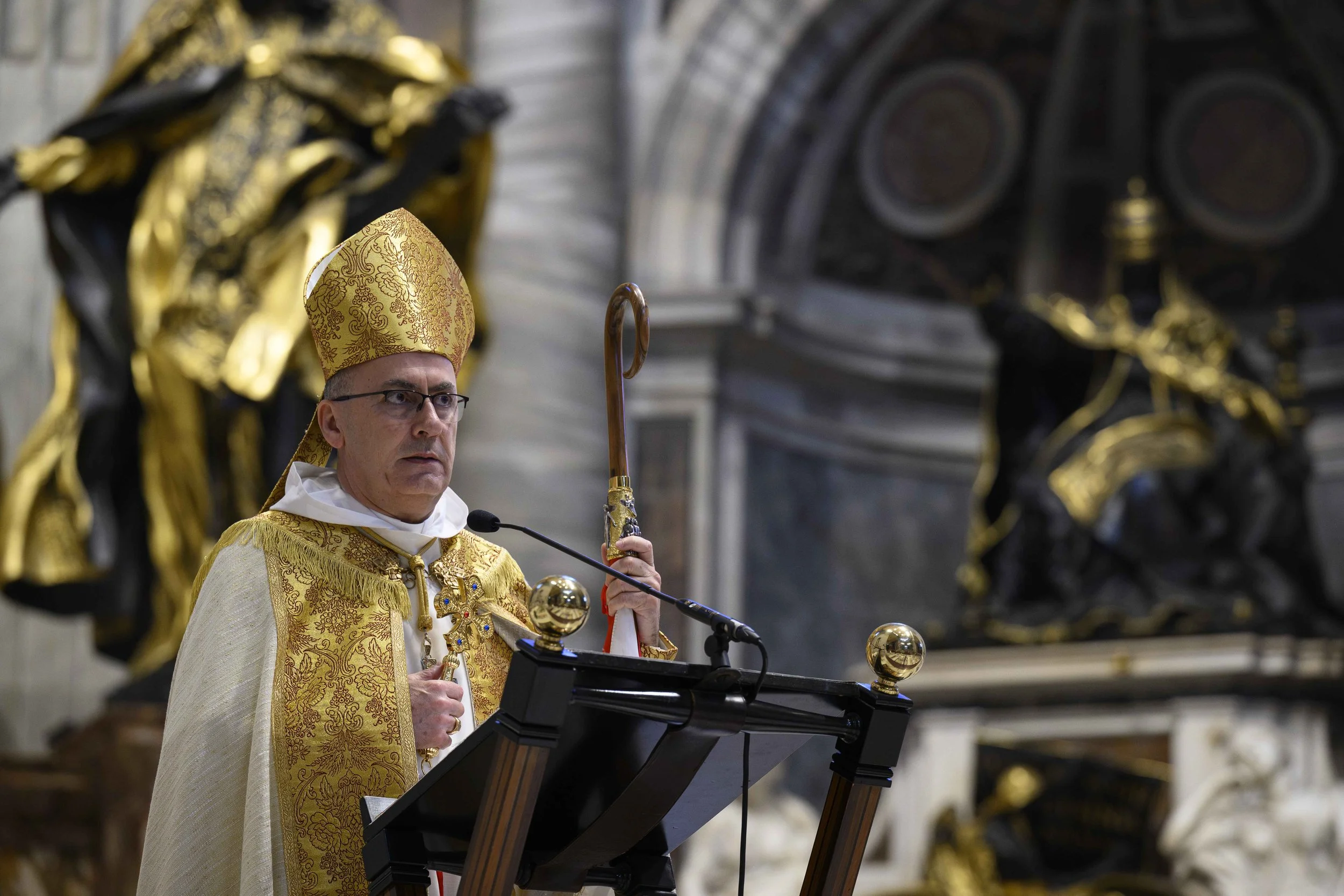
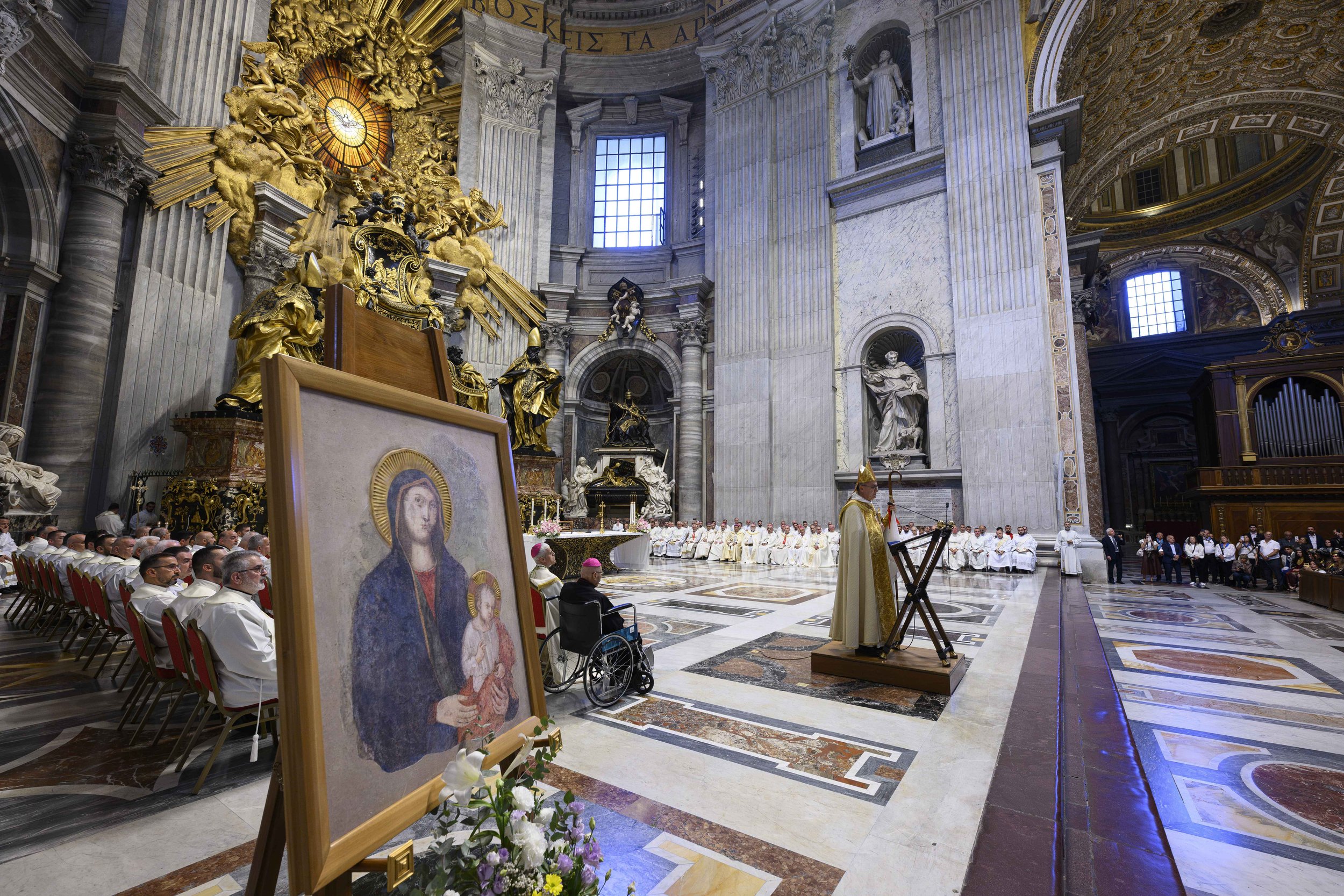
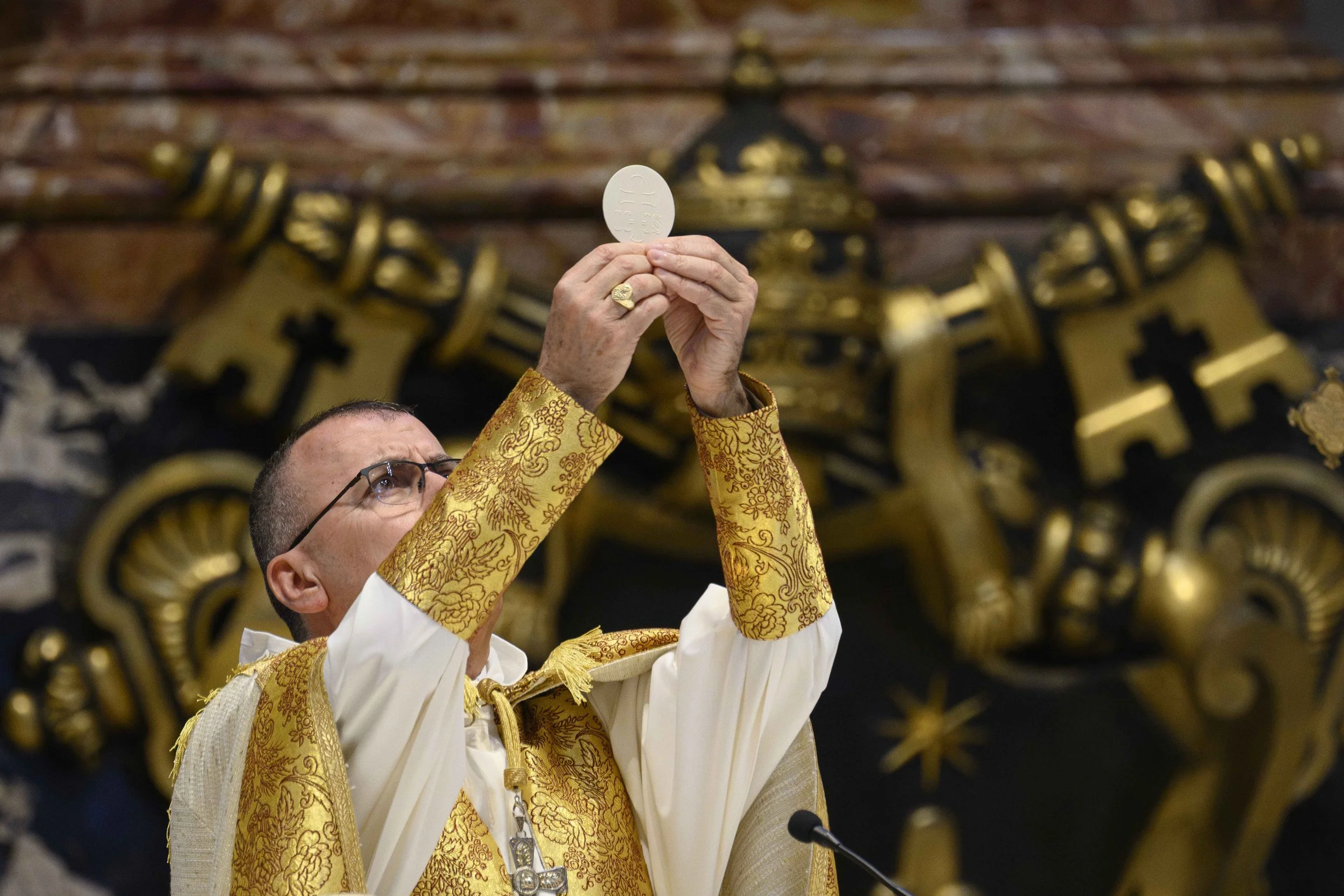
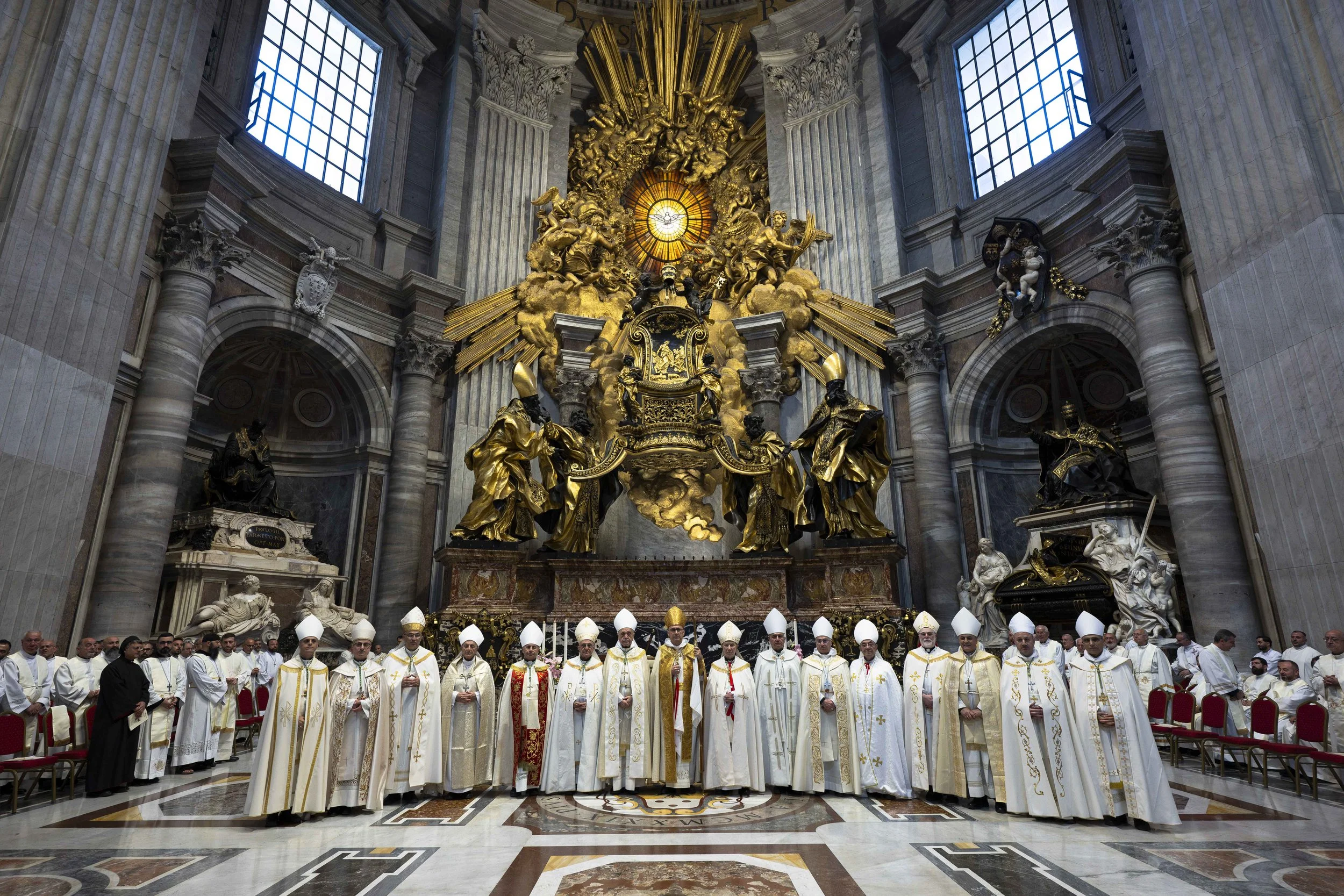
Catholicos-Patriarch of the Chaldean Catholic Church
St. Peter’s Basilica, Vatican City October 15, 2026
English Translation of the Spoken Chaldean Homily Translated and subtitled by Subdeacon Michael Antoon
In this holy Church, which houses the resting place of St. Peter the Apostle, the rock upon whom our Lord built His Church, we offer these Holy Mysteries in honor of the Holy Trinity: Father, Son, and Holy Spirit.
We offer these Holy Mysteries for our entire Chaldean Church throughout the world, especially for our fathers, the bishops of the Chaldean Church, those here with us and those unable to attend. For the priests of our Church, the deacons, monks, and nuns. For all the people of our Chaldean Church, wherever they may be in the world. And especially for all of you here with us.
Let us all pray together and offer these Holy Mysteries on the occasion of the communion we celebrated yesterday with His Holiness the Pope.
May the Lord protect and bless our Chaldean Church and all her children. May He always allow her to remain a Church that moves forward and looks ahead. And certainly, grounded in and building herself upon her long and great history her strong inherited tradition, and the faith of all her children, who, in many places and at many times, faced difficult circumstances, yet preserved and honored their faith.
Let us pray for this intention, and for all our departed, who have left us for the other life. May God have mercy on them, grant them rest, and remember them in His heavenly Kingdom. Let us pray and offer these Holy Mysteries for all the sick and needy, that God may grant them healing and health.
It is a great occasion for us to celebrate at the tomb of St. Peter, for, as I said, our Lord chose him to be the head of the disciples. It is an honor for all of us to celebrate, pray, and offer the Divine Sacrifice in our own language, in this Holy Church. Let us pray for these intentions, that God may hear our prayers and protect all our children.
[Speaking in Arabic] I will preach in our spoken Chaldean language. The Arabic translation will be published on the Patriarchate's website. I am going to speak in Chaldean. If anyone wants my homily in English, they can find it with Fr. David.
The first thing to say about the Church is that she cannot be known from the outside. She cannot be defined from the outside. Any definition of the Church as a body or an institution, or as an inherited cultural heritage, or as a group of people who believe they belong only to one nation, when we define the Church only in these ways, we are speaking about things on the outside of the Church.
The Church, by her very name, is not a gathering of people who called themselves together. Rather, she is a community, an assembly, formed through a divine calling. They are not merely people who agreed to gather and pray together. Rather, it is built upon the will of the One who called them. The Apostles did not gather together and establish the Church. Our Lord called them to become the Church. This is a great and important distinction. We do not make the Church; our Lord calls us to become the Church.
From this, communion is not a fruit of ecclesial life, nor something we ourselves produce; rather, it is a foundation. The very essence of the Church is communion. The Church is communion before she is an institution, a mystery before she becomes an order or a great organizational system, and a living body before she is a building of stone.
Communion, in its very essence, is a mystery that springs from the life of God Himself. It is given to humanity through grace and takes flesh in the Church. This communion takes flesh in the Church as the People of God, the Body of Christ, and the Temple of the Holy Spirit. Thus, every discussion of ecclesial communion remains incomplete if it does not begin with the Holy Trinity, pass through the mystery of the Incarnation, and find its realization in the liturgy and the mysteries of the Church.
In our Eastern tradition, the Church is not a gathering around the memory of Jesus. Rather, she is the place where her members share their entire lives with one another, in the life that proceeds from God, is given through the Son, and is sealed by the Holy Spirit. Ecclesial communion does not arise merely from people's need to gather together. Rather, its origin and source are divine.
The primary source of every authentic ecclesial communion is the communion of the Holy Trinity: Father, Son, and Holy Spirit. This means that the Church does not create communion; she receives it. She does not produce communion from herself, but receives it from the life of the Holy Trinity. And the Church does not establish unity; rather, unity exists in God Himself. There is no unity outside of God. Our task is to make real the unity that exists within the very being of God, between the Father, Son, and Holy Spirit.
Therefore, in our Eastern understanding of faith, communion is not merely closeness between different people, but participation in a life given from above, a life that makes the many one without abolishing their differences.
In our Eastern understanding, a question arises: How do we preserve communion in the Church? But this is not the right question. The more important question is not how we preserve communion, but how we allow the mystery of Christ to take flesh in our ecclesial relationships with one another. For when communion becomes merely a matter of administration, it is no longer the communion of Christ. The communion of Christ is when, every day and at every moment, in our relationships, we give flesh to the life of Christ in those moments of relationship.
Thus, in our Christian history and tradition, we understand the Church as the People of God, the Body of Christ, and the Temple of the Holy Spirit. These are not merely empty words; they are the foundation of all communion. For without communion with God, the Church becomes an institution. Without communion among the members of the Church, all talk about God becomes empty. And without sacramental communion with one another, the Church grows weak in her depths, and she no longer remains the Church in the true sense.
Therefore, the deepest crisis that can arise within the Church is not when there are differences in thought or opinions, but when sacramental awareness begins to weaken. The awareness that the mysteries of the Church are the foundation of our communion. Then we can no longer say of ourselves: “We are the Church.” When we lose the awareness that we all eat from one bread, that we are all sealed by one Spirit, and that we all return to one Lord, without this awareness, the Church becomes divided. Her foundations no longer remain firm, and she becomes merely a large and beautiful building.
In our profound faith, ecclesial communion does not mean simply living alongside one another outwardly, or laughing together. Rather, we carry one another in Christ. True communion means that another person's joy is something I experience myself. His wound is a wound that pains me. It pains my heart. And his fall becomes a call to me to pray for him, not to judge him or push him away.
A believer does not grow simply by knowing many things within the Church, but when he knows how to live with another brother, without opposing him or standing against him.
Throughout the history of our Chaldean Church, our believers and our forefathers carried the Gospel through profound theological reflection rooted in faith, and through Taksa (Liturgy), with its greatness and antiquity, and through a profound and rich spirituality. This means that, for us, communion cannot remain something apart from our Taksa and the spirituality of our Taksa.
For our Taksa is the place where the Church learns how to live as the Church. Through Taksa, the believer does not stand before God as an individual with no connection to others. Rather, he stands before God as a member of one community, the entire community, called to think, to give thanks, and to offer praise. Thus, within Taksa, each member learns that his voice finds its fullness only together with the voices of others. His prayer becomes part of the prayer of the one Body.
And all his work, all his life, and his drawing near to the altar becomes a drawing near with others. That is why, when we pray, we all chant the Onyatha (hymns) together.
Every new embodiment of ecclesial communion cannot remain merely emotional slogans, but must be a genuine return to living our Taksa, as an awareness of unity, as a formation in unity, and as a journey together toward God.
Therefore, dear brothers and sisters, our Chaldean Church, through her history, her heritage, and her Taksa, through her wounds and her hope, is called today to bear witness from the surface to the depths, that communion does not mean merely being together, but walking together and remaining one in Christ. For we walk as one with Christ.
No one should lose their dignity. No one should be pushed away because of their sins. For Christ forgives. Christ is forgiving.
Let us then implore: Not a communion of hostility, nor a communion of mere pleasantries, but a communion that is crucified and risen. A communion born from the altar, purified through repentance, and fed and nourished by the Holy Eucharist. A communion made visible in hearts that know how to forgive, how to bear one another, how to be patient, and how to walk with one another.
Then we will not merely speak about communion, but we will live communion with one another. Amen.