
I See You Resist Your Tears
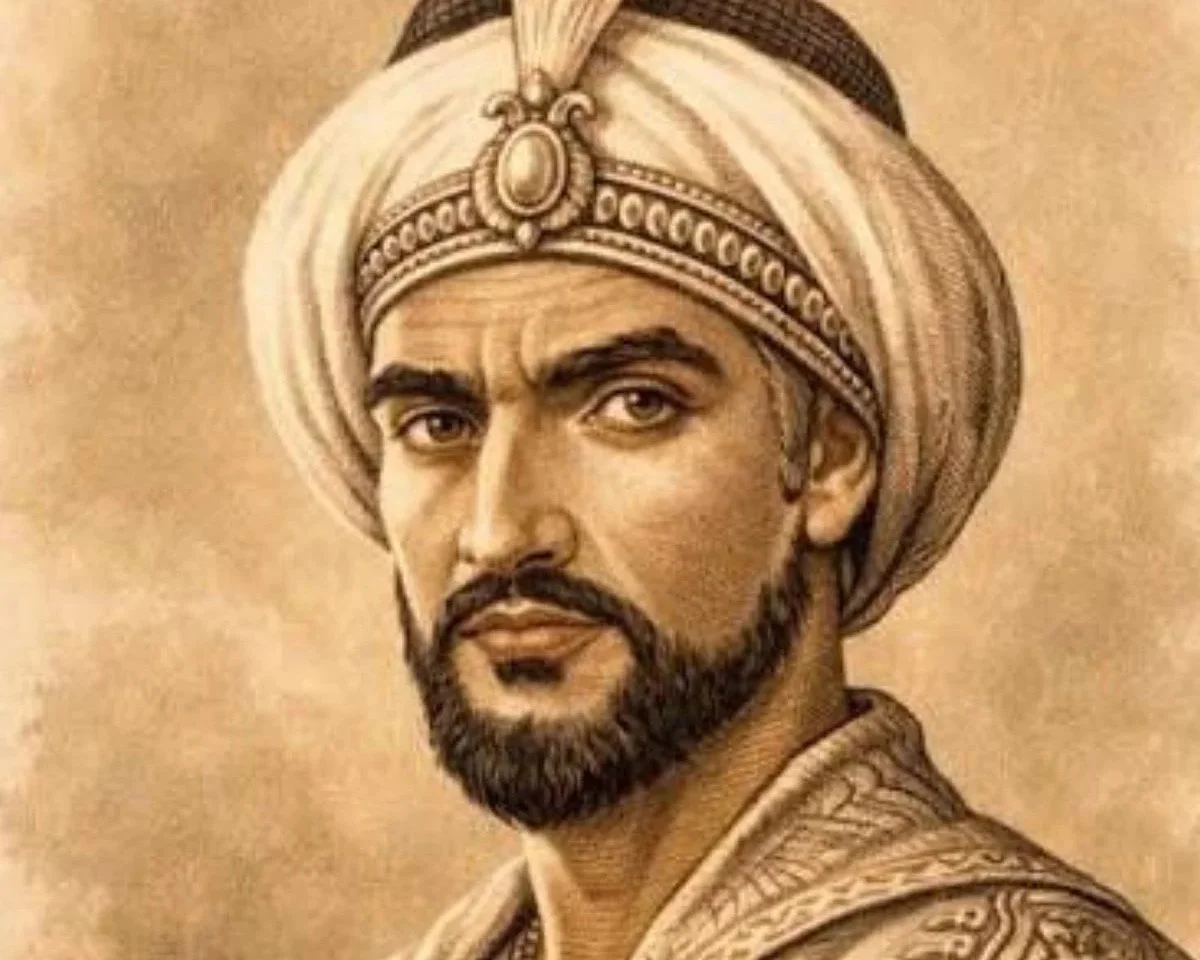
Abu Firas al-Hamdani: The poet-knight of love and honor
The poem “Arāka ‘Asiyya al-Dam’” ( ), often translated as “I See You, Yet You Resist Your Tears,” is one of the most celebrated works of the Abbasid-era poet-knight Abu Firas al-Hamdani. Written in the tradition of classical Arabic poetry, it begins with the restraint of a proud lover, moves through longing and reproach, and ultimately unfolds into a powerful declaration of courage, honor, generosity, and pride. Much of the poem’s force comes from the contrast between the poet’s private suffering in love and his fearlessness on the battlefield.
The following is an English literary translation that seeks to preserve the meaning, imagery, and spirit of the original while remaining readable in modern English. Since classical Arabic poetry relies heavily on rhyme, meter, and layered meanings, some expressions are rendered for their poetic sense rather than translated word for word. The language is more fluid and elevated, with occasional rhyme rather than forcing every line into a strict rhyming pattern.
Abu Firas al-Hamdani’s poetry captures the defining duality of his personality: the tenderness of a lover and the defiance of a warrior.
I See You Resist Your Tears
By Abu Firas al-Hamdani (932–968 CE)
I. Love, Longing, and Pride
I see you resist your tears; your nature is to endure.
Has love no law to bind you, no command you must obey?
Indeed, I yearn, and deep within me burns a flame;
Yet men like me do not reveal the secrets of their pain.
When night descends and overwhelms me with desire,
My tears betray the pride that would conceal their fire.
The blaze within my ribs could set the darkness bright,
As longing fans its embers through the silence of the night.
You comfort me with promises of union yet to be,
But death stands between us, and no reprieve has granted me.
You guarded once the bond that held our hearts as one;
Then let it fray and perish, until its strength was gone.
Your betrayal bears its burden, though excuses may be found;
Even blame grows softer when love still lingers underground.
Our days are pages written, line by measured line,
By a hand that shapes our fortunes, though the end remains divine.
I would surrender my soul for the beauty passing by;
Her loveliness may be my fault, yet her charms absolve me, I reply.
She listens to the whispers of those who speak against my name,
But I turn a deafened ear to every slander and its claim.
I left my family and kin, though they were gathered all around;
For without you, home is barren, and belonging cannot be found.
For love of you, I stood against my own bloodline;
Yet without your love, their world and mine would scarcely intertwine.
Whether all the slanderers proclaim is true or false,
Faith may yet undo the work of doubt and its assaults.
I kept my troth, though faithfulness may bring disgrace,
To one whose heart betrays me and whose vows leave not a trace.
I bear myself with dignity, yet youth can stir her heart;
At times she leaps and plays, like a young colt set apart.
She asks me, “Who are you?” though well she knows my name.
Can one so deeply wounded be a stranger to his flame?
I answered as if her own desire had led me to reply:
“Your slain one not any.” She asked, “Which one? They were so many!”
“Had you wished,” I said, “you would not have caused me such despair,
Nor asked who stands before you when you know me standing there.”
“Since we parted,” she declared, “your worth has ebbed away.”
“God forbid!” I answered. “It is you who have diminished me, not fate’s decree today.”
Were it not for you, grief would find no passage to my heart;
Yet love has built a bridge through which its ruin can depart.
Between jest and earnest, the soul approaches death;
When separation strikes, estrangement steals the breath.
I learned that no lover who followed me could stand as proud,
And that my hands were emptied of the treasures once endowed.
I turned my fortunes every way but found no place of rest;
When separation dulled my memory, estrangement pierced my breast.
At last, I bowed to time’s decree and yielded to her will;
The fault was hers, yet I would spare her punishment still.
As though I called a gazelle, not some young fawn nearby,
Thirsting, trembling, terror-stricken beneath an anxious sky.
At times she flees, then turns to look once more,
As if her distant fawn were calling from the valley floor.
Do not disown me, cousin, though you turn away;
The Bedouin and the wilderness know the man you now betray.
Do not disown me; I shall never disown you when others fall,
When feet lose their footing and fortune abandons all.
II. The Warrior and the Battlefield
I lead the charge of every battle-host,
A seasoned company that never yields its ground or boasts.
I plunge into the places where the bravest hesitate,
Where those who dare to enter must confront their destined fate.
I thirst until the swords are drenched and spears run red;
I hunger until the wolf and vulture feast on the dead.
I never raid a sleeping camp beneath the veil of night,
Nor strike an army unprepared before it knows the fight.
How many a fortress, confident behind its walls,
Have I approached at daybreak, bringing death to those within its halls!
How many tribes have fled before my onset and my might,
Until I conquered them and scattered them in flight.
Only to find myself defeated by a veil, a glance,
By eyes whose hidden beauty held me captive in a trance.
How many a woman, trailing robes, approached my side,
Whom neither harshness nor severity could frighten or divide.
I gave her all the spoils my army had secured,
Then left without lifting the veil that modestly obscured.
The face whose beauty might have claimed a victor’s gaze;
My honor was the treasure that endured beyond the days.
Silks and riches cannot make my spirit swell with pride,
Nor can the rags of poverty make generosity subside.
What worth is wealth, however vast its glittering store,
If I cannot defend my honor? Then wealth is worth no more.
I fell into captivity, yet my companions were no cowards in the fray;
My horse was no untrained colt, nor was its rider green that day.
But when a man’s appointed hour is written in his fate,
No land can shelter him, nor can the sea make death abate.
My comrades cried, “Escape! Or death will claim you here!”
I answered, “Both are bitter; neither offers cheer.
Yet I shall choose the road that leaves my honor whole;
Of two hard destinies, captivity may spare my soul.”
“You traded safety for your doom,” they said. I made reply:
“By God, I have not lost the things that make a man stand high.”
Can death be held at bay, even for an hour,
When suffering and captivity cannot withstand its power?
Death is inevitable; choose, then, the end that earns renown.
A man does not truly perish while his name lives on.
There is no honor in escaping death through shame,
As “Amro” once escaped it, leaving dishonor on his name.
They boast that they spared my garments, letting me retain my clothes;
Yet I wear the blood that stains the blood of those I chose.
To face in battle, sword to sword, beneath the open sky;
Their crimson marks bear witness to the blows by which they died.
A sword-hilt remains, though its blade was broken there;
And shattered spear-shafts testify to the blows I dared to bear.
III. Honor, Reputation, and Immortality
My people will remember me when hardship tests their might;
As the moon is missing when darkness swallows up the night.
If I survive, my thrusts shall speak again,
Through swords and spears and tawny steeds that thunder over the plain.
And if I die, then every mortal must depart;
No length of day can spare the end that waits for every heart.
Had others done the deeds that I have done, they might have rested, satisfied;
But gold would lose its value if base metal stood beside.
We are a people who accept no halfway place:
The highest summit in the world, or earth’s unmarked embrace.
For greatness, we consider our own lives a modest price;
Who seeks a bride of beauty must pay the wedding price.
We are the noblest among the nobles, the highest of the high,
And in proclaiming this, we speak no boast, but what we know:
Our deeds have given honor to the name we proudly show.
The most generous who walk beneath the wide and watchful sky.