
Remembering Khariya
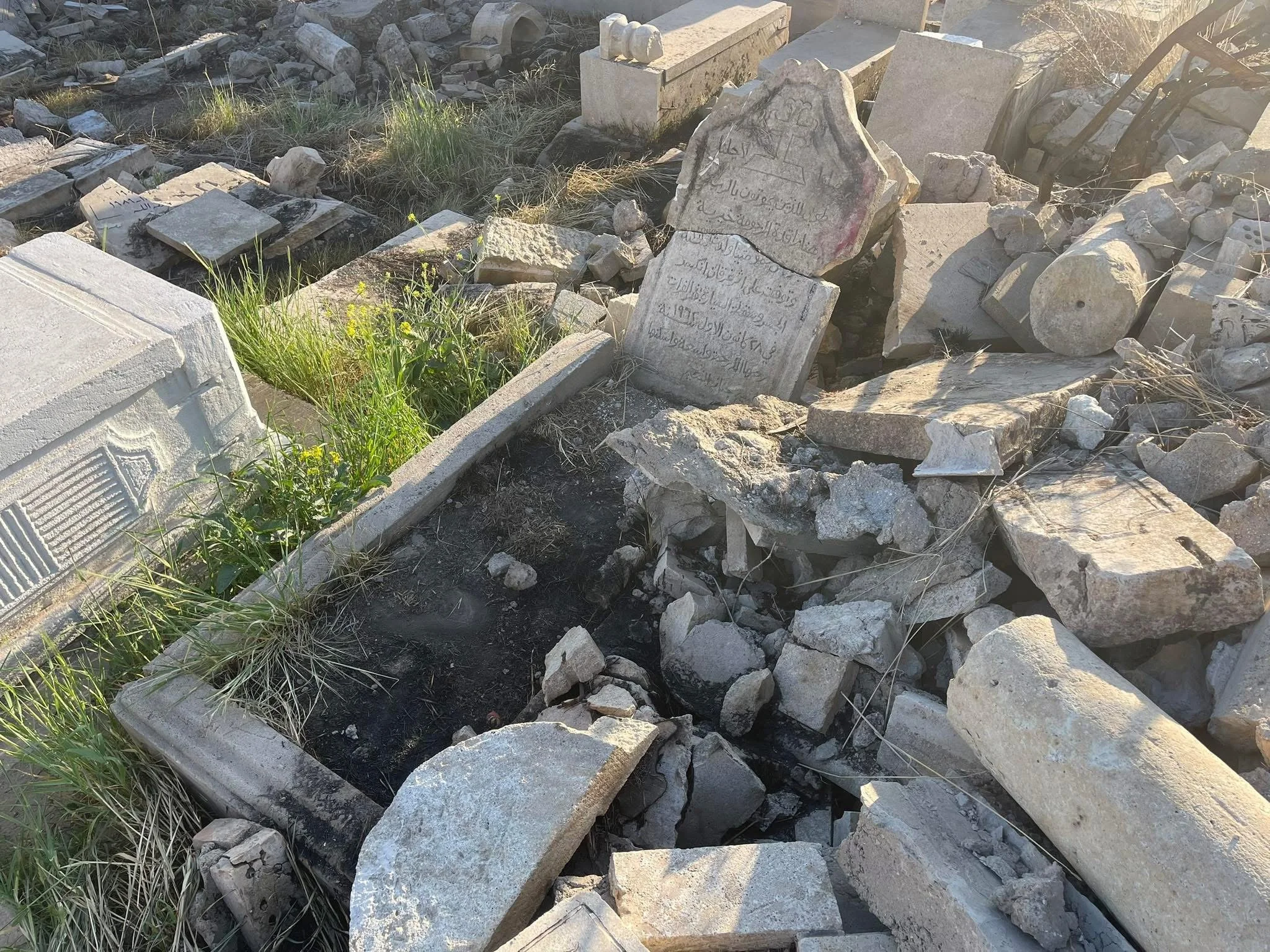
Gravestone of Khariya Matti
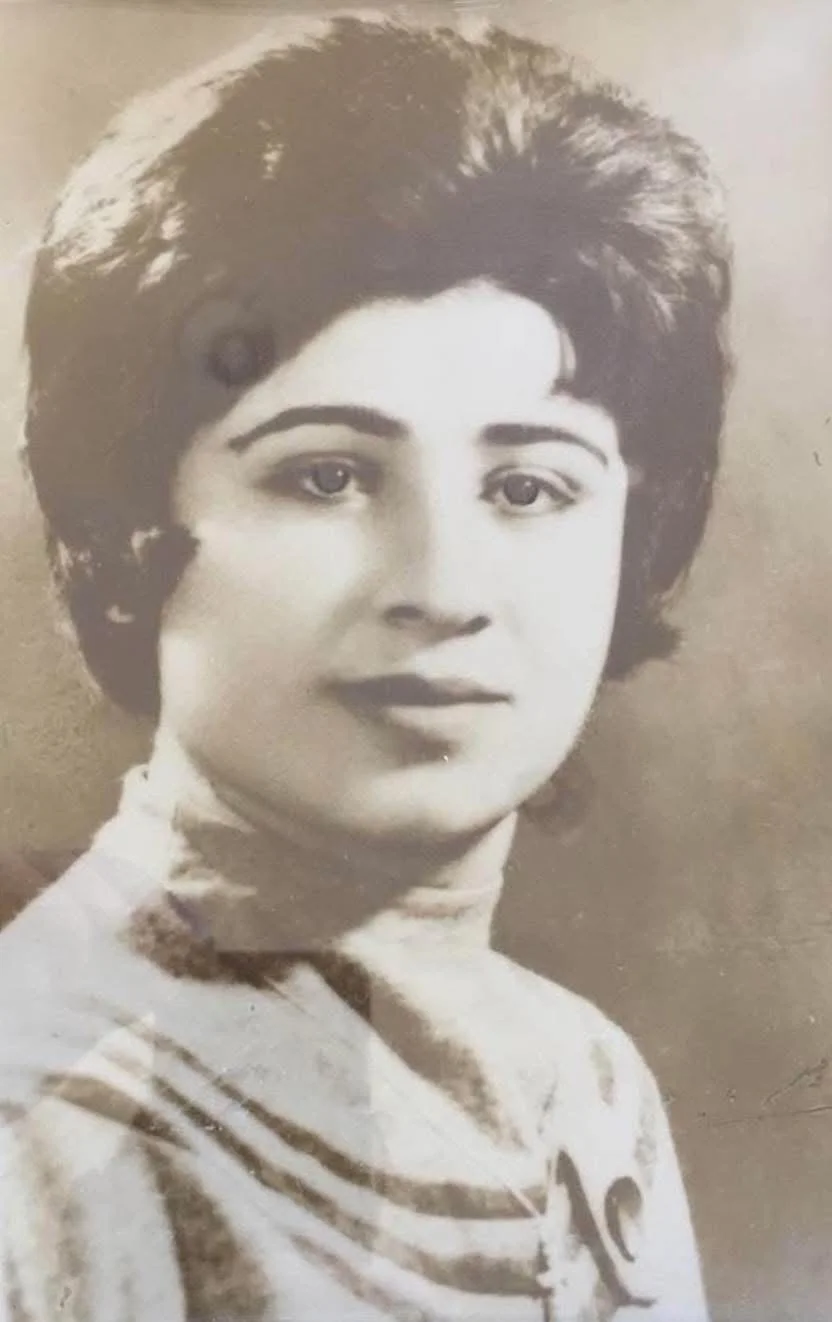
Khariya Matti
The tragic tale of Telkeppe’s first teacher
BY CRYSTAL KASSAB, Ed.D.
Though it happened decades ago, the tragedy that once made headlines across Iraq still lingers in memory.
Khariya Gergis Mattia was intelligent and beautiful. Though she had many suitors, she never married. Around 1960, while she was in her early twenties, she moved to Baghdad to study education. After completing her studies, she was assigned to teach in Shatra, then a rural area near Nasiriyah that lacked teachers. Under national policy, she would be eligible to transfer after three years. The nuns of Telkeppe hoped she would return to teach there, as did her family.
It was what she wanted, too. But she never made it back alive.
In December 1962, Khariya took a couple of days off from teaching in southern Iraq to travel more than three hours to Baghdad. Her sister Evelyn had just given birth. Their oldest sister, Gorgiya, lived there with her family, and their younger brother, Samir, had recently moved for work. Their mother, Khokhi, had come from Telkeppe in northern Iraq to Baghdad to welcome the new baby and visit her children.
“I am going to pick up my paycheck,” Khariya said. “And when I come back, we will all return to Telkeppe together for Christmas.” They said they would wait for her.
When Khariya arrived back in Shatra to pick up her paycheck, she saw her friend, a principal at a girls’ school, who invited her on a school field trip. Khariya hesitated. She needed to pack and return to Baghdad. But the principal and a few teachers she knew convinced her to go, and since she had the day off, she joined them.
There were nearly 40 females on the bus to visit a farm, most of them young girls.
The bus reached an old wooden bridge that was under construction. Passengers were supposed to get off and use the pedestrian walkway. Security was nowhere to be found. They waited. And waited.
Finally, the principal told the bus driver to just go; she would take responsibility.
“No, we cannot do this,” the bus driver responded. The principal, a daughter of a local sheikh, insisted it was too cold for the girls to walk. The driver eventually gave in.
As the bus driver accelerated over the bridge, a security guard appeared, blowing his whistle and signaling for the bus to stop. The driver slammed on his brakes. The force caused the bridge to collapse, plunging the bus and its passengers into the water below. Chaos followed.
One teacher urged Khariya to try swimming, offering to help her. But Khariya would not budge. She did not know how to swim and, according to that teacher, feared that if she jumped, her body might never be recovered for her family to bury. The 24-year-old froze in terror.
The bus driver saved a few girls, but there were more dead than survivors. The fatal disaster dominated newspapers across Iraq. Although there was an investigation, it is believed no charges were filed against the bus driver or the principal, both of whom survived.
When rescuers recovered Khariya’s body, she was positioned upright, just as she had been seated when the bus fell. Her mandatory abaya (long veil) remained intact, and a cross hung around her neck.
No one in the town claimed her body, so the authorities contacted her landlord. Khariya had rented a nearby room from a Chaldean family originally from Tesqopa, near Telkeppe. They did not know the Mattia family, so they went through her belongings for clues. They found letters she had exchanged with her uncle Karim, so authorities went to his address in Baghdad.
Government officials from the educational sector placed Khariya in a casket and put it atop a taxi for the drive to Baghdad. They arrived at that address around 6 AM and parked at the end of the street. It was her sister Gorgiya’s home. Uncle Karim, close in age to the siblings, was renting a room there.
Gorgiya was initially fearful of the officials; she thought they wanted to question him for political or military reasons. “What do you want from my uncle?” she asked.
Only then did they realize she was Khariya’s sister. They told her to walk away so they could speak to him alone. Karim changed out of his pajamas and walked out.
“Who is Khariya Mattia to you?” they asked him. “That is my niece,” he replied.
They broke the devastating news.
Gorgiya, unknowing of the situation, saw him crying and thought they were going to take him in for questioning. Then he told her. She began screaming. Their mother Khokhi, who was staying at the house during her trip, came out to see what the commotion was about. Gorgiya told her mother that Khariya had drowned in a bridge accident.
According to one account, after the initial shock, Khokhi climbed onto the taxi and opened the casket to see her daughter with her own eyes. She then threw herself on the ground, sobbing in disbelief.
The family’s plan to return to Telkeppe for a Christmas celebration turned into a funeral instead.
Khokhi sent a telegram to her husband Gerjis in Telkeppe. The postal carrier, nervous and unwilling to read it to him, told him to ask a neighbor to decipher it.
“Get the house ready,” it read. “We’ll arrive back at 7 AM and be home by 9 AM. Khariya died.”
Khalida Kalasho, Khariya’s youngest sister, was about 9 years old. She recalls coming home from school with her brothers, Amir and Nabeel, to find many of the village women at the house and her father in tears. He hugged her and told her Khariya had died.
The family wept in shock. Neighbors stayed through the night, wailing alongside them.
By morning, all of Telkeppe gathered at the village entrance to welcome their beloved Khariya and the rest of the Mattia family back in. The funeral procession had begun, with an open casket, a Mass at Sacred Heart, and an afternoon burial in the cemetery near it.
The tragedy was even more haunting because Khariya had escaped death once before. During the Great Flood of 1949, which swept through a girls’ school and killed more than 40 children, Khariya had stayed home to help her mother make takratha, traditional meat pies. Her younger sister Evelyn had been sent to school and cried as she walked. A neighbor, an older girl, asked why she was upset. Evelyn said she wanted to stay home and help cook. The neighbor told her to remain with her and play all day.
The flood came. The girls at school perished. Khariya and Evelyn were spared.
But fate returned years later.
Khariya’s dreadful drowning was not the only tragedy; Khokhi’s struggle with the loss of her daughter was also heartbreaking. She went daily to the cemetery, crying uncontrollably, until a passerby had to pull her up and walk her home. Neighbors suggested the family move to Baghdad to change their environment, especially since they already had children and grandchildren there.
After 7 months, the Mattias relocated. Still, Khokhi’s sorrow consumed her. She even visited random cemeteries to release her grief. She wore black for about 15 years, stopping only around 1978 when she immigrated to America. Even then, she chose dark brown and gray. She remained, in many ways, inconsolable.
In 1980, Khokhi died of a heart attack. Or maybe a broken heart. She was only 63.
Khariya had become the family’s breadwinner, sending money home and promising to help her brother Samir marry. She bought clothes and jewelry for her youngest sister, Khalida, and spoiled her siblings with generosity and love. She was not concerned about suitors; she believed there would always be time for marriage. First, she wanted an education. She wanted to teach. She wanted to support her family. She wanted a life on her own terms.
The Mattias have never forgotten Khariya; her memory shapes a deep capacity for love and service to others that they have passed down to their children and grandchildren.
Tragedy may have rewritten the script of their lives, but they believe God is still the author, turning this broken chapter into a story of profound faith and remembrance, with Heaven as the final destination.
In Loving Memory
Khariya Gergis Mattia
1938-1962