
What’s Cooking in Nana’s Kitchen?
By Sarah Kittle
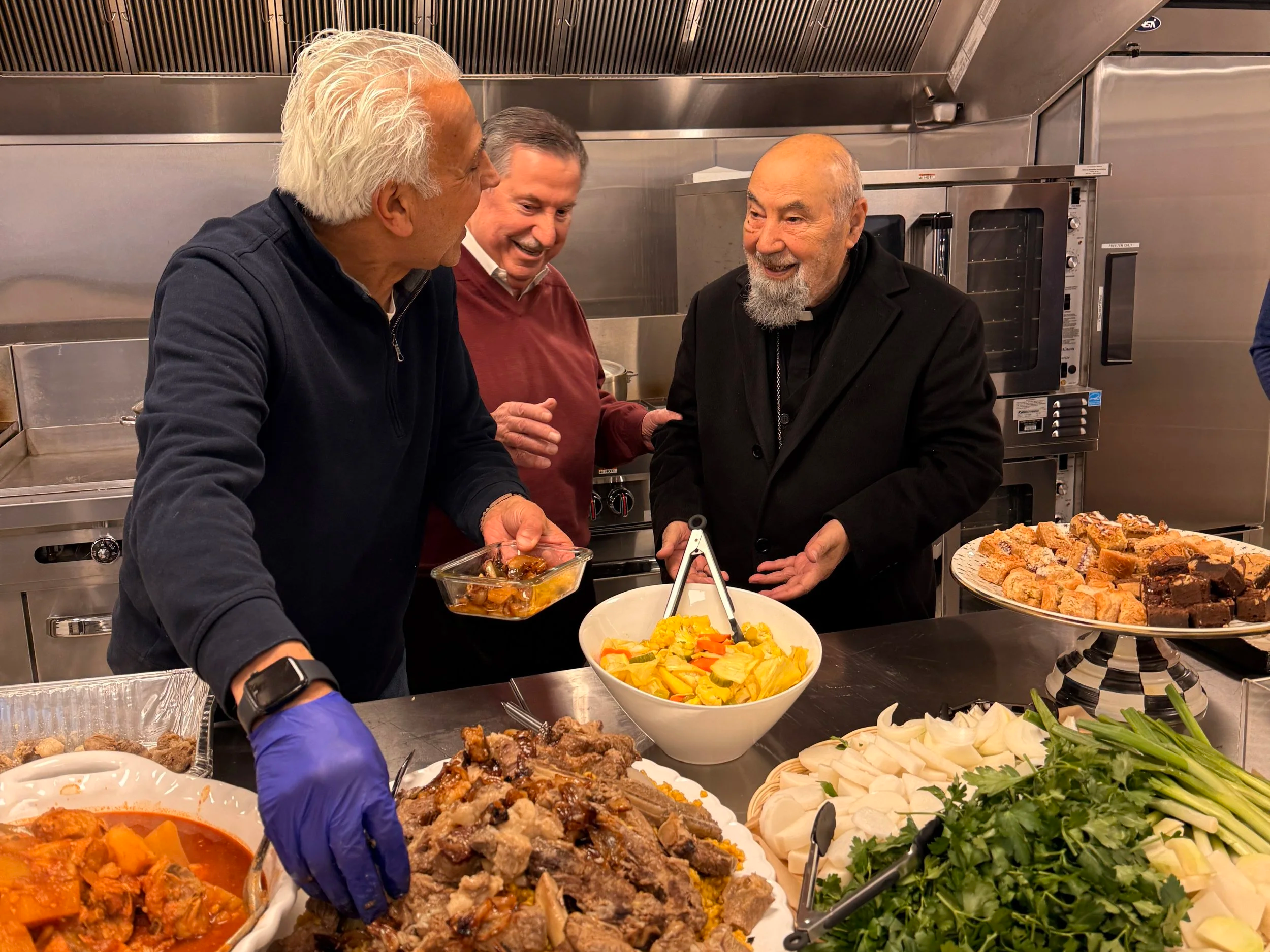
For the second time in Chaldean Community Foundation West Bloomfield’s relatively short history, a group of (mostly) men met in Nana Bernadette Sarafa’s Kitchen to cook up some Chaldean cuisine. On the menu for this cold February day in Michigan? Paqota (also spelled pakutta, pukota, or pikota), a traditional Chaldean dish of turmeric barley with beef.
This hearty dish is fitting for the current weather—it’s like a warm hug from Nana.
Long before you could buy bone broth at the grocery store, Iraqis were boiling bones for a rich, savory base to their soups and stews. Bones are essential in dishes like hareesa and are used to enhance the flavoring of favorites like dolma.
In paqota, boiling bones with barley infuses the grain with deep, umami flavors, resulting in a creamy dish reminiscent of risotto. Barley, cultivated thousands of years ago in the Fertile Crescent, has been a kitchen staple across regions from Greece and Rome to Egypt, Scandinavia, and China. In ancient Mesopotamia, it even served as currency.
Recipes for paqota vary, but the version that brought these men together for lunch came from Jacob Bacall. This particular gathering marked the inaugural event of a new CCF West program series, The Village Table, which brings community members together for food and fellowship in West Bloomfield.
According to Sharkey Haddad, Special Projects Manager with the Chaldean American Chamber of Commerce and one of the driving forces behind the program, the initiative was created to bring seasoned leaders within the Chaldean community together for socialization and meaningful conversation over a delicious Chaldean meal prepared by members of the community at the new demonstration kitchen at CCF West. The program is specifically geared toward elders and retirees—individuals who may have the time and desire for connection but lack accessible venues for regular social gatherings.
Elders hold a unique and irreplaceable place in any community. They are living repositories of history, tradition, and cultural knowledge, carrying the stories, values, and lessons of generations past. Their experiences help younger members understand where they come from, why certain customs matter, and how the community has weathered challenges over time. Honoring and engaging with elders ensures that the collective memory of a community is preserved and shared in meaningful ways.
One of the simplest yet most powerful ways to support elders is through gatherings centered on food and fellowship. Sharing a meal creates a natural setting for conversation, storytelling, and connection. Whether recounting family histories, explaining traditional recipes, or reflecting on past milestones, these moments foster bonds. They also provide elders with a sense of purpose and belonging, reinforcing that their contributions remain vital to the life of the community.
Beyond the social aspect, these gatherings play a critical role in sustaining cultural identity. When elders come together, they pass on not just stories but also traditions, songs, rituals, and values that might otherwise fade. Young people who witness and participate in these interactions gain a living link to their heritage, grounding them in a sense of identity and continuity. In this way, food and fellowship become more than nourishment—they become a bridge connecting past, present, and future, ensuring the legacy of the community endures.
For more information on CCF West programming, visit chaldeanfoundation.org or call Farah Shammami at 248.851.1200.