
Advancing Dialogue
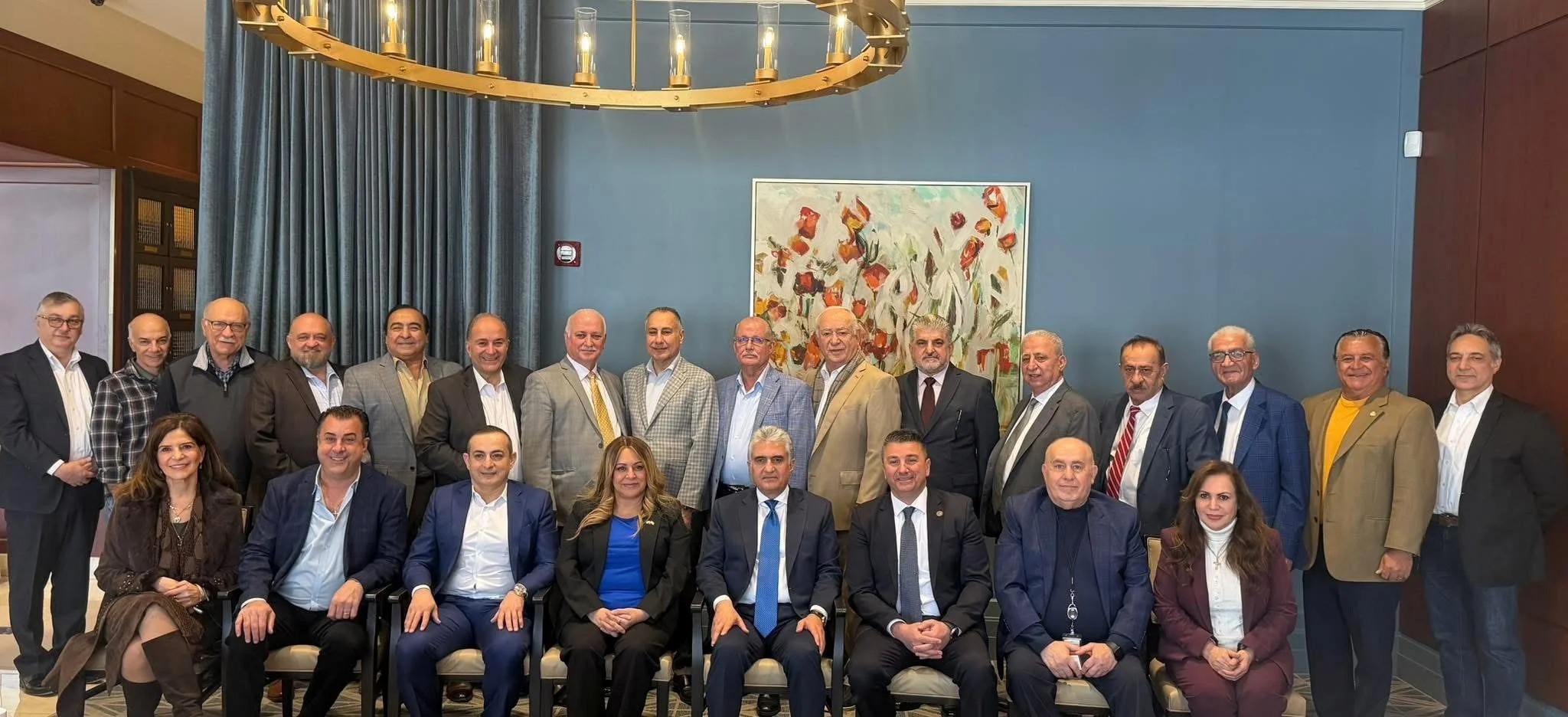
Minister Ahmed with Chaldean community leaders at Shenandoah Country Club.
Chaldean Community hosts KRG interior minister
By Adhid Miri, PhD
Over the past 20 years, the Chaldean American Chamber of Commerce and the Chaldean Community Foundation, along with other community organizations, have built an outstanding reputation anchored in capability, credibility, and consistency.
That strong and reliable reputation has made Chaldean organizations in Michigan and across the United States effective influencers — and a first stop for visiting politicians, officials and delegations from Iraq and beyond.
On Feb. 14, 2026, an official delegation from the Kurdistan Regional Government (KRG) visited Michigan and the Chaldean Community Foundation. The delegation was led by Interior Minister Rebar Ahmed and included Treefa Aziz, the KRG representative in Washington, D.C.; Desko Shirwani of the KRG office in Washington; and Saad S. Salim, head of relations and protocol for the Ministry of Interior.
The group was warmly welcomed by Martin Manna, president of both the Chaldean Community Foundation and the Chaldean American Chamber of Commerce, along with representatives of the Chaldean and Assyrian communities.
During the visit, Minister Ahmed highlighted KRG policies aimed at encouraging investment and attracting U.S. private-sector companies to opportunities in the Kurdistan region. He also addressed ongoing financial and salary disputes with Iraq’s central government in Baghdad.
Manna, in turn, pointed to persistent challenges affecting both sides, including a lack of progress on key issues in recent years. He emphasized the region’s historic coexistence among ethnic and religious groups — particularly Christians — and the Kurdistan government’s commitment to protecting their rights as outlined in the Iraqi Constitution.
He also raised several concerns affecting Chaldean, Assyrian and Syriac communities in Iraq and the KRG region, including high unemployment in Christian towns and villages, the need to implement Article 125 of the Iraqi Constitution, and the creation of an administrative region in the Nineveh Plain.
Article 125 guarantees the administrative, political, cultural and educational rights of various nationalities, including Turkmen, Chaldeans and Assyrians, and serves as a constitutional foundation for minority protections.
In a follow-up letter, Manna reiterated these concerns, writing: “The Kurdistan Region has long sought to distinguish itself as a model of coexistence and minority protection in the Middle East. That reputation is an asset of immense diplomatic and strategic value. However, reputation must be reinforced by consistent policy and equitable administration. Where there is a divergence between principle and implementation, corrective measures are not a concession; they are an affirmation of leadership.”
He outlined several key issues, including:
• Ongoing administrative and property-related obstacles affecting Christian villages and institutions
• Uneven enforcement of legal protections related to land ownership and local governance
• Structural limitations on political representation and community self-administration
• Policies that risk weakening the demographic and cultural sustainability of historic Christian communities
Among the proposed steps forward:
• Establishing a transparent review mechanism for land and property disputes
• Ensuring equal administrative treatment in local governance and security matters, including full implementation of Article 125
• Strengthening protections for demographic balance in historically Christian areas
• Creating a formal, institutionalized channel of dialogue between the Ministry of Interior and recognized representatives of the Chaldean-Syriac-Assyrian community
“These steps would send a clear message to our people and to the international community that the Kurdistan Regional Government remains firmly committed to justice, equality and the preservation of its diverse social fabric,” Manna wrote. “Our intent is not confrontation — it is partnership grounded in mutual respect.”
The visit concluded with a dinner and roundtable discussion at Shenandoah Country Club, where business leaders and community members engaged with the delegation. Conversations focused on developments in the Kurdistan Region and the Nineveh Plain, as well as opportunities to build trust, strengthen collaboration and leverage the Chaldean community’s influence in the United States.
The visit offered a meaningful opportunity for dialogue, mutual understanding, and renewed partnership. Delegates expressed admiration for the accomplishments, organization and dedication of the Chaldean Community Foundation and voiced interest in strengthening ties with the Chaldean-American community.
The takeaway: It was an honor to host Minister Ahmed and his delegation. There is optimism that shared goals, if matched by action, can lead to meaningful progress. With continued collaboration, there is confidence that positive outcomes will emerge from this engagement.