Chaldeans’ 5,000 Year Journey
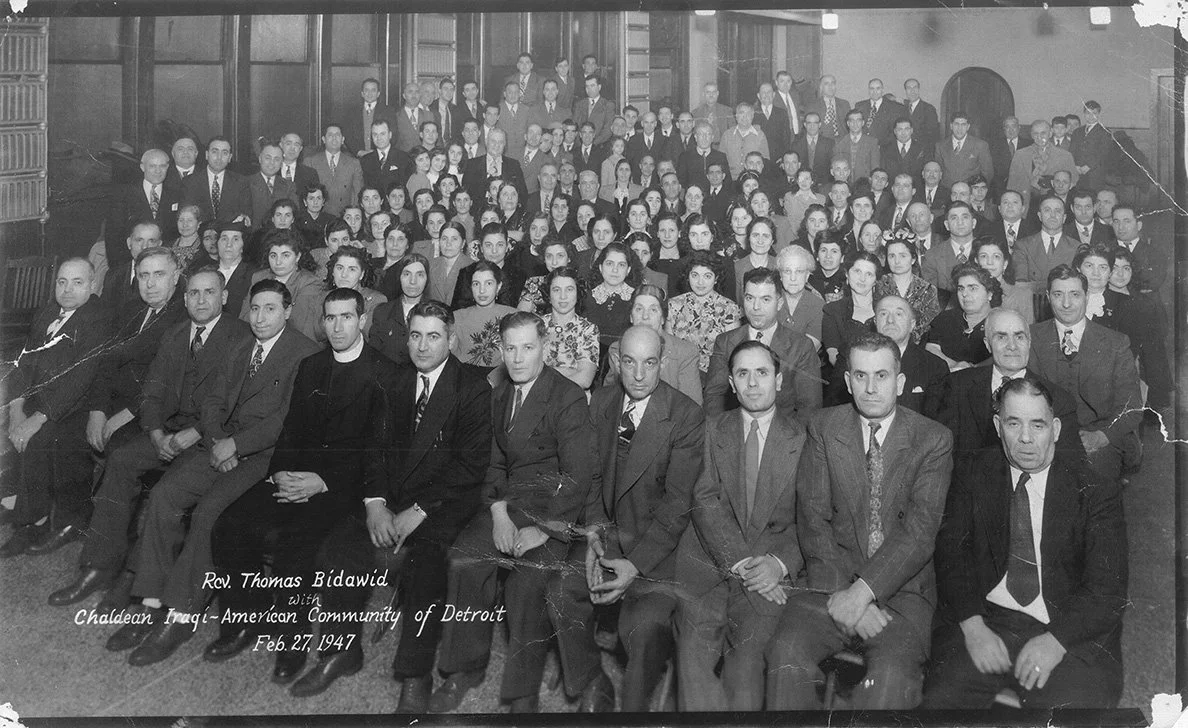
The Chaldean community in February, 1947 when Fr. Bidawid arrived in Detroit.
Step Into Our Story
By Mary Romaya
Imagine stepping into a place where you can do it all: explore the town center of ancient Babylon; touch the stele bearing Hammurabi’s Code of Laws; enter a sacred space and hear Aramaic spoken just as it was in the days of Christ; visit a Chaldean village in the Nineveh Plain in the early 20th century; travel to America and glimpse the New York skyline as early pioneers saw it from Ellis Island; feel the pride of standing inside a 1930s grocery store as a Chaldean entrepreneur builds his place in Detroit’s business community; and discover how Chaldeans today are expanding their professional horizons. How is all this possible? Welcome to the Chaldean Cultural Center and its Museum.
As many of you know, the Chaldean Cultural Center and its state-of-the-art Museum is moving to a new home in the Chaldean Community Foundation-West (CCF-W) building at Walnut Lake Road and Inkster. The Museum showcases over 5,000 years of Chaldean history and currently features five galleries: Chaldeans in the Ancient World, Faith & Church, Village Life, Journey to America, and Chaldeans Today. A sixth gallery, focused on Genocide, will be added soon.
Each gallery presents artifacts, media, sculptures, and text panels that tell our unique and cherished story while supporting its theme. The new space will incorporate cutting-edge technologies to enhance the visitor experience and provide room for revolving exhibits and signature programs.
In the gallery highlighting ancient Mesopotamia, visitors can see cylinder seals used for ownership and accounting, as well as an authentic replica of the original stele of Hammurabi (Code of Laws), purchased from the Louvre. Clay tablets and sculptures of historical figures are also on display.
The Faith & Church Gallery highlights the Aramaic language as it is used in religious ceremonies, including the Chaldean Mass, baptisms, and weddings. Liturgical manuscripts, vestments, and other church adornments showcase the spiritual life of the community.
Moving into the Village Life Gallery, visitors encounter farming tools, cooking utensils, and traditional clothing. Exhibits demonstrate how religious practices, village customs, and attire helped Chaldeans maintain their identity as a Christian minority within a larger Islamic culture.
The Genocide Gallery, currently in the design and content phase, will be positioned between the Village Life and Journey to America galleries. It will place special emphasis on the ISIS invasion of the Nineveh Plain from 2014 to 2017, highlighting the resilience and struggles of the Chaldean community.
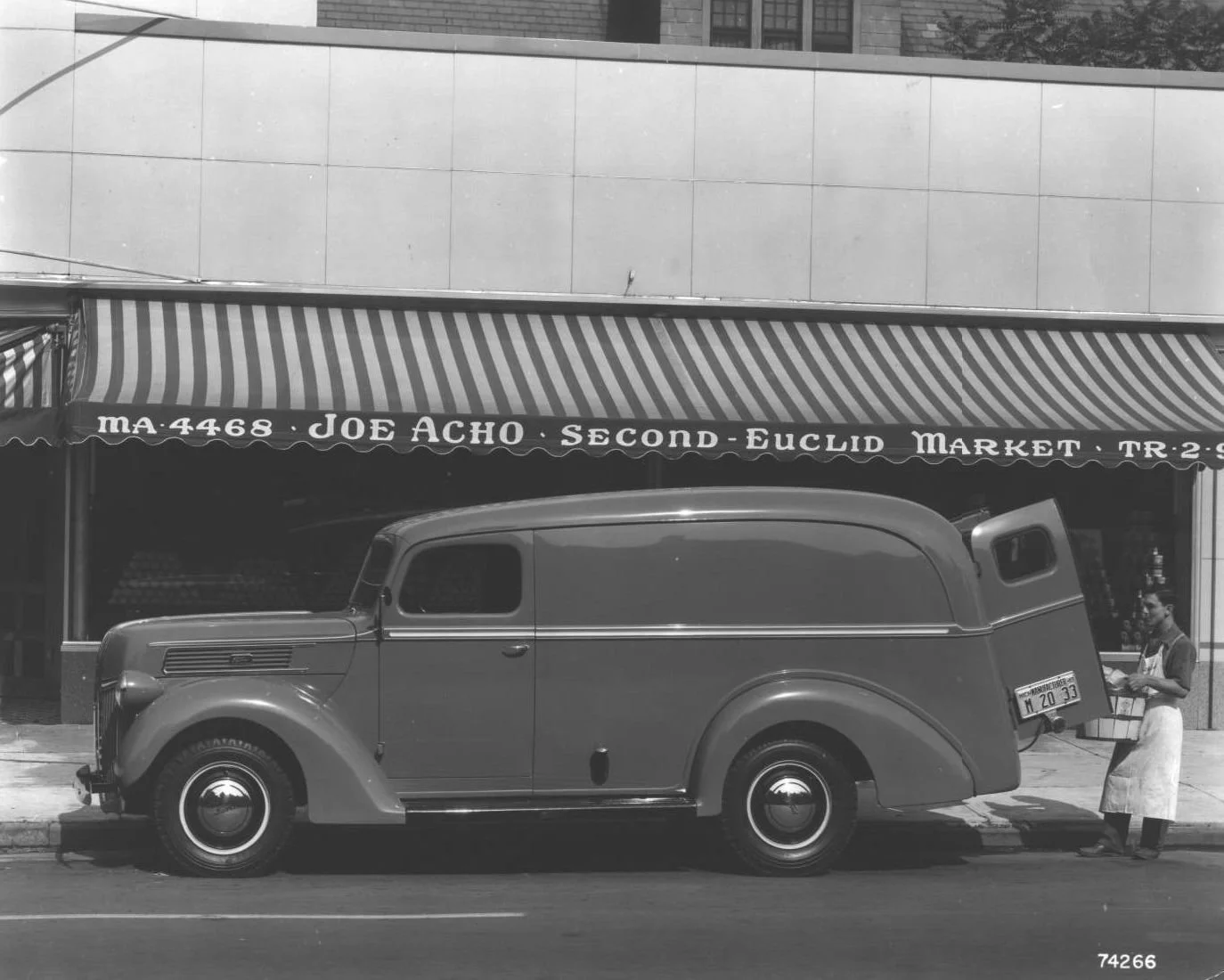
The Journey to America Gallery features passports, photographs, steamer trunks, passenger tickets, and other personal items that trace how individuals and families migrated from Iraqi villages and cities to the United States. This gallery tells the story of why Chaldeans chose to settle in Detroit and includes a display of an early Chaldean-owned grocery store, illustrating the community’s entrepreneurial beginnings.
The final gallery, Chaldeans Today, highlights the strength and diversity of the contemporary Chaldean community. Through graphics, videos, and interactive technology, it shows the global presence of Chaldeans—the Chaldean Diaspora—and how they continue to thrive worldwide. Together, all the galleries immerse visitors in the full richness of the Chaldean experience.
The Chaldean Cultural Center and its Museum is a living testament to our heritage. It honors the early pioneers who had the courage and adventurous spirit to start anew in a foreign land. The Center helps our children, grandchildren, and future generations understand their legacy and instills pride in being Chaldean. It also shares our unique history with the broader, non-Chaldean community.
The CCC is currently seeking additional objects and artifacts—photographs, books, household items, immigration and naturalization documents, and other personal belongings brought to America—that tell the story of individual families while reflecting the broader immigrant experience. The new space will allow some of these items to be displayed in permanent galleries, featured in rotating exhibits, or included in a mobile museum.
We invite community members to donate items to become part of the Chaldean collection. In particular, we are looking for photographs of families, groups, and events, whether taken in Iraq, the U.S., Mexico, San Diego, or elsewhere, spanning multiple decades. Originals will be carefully scanned and returned. All items will be evaluated and curated to determine their historical value and suitability for the collection.
This is a wonderful opportunity to preserve and share your family’s story, support the living legacy of the Chaldean Cultural Center, and ensure that future generations can connect with their history in a meaningful way.
For further information about donating items, touring the current Museum inside the Shenandoah Country Club, or making a financial contribution, please contact Zina Lumelsky, archivist/collections manager, at zlumelsky@chaldeanculturalcenter.org or by calling the Chaldean Cultural Center at (248) 681-5050.