
Passing the Staff
Inside the Selection of the Next Chaldean Patriarch
By Sarah Kittle
Transitions are rarely easy. Letting go of what was and adjusting to what comes next is an internal process—one that requires navigating the journey, not just the change itself. For a Church and a community that have endured many transitions, the current moment is simply the latest chapter in a long and evolving story.
The world itself feels unsettled. Global leaders remain hesitant to commit to lasting peace, while religion has become more deeply intertwined with politics in Washington. Administration officials have spoken of confronting religious extremism, even as critics point to rhetoric aligned with far-right ideology.
Against this turbulent backdrop, the current reorganization within the Chaldean Catholic Church carries particular weight.
On March 10, Pope Leo XIV accepted the resignation of Louis Raphael Sako as Patriarch of Baghdad of the Chaldeans, bringing to a close more than a decade of leadership that began in 2013 and unfolded amid years of turmoil and political tension.
In the months following his election, Sako faced one of the darkest periods in modern Iraqi Christian history, as the Islamic State swept through Mosul and the Nineveh Plains, forcing nearly 120,000 Christians into exile. His role quickly expanded beyond pastoral leadership to that of an international advocate, calling for protection and global attention.
In 2018, Pope Francis elevated him to the College of Cardinals. Three years later, in 2021, Sako played a central role in organizing the first papal visit to Iraq, including a historic stop in Ur, traditionally recognized as the birthplace of Abraham. Yet challenges persisted. In 2023, the Iraqi government revoked a decree recognizing him as patriarch, prompting his temporary relocation to Erbil. Following widespread support, he was reinstated in 2024.
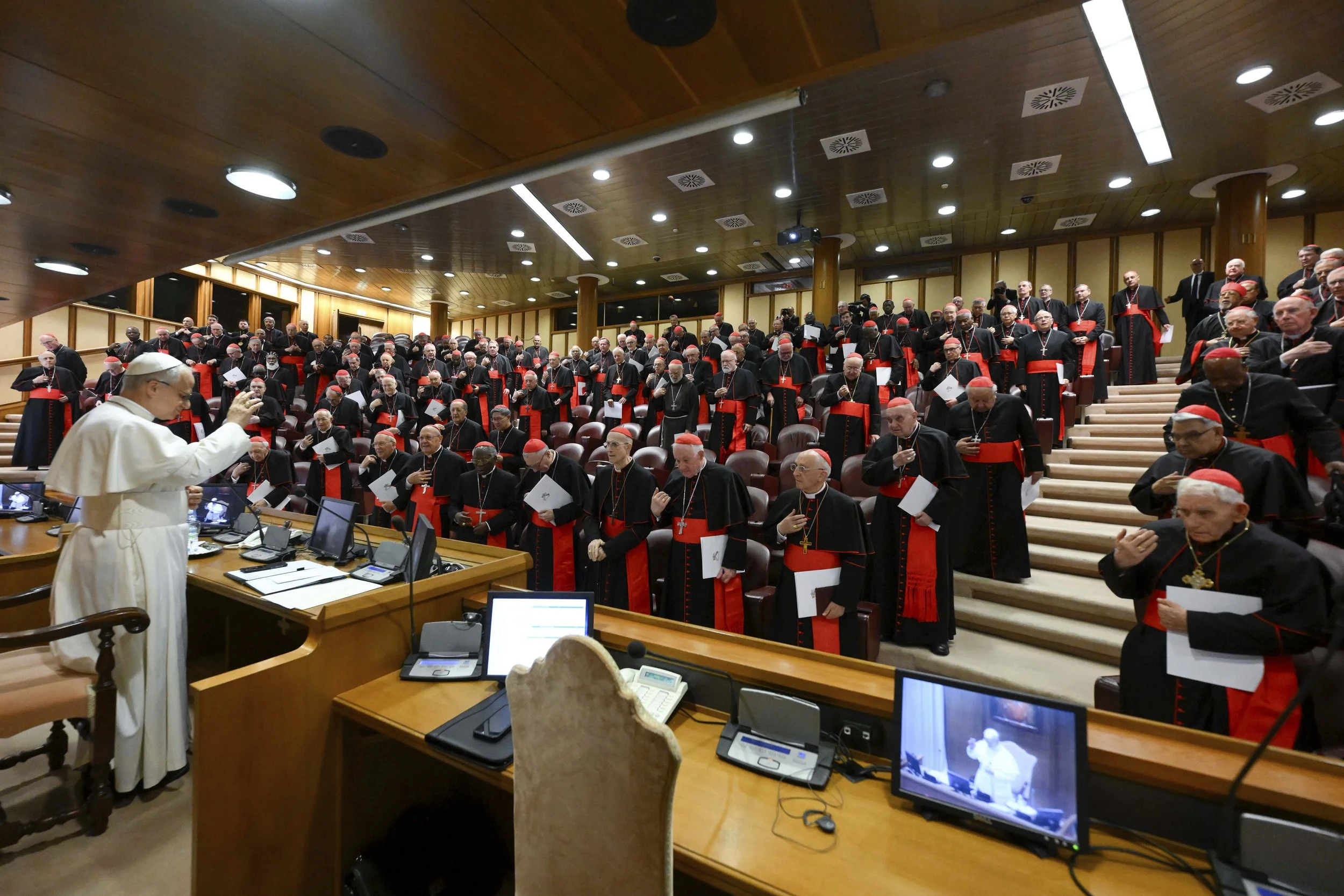
As a cardinal elector, Sako participated in the May 2025 conclave that elected Pope Leo XIV and as “Patriarch Emeritus,” remains a cardinal elector until his 80th birthday on July 4, 2028.
Cardinal Sako had previously submitted his resignation upon turning 75, but at the time, Pope Francis encouraged him to remain. Now, for his own reasons, Cardinal Sako has chosen to step away, dedicating himself to “prayer, writing, and simple service.”
Trusting the Process
When the patriarchal seat becomes vacant—as it has with Sako’s resignation—the Chaldean Church initiates a formal election process guided by its own canon law as an Eastern Catholic Church in communion with Rome.
First, the most senior bishop by ordination serves as temporary administrator. His primary responsibility is to organize the election and convene the Synod of Bishops, the body tasked with selecting the new patriarch.
The Synod must meet within one to two months. Only bishops of the Chaldean Church may attend and vote—no outside participants are involved. To be elected, a candidate must receive a two-thirds majority vote, and notably, the person chosen does not have to already be a bishop.
If no candidate is elected within 15 days, the decision is referred to the Pope—currently Pope Leo XIV.
Once a candidate is chosen, he has two days to accept. If he does, the Church announces the new patriarch and schedules his formal enthronement. Before fully exercising his authority, he must also request ecclesiastical communion from the Pope, formally affirming unity with Rome.
In short, the bishops of the Chaldean Church gather, deliberate, and elect their new leader, with final confirmation rooted in their communion with the Holy See.
In moments of uncertainty, institutions often reveal their deepest strengths. For the Chaldean Church, that strength lies not only in its leadership, but in its continuity—its ability to endure upheaval while remaining anchored in faith, tradition, and community. As the process unfolds, the faithful are reminded that this transition, like so many before it, is not an end but a passage—one that will shape the Church’s next chapter while honoring the resilience that has carried it this far.
The Chaldean Bishops Synod will meet in Rome April 9 - 15 to decide who will be the next Patriarch.