
From 80 Proof to the Whole Truth
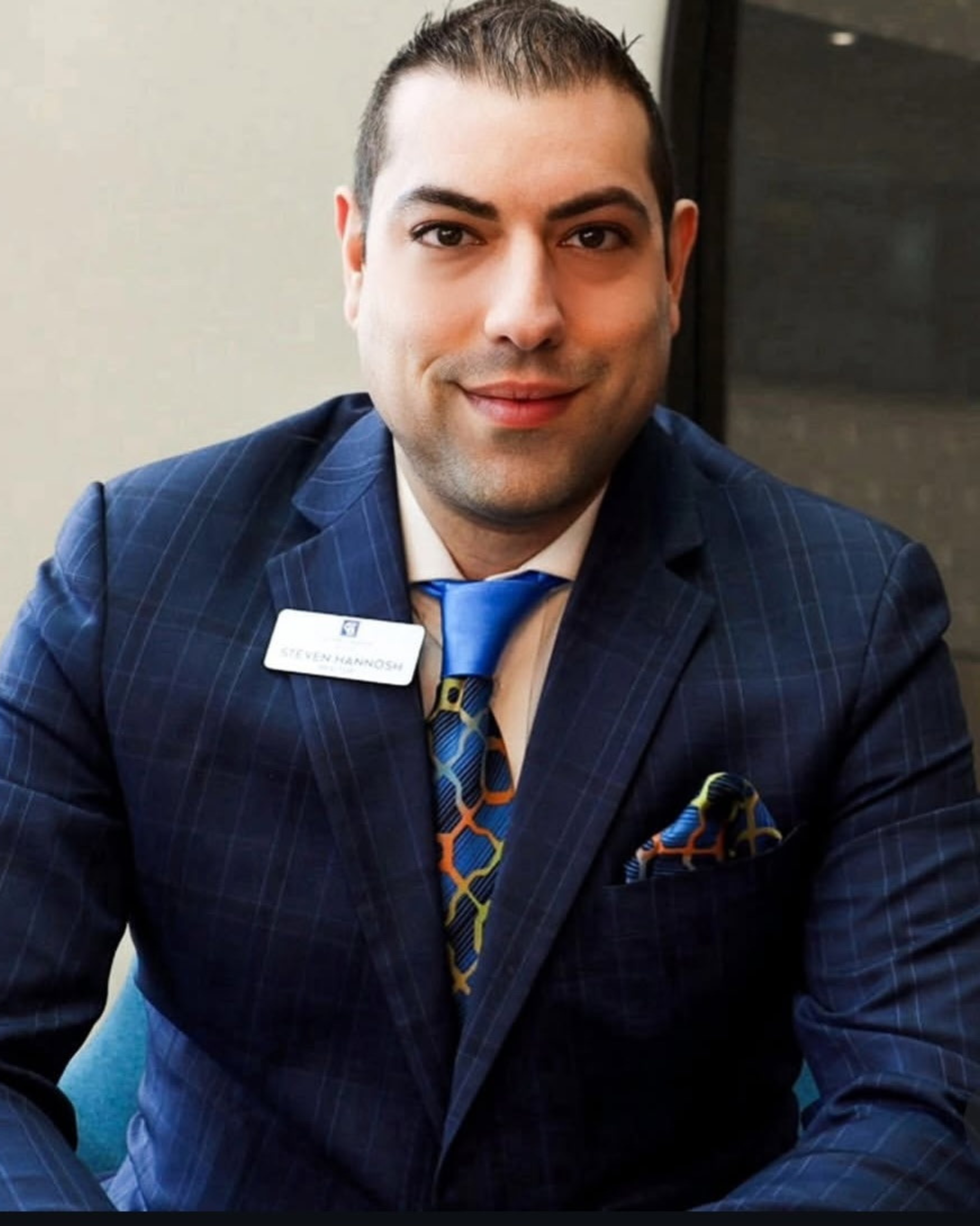
Steven Hannosh
By Crystal Kassab, Ed.D
June is recognized as Men’s Mental Health Awareness Month, a time dedicated to encouraging honest conversations about emotional well-being, addiction, depression, anxiety, and the silent struggles many men face behind closed doors. For generations, men have often been taught to suppress pain rather than confront it, leaving many to cope in unhealthy ways. In the Chaldean community and beyond, the stigma surrounding mental health and addiction can make asking for help even more difficult.
For Steven Hannosh, healing began the moment he stopped hiding.
While some people search for answers at the bottom of the bottle, a higher power is seeking them out.
That is Hannosh’s story: blackout binging as a coping mechanism during both good times and bad, followed by a sudden spiritual awakening after he pleaded with God to save him from alcoholism.
“I do not just want to be sober,” said Hannosh, 40. “I want to live with a purpose.”
Hannosh grew up in the liquor store business and began drinking at age 21. Like many young adults, he frequented bars and clubs and found almost any excuse to drink. As he built a career in real estate, alcohol became tied to both celebration and disappointment—drinking after closing a deal or coping with a loss.
By 2017, his drinking had spiraled.
“The more I drank, the more problems I had,” he admitted. “I had made alcohol my master. Those blackouts were demons numbing my mind.”
The following year, a close friend encouraged him to attend Alcoholics Anonymous. Between 2018 and 2025, he returned to AA five separate times, half-heartedly and often unprepared. He never made it past 60 days sober.
Until now.
This past January, during what he describes as a drunken stupor, Hannosh prayed to God to save him and to get rid of this disease that was hurting him and his family. His drinking had become uncontrollable. He was lashing out at people, losing friends and clients, and hurting his own reputation.
A half-pint every night. Sometimes a beer afterward to top it off.
Anxiety. Isolation. Panic attacks.
Then he called his sponsor from AA and told him he wanted to get serious. His sobriety began a week later, on January 12.
“I really had to do this for myself,” claimed Hannosh, a husband and father of four. “I did not know who I was anymore because the drinking was masking my emotions. I needed to learn to live with and deal with my emotions.”
Alcoholics Anonymous is his therapy; AA began in 1935 in post-Prohibition Ohio, when a doctor and a stockbroker—two severe alcoholics—first met and discovered they could maintain their sobriety by helping others. It has since become a global fellowship, with 2 million members across 180 countries.
Hannosh benefits from daily AA meetings. He wants to hear God’s messages through the human spirit, and that is what keeps him sober. After completing the 12-step program, he became a sponsor, helping others battle the demons he once grappled with. He is honored to be a part of AA.
“I wasn’t ready before, but this was part of God’s plan. God was there the whole time—I’m just now paying attention.”
What concerns Hannosh most, however, is how few Chaldeans he sees attending AA meetings, despite knowing many people who could benefit from them. He believes stigma and shame—the “aab”—continue to prevent many in the community, especially men, from seeking help.
According to the National Institutes of Health, men are less likely to seek mental health treatment and experience higher rates of alcoholism, substance abuse, and suicide than women.
“If we don’t talk about it, we’ll continue dying,” Hannosh asserted. “There is nothing to be embarrassed about. We’re all human at the end of the day. None of us is perfect.”
Hannosh is sharing his truth in hopes of it becoming part of someone else’s survival guide. He is grateful for his sobriety now that he has the awareness and clarity he needed. He is also thankful for the friends and business associates he made amends with. They have congratulated and encouraged him.
Learning to forgive himself has been one of the hardest parts of recovery, but he refuses to erase the past.
“I don’t want to close the door on it,” he explained. “I want to remember where I came from so I can see where I’m going.”
Recovery, he says, is a daily commitment.
“Every day is different,” Hannosh affirmed. “Don’t be afraid to ask for help. We have to break the stigma and break our generational curses. I love my life so much more now.”
Steven Hannosh is open to sharing his story and supporting others who struggle with alcohol addiction. He can be found on Facebook or reached by phone or text at 248-854-3490. For additional resources, visit Alcoholics Anonymous, National Institutes of Health, and MentalHealth.gov.