
When Soccer Made a Nation Dream
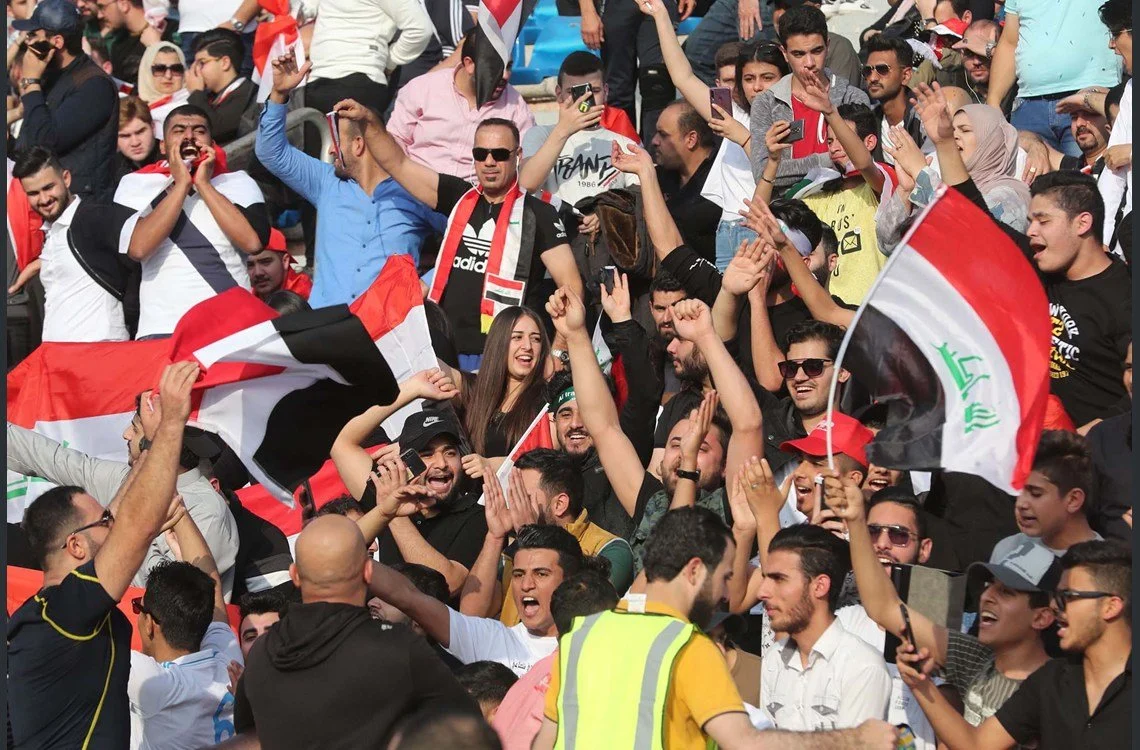
Fans celebrate the Iraqi team qualifying for the 2026 FIFA World Cup.
Iraq’s World Cup Memories Revisited
By Dr. Adhid Miri
Soccer in Iraq is a unifying cultural force governed by the Iraq Football Association, which was founded in 1948 and joined FIFA in 1950. Known as the “Lions of Mesopotamia,” the national team has qualified for the FIFA World Cup twice (Mexico 1986 and the expanded 2026 tournament) and famously won the 2007 AFC Asian Cup.
During a period of immense internal strife in the early 2000s, soccer became a powerful symbol of national unity. The so-called “Golden Generation” had previously made waves by finishing fourth at the 2004 Athens Olympics. In 2007, operating with limited preparation and heavily depleted resources, Iraq shocked the continent by defeating powerhouses like Australia, South Korea, and Saudi Arabia to win their first-ever AFC Asian Cup.
Qualifying for the 1986 World Cup stands as a pivotal historical milestone in the trajectory of Iraqi football. In this article, we embark on a journey through Iraq’s footballing odyssey, revisiting the unforgettable campaign of the “Lions of Mesopotamia” at the 1986 World Cup finals held in Mexico—marking the first and only historic appearance of Iraqi football on the global stage.
Mexico will forever be a touchstone for Iraqi football. Four decades after a Fernando Quirarte volley stamped their exit papers from the 1986 FIFA World Cup, the Lions of Mesopotamia are back on the global stage having secured their return via the FIFA Playoff tournament in the northeastern city of Monterrey. In the intervening decades Iraq have dazzled at the Olympics and dominated Asia but stumbled time and again in pursuit of a repeat booking at the sport’s grandest table.
No study of Iraqi football history can overlook the defining era of the 1980s. The 1986 World Cup squad represented the pinnacle of that generation, achieving qualification during a time of regional tension and national hardship. Although Iraq exited at the group stage, the team earned respect for its spirited performances against some of the world’s strongest sides.
The achievement was built on a legendary roster of players who remain icons of Iraqi sport, including Hussein Saeed, Ahmed Radhi, Adnan Dirjal, goalkeeper Raad Hammoudi, Nazem Shaker, Samir Shaker, Ali Hussein, Khalil Allawi, Nateq Hashim, Basil Gorgis, Haris Mohammed, Karim Saddam, and Karim Allawi. The team was guided by influential coaches such as the late Wathiq Naji and the iconic Ammo Baba, with Brazilian coach Evaristo later taking charge for the World Cup finals.
More than 40 years later, Iraq has once again reached the World Cup, securing qualification for the 2026 tournament and sparking nationwide celebration. The victory has been widely seen as a unifying national moment, reviving a long-dormant dream first realized in Mexico in 1986.
This historic qualification was secured following a 2–1 victory by the “Lions of Mesopotamia” over Bolivia in the final match of the inter-continental play-offs—hosted in the Mexican city of Monterrey—thereby booking Iraq’s second-ever berth in the World Cup.
Christian players have long played a meaningful role in Iraqi football. The 2026 qualification squad notably included several Chaldean and Assyrian Christian players, among them Rebin Sulaka, Kevin Yakob, Aimar Sher, Peter Gwargis, Frans Putros, and Charbel Shamoon. Many of these players developed their careers in Europe and the diaspora, reflecting the global reach of Iraqi talent.
Historically, Christian athletes have made foundational contributions to the national team. The legendary Ammo Baba—an Assyrian Christian—scored Iraq’s first international goal in 1957 and later coached the national team to its first World Cup appearance in 1986. In the modern era, players such as Justin Meram helped pave the way for diaspora representation with the “Lions of Mesopotamia.”
As celebrations continue across Iraq, the return to the World Cup has reignited a sense of national pride. The current generation now carries the opportunity to build on history, improve upon the 1986 group-stage exit, and write a new chapter in Iraqi football.