
The Road Back
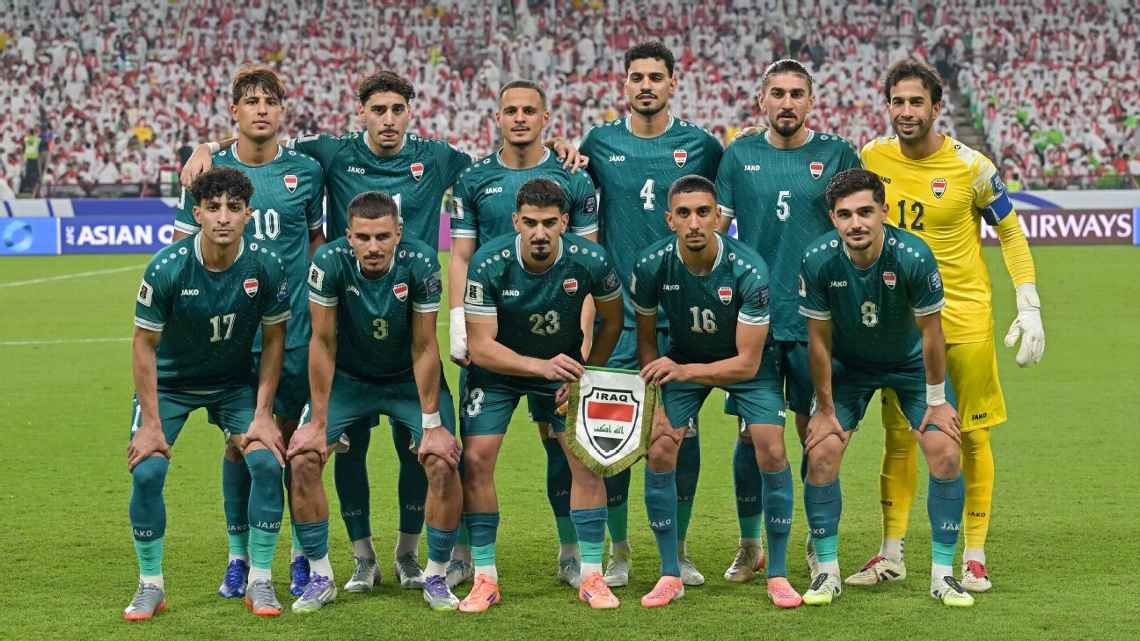
The 2026 FIFA World Cup Iraqi Soccer Team.
Iraq’s journey to the World Cup
By Weam Namou
Ayear of unseen work—in training grounds, strategy sessions, and even airports—culminated in a historic moment when the Lions of Mesopotamia defeated Bolivia 2–1 in Monterrey, Mexico, earning Iraq its first World Cup qualification in 40 years.
Yousif Feal Dhumad, Iraq’s National Team Media Lead, credits the victory to one man, Australian coach Graham Arnold. “The former coach not having achieved success, we had a meeting where we placed special importance on selecting the right coach,” he said.
They reviewed the credentials carefully. Arnold had previously faced Iraq in 2007 and brought extensive experience with Asian teams as well as international competition.
“When we approached him, he agreed immediately,” said Dhumad, “without asking about salary or contract length. He was genuinely happy. He respected the Iraqi national team and felt proud to be chosen.”
Dhumad, who has spent six years serving as the bridge between the team and the public, said that Arnold’s influence extended far beyond tactical adjustments.
“He is not only a soccer expert,” Dhumad explained. “He understands how to work with the Iraqi players mentally.”
Before fully assuming his role in May 2025, Arnold studied Iraqi society—its customs, temperament, and social dynamics—to understand how to lead the team both individually and collectively. That cultural awareness became foundational.
“Even before signing his contract, Arnold publicly stated his belief that Iraq would reach the World Cup finals,” said Dhumad. “That belief and confidence reached the players.”
Rebuilding from Scratch
Arnold has described his first days in Baghdad in one word: chaos.
“I thought I was just replacing the technical staff,” he said in a recent interview. “But they got rid of everyone—the medical staff, the backroom staff, the kitman, the media staff. The lot.”
Once stability returned, his focus turned to mindset. During the final stretch of qualification, Arnold banned social media. “I did not want them thinking about what was going on in the Middle East,” he said. “They had to focus on the job.”
He also reframed the pressure. After a 40-year absence, Iraq had nothing to defend; only something to chase.
“We can step onto the field and surprise the world,” he told his players.
Arnold built close relationships with the squad, often saying he felt “as proud as a father for his sons.” Across a grueling 21-match campaign, trust and belief became the foundation.
“They are fighters,” he said.
For Arnold, the long drought wasn’t discouraging; it was the challenge that drew him in. He admits he had his own concerns before relocating.
“On the airplane, I was a little bit worried,” he said. But once in Baghdad, “from Day One, I felt safe.”
The 2026 conflict involving Iran severely disrupted the Iraqi national team’s historic 21-match qualification journey. Airspace closures forced players into long overland trips to neighboring countries just to catch international flights. Visa complications required coordination through foreign embassies. At one point, Arnold formally requested a postponement because players were scattered across continents.
Despite the logistical maze, the team stayed focused. The result was a composed 2–1 victory over Bolivia in Monterrey—a win that sent Iraq back to the World Cup after four decades.
Stories Behind the Jersey
The team itself carries powerful personal stories.
Striker Aymen Hussein fulfilled a promise he made nearly a decade ago: that he would help return Iraq to the World Cup. His decisive playoff goal sealed that dream.
Ali Al Hamadi, who scored the opening goal in Monterrey, left Iraq as a child and later became the first Iraqi to play in the English Premier League.
Marko Farji, born in Norway to Iraqi parents, will experience a unique moment when Iraq opens its World Cup campaign against Norway on June 16 in Boston—the country of his birth facing the nation he now represents.
“These players travel long distances, face visa issues, spend time away from their families,” Dhumad said. “But they come because they believe in representing Iraq.”
On April 5, 2026, when Arnold landed in Sydney, he expected a quiet return home.
Instead, hundreds of Iraqi Australian fans filled the arrivals area, chanting his name—“Arnie, Arnie, Arnie”—waving Iraqi flags and carrying signs thanking him for “fulfilling 46 million dreams.”
Because the players had returned to Baghdad for their own celebrations, which Arnold could not attend due to airspace closures, he became the face of gratitude for the diaspora that night.
He was stunned.
More Than a Match
Placed in Group I alongside France, Norway, and Senegal, Iraq will open its 2026 World Cup campaign in Boston this June.
“In the beginning, the pressure to win was much greater than it is now,” said Dhumad. “Now, their confidence has been lifted and the pressure has eased significantly. Their focus is to perform and deliver.”
The qualifications have also shifted something deeper. From Baghdad to Detroit, from Sydney to London, Iraqis have rallied behind the Lions of Mesopotamia. The team has become a shared symbol of pride and proof of what belief and unity can achieve.
Dhumad’s message to the diaspora is simple: “We need their voices. We need their encouragement. This game is for all Iraqis around the world.”
As the Lions prepare to step onto the World Cup stage, their journey represents more than athletic success—it is a story of belief under pressure and a shared identity carried across borders.