
A Life in Service
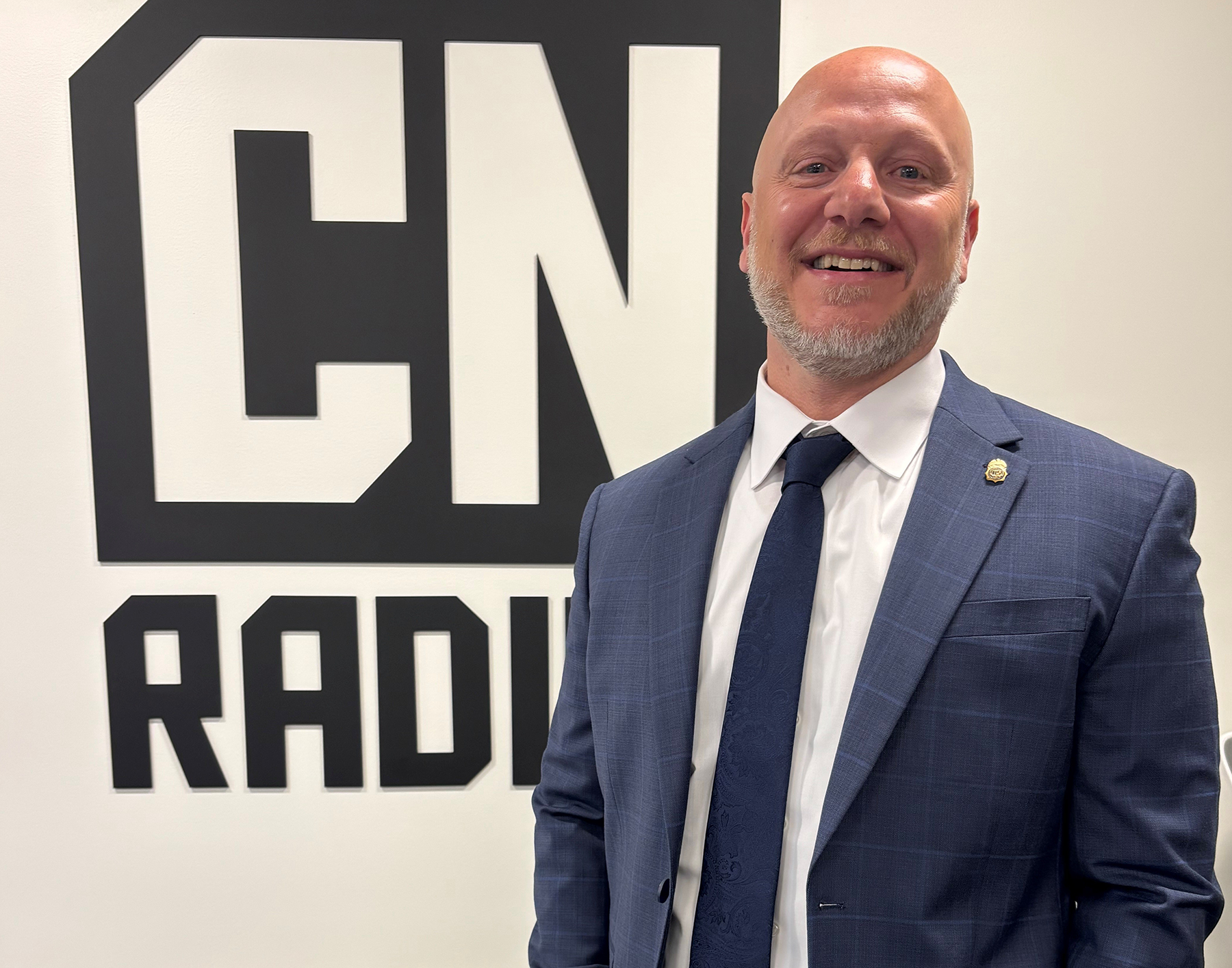
Sam Poules’ Path from Immigrant to DEA Leader
By Sarah Kittle
Sameer “Sam” Poules didn’t grow up imagining a career in federal law enforcement, but looking back, the path now seems almost inevitable.
Born in Iraq and brought to the United States at around age seven or eight, Poules spent his early years in Chicago before settling in Detroit, where he was raised. It’s the city that shaped his identity, his work ethic, and ultimately his career in law enforcement.
Today, Poules serves as the Assistant Special Agent in Charge of the Detroit Division of the U.S. Drug Enforcement Administration (DEA), a role that places him at the center of complex investigations spanning local neighborhoods, international trafficking routes, and rapidly evolving drug networks.
“I think growing up in Detroit had something to do with wanting to be in law enforcement,” Poules said. “And I always joke that I’m inherently nosy.”
After earning a degree in criminal justice from Wayne State University, Poules entered local policing through the Michigan Police Corps, attending the police academy and beginning his career with the Plymouth Police Department. Four years later, he made the leap to federal service with the DEA, a move that required intensive training at Quantico and eventually took him to Philadelphia to launch his federal career.
Although his family was very supportive of his career choice, they were understandably underwhelmed by his move out-of-state. “That was like a funeral, “ he recalled.
From Philadelphia, his work expanded far beyond Michigan’s borders.
“I’ve been from Afghanistan to Nigeria to all of South and Central America,” he said, reflecting on his time conducting polygraph examinations and supporting international investigations. “The DEA has been really good to me.”
After six years in Pennsylvania, family brought him home. With two young children at the time—and now three children total—Poules and his wife made the decision to return to Detroit. “Family is so important in our culture,” he explained.
Back in Michigan, he served as a DEA polygraph examiner for five years, a role that exposed him to investigations across the globe and gave him a unique lens into the agency’s worldwide reach.
Despite the intensity of his work, Poules is quick to emphasize the importance of balance, humility, and trust. “ I always like to surround myself with really smart people,” he said.
“You have to be vulnerable,” he said, describing the leadership philosophy that guides him. “My boss tells me to get comfortable in uncomfortable places.”
Bridging Law Enforcement and Community
In his current role, Poules sees himself not only as a federal agent, but also as a connector between law enforcement and the communities it serves—particularly immigrant communities, although with his blond hair and blue eyes, he jokes he’s always undercover.
Regardless, “When someone knows your culture, understands you, the language, immediately that barrier comes down,” he said. “Representation matters, but we’re still professionals with a mission.”
That dual responsibility—professional duty and cultural understanding—has made Poules a visible figure in conversations about trust between law enforcement and the public.
“Trust starts with communication and is strengthened by building the relationship.”
He now works closely with local and regional partners through DEA task forces embedded with agencies across Metro Detroit, including Sterling Heights and other communities. That structure, he said, allows local officers to maintain the strongest sense of what is happening on the ground while federal partners provide additional resources and reach.
Poules also points to community-based initiatives as a growing priority, including partnerships with programs like Detroit PAL (Police Athletic League) and Operation Engage, which bring law enforcement into youth sports, mentoring, and educational outreach.
“We’re not here to tell communities how to engage,” he said. “We’re here to support what already works…You know your communities best.”
A Changing Drug Landscape
Poules has witnessed firsthand how dramatically the drug landscape has shifted over the course of his career. What once centered largely on heroin has evolved into a more complex and dangerous environment dominated by synthetic opioids, especially fentanyl.
“It’s a game changer,” he said. “Just two millimeters of fentanyl can literally kill you.”
Unlike heroin, fentanyl is often manufactured through global supply chains involving precursor chemicals shipped from countries like China and processed in clandestine labs before distribution. Increasingly, Poules said, it is being found in counterfeit pills designed to mimic prescription medications such as Xanax or Adderall.
The result, he warned, is a growing wave of accidental poisonings.
“That’s why we don’t always call it overdoses anymore,” he said. “We call it poisoning—because people often don’t even know what they’re taking.”
Poules stressed that enforcement alone cannot solve the crisis.
“We are not going to police our way out of this,” he said. “It takes prevention, education, and community support.
“Drugs don’t have a specific zip code.”
Trust as a Cornerstone
For Poules, trust is not a secondary part of policing—it is the foundation.
“If you don’t trust me, you’re not going to talk to me,” he said. “And if people don’t talk to us, we lose everything.”
That belief drives much of his community engagement work, including youth programs that aim to build relationships early and offer positive alternatives. Youth programs started by the DEA include basketball, flag football, and even fishing.
It also shapes how he speaks to families about drug awareness, especially in tight-knit communities like the Chaldean community, where stigma can sometimes prevent open conversations.
“I think you have to be nosy as a parent.
“Know your kids. Know who they’re with. Pay attention,” he said. “And don’t wait until it’s too late to ask the hard questions…It’s the world we live in.”
To young people considering a career in law enforcement—especially those from immigrant or Chaldean backgrounds—Poules offers straightforward guidance.
“Lean into your background,” he said. “We’re resilient. We’re hard workers. Stay in school, stay fit, stay out of trouble, and take opportunities when they come.
“God opens up certain doors for you , and you have to be willing.”
He credits his own success not to a perfectly mapped-out plan, but to willingness—being ready when unexpected doors opened, from local policing in Plymouth to federal work that has taken him across the world.
“If I can do it, anybody can do it,” he said. “Nothing is impossible.”
Despite global experience and a demanding federal role, Poules remains deeply tied to Detroit and the community that raised him. His work, he said, is ultimately about connection—between law enforcement and civilians, between generations, and between cultures.
“It’s about bridging that gap,” he said. “And I’m here for that.”