
More Than a Game
World Cup unites the globe and displays Iraqi pride
By Sarah Kittle
Photos by Zena Kashat / @byzenateresa
After 39 days and 104 matches, the World Cup has come to an end—but the intense feelings of national pride and a broader sense of global unity will hopefully linger.
The 2026 FIFA World Cup was the first in its 23 editions to be jointly hosted by three nations: Canada, Mexico and the United States. Opening Day on June 12 had 25 million viewers for “the planet’s largest sporting event,” according to NPR—and then the party really began.
What is it about this sporting event that unites hearts and minds, making us all feel like family and fostering the kind of understanding that only shared experience can inspire? How many fans from around the world visited the United States and left with a different impression of America—and, more importantly, Americans? And why were Iraqi fans “just happy to be there?”
Sinan (Savio) Yaldo was in Toronto on June 26 to watch Iraq take on Senegal. Savio, who lives in Michigan but was born in Iraq, has watched and played football his entire life. “It has been my dream to attend a World Cup game,” he said, “and I finally got the opportunity to see it live.”
Savio was far from alone in his excitement. “The atmosphere outside the stadium was amazing,” he recalled, “and the energy within was even more intense. The fans were so loud.”
He had planned this trip for several months, although when asked what his team’s chances were, he implied they were slim to none. He wasn’t going there to see them win—he was going there to see them play. There’s a difference.
Dr. Adhid Miri also traveled to Toronto for the match. “The thrill, the fans, the 48 teams,” he ran through his reasons to get excited about the World Cup, “the games, the experience, the festivities, the atmosphere, the colors, the flags, the emotions, the drama, and the once-in-a-lifetime opportunity.”
It has been 40 years since the last time Iraq played in the tournament. That’s reason enough to celebrate! As Dr. Miri said, “Ole Ole….Sing Ole!”
Months after planning the trip, he’s still riding the high: “It was an incredible feeling. The organization was amazing, and the city of Toronto was fascinating,” he said. But what stayed with him most were the pregame festivities, the electricity surrounding the stadium, the roar of the crowd, the celebrations in the streets, and the international mix of supporters—all of which combined to create what he called “a perfect summer of soccer.”
He met fans from Senegal, Scotland, Argentina, Spain, Germany, Brazil, Bosnia-Herzegovina, Korea, and Egypt. Dr. Miri found the Senegalese supporters to be “vibrant, colorful, friendly, and engaging.” They took group photos and he gave them an Iraqi flag. He even light-heartedly tried to trade his Iraqi jersey with the Senegalese fans but had no takers.
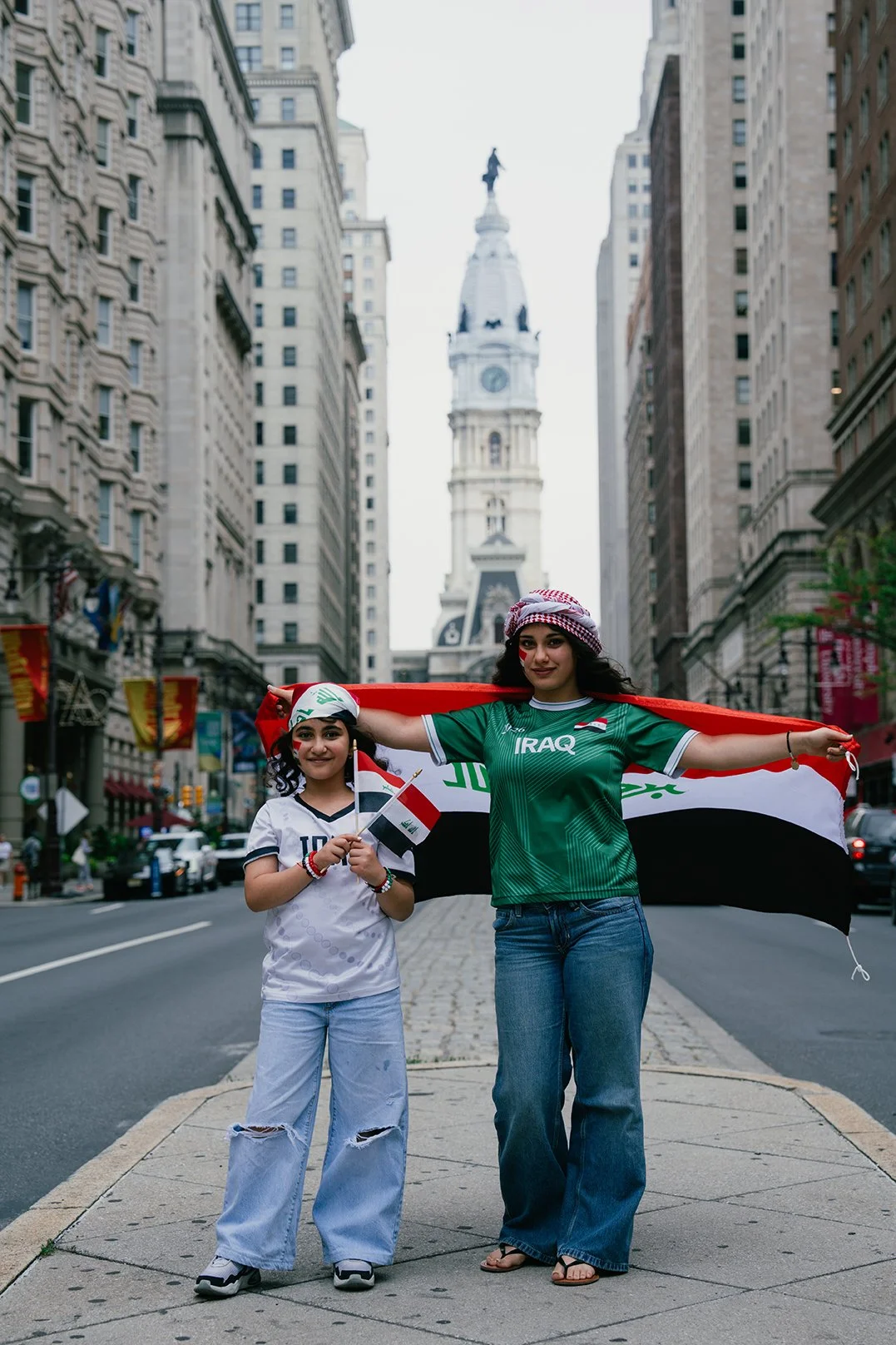
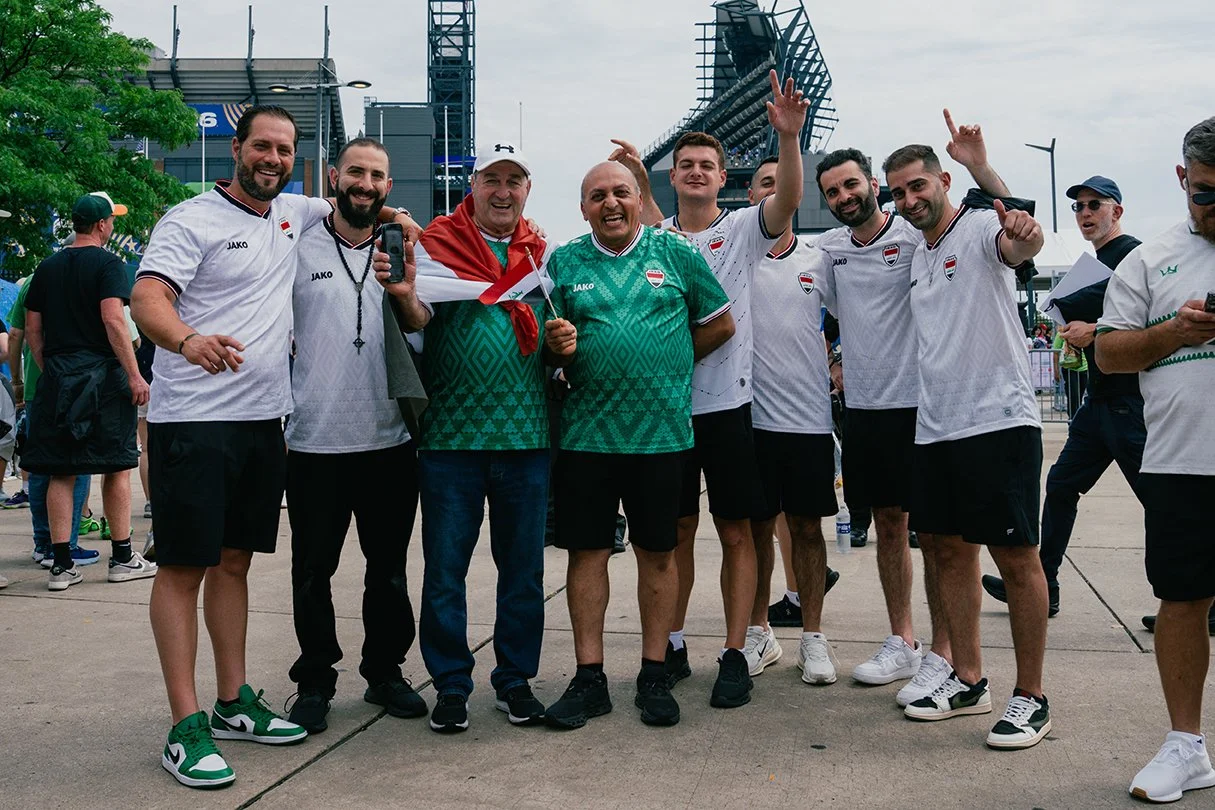
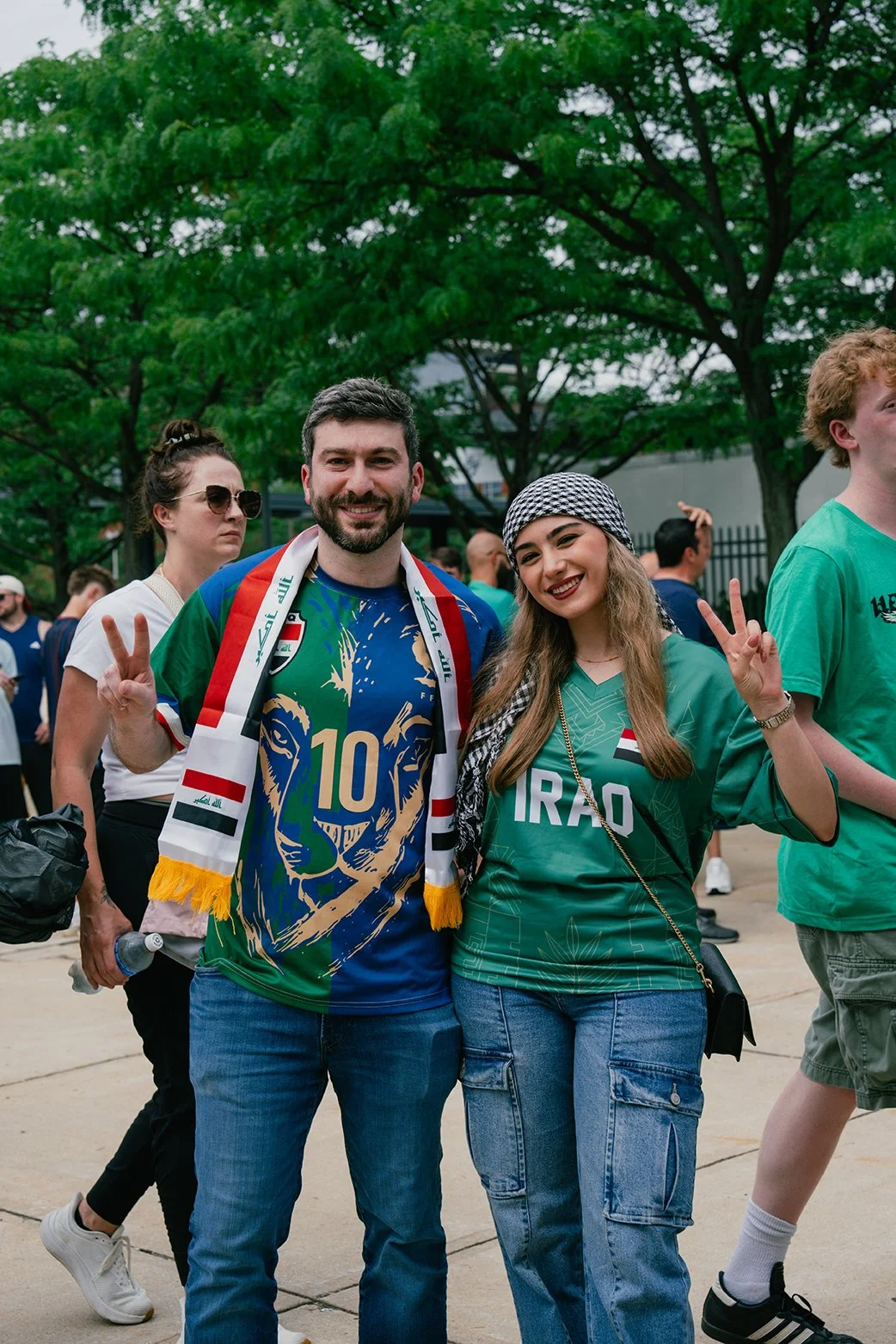
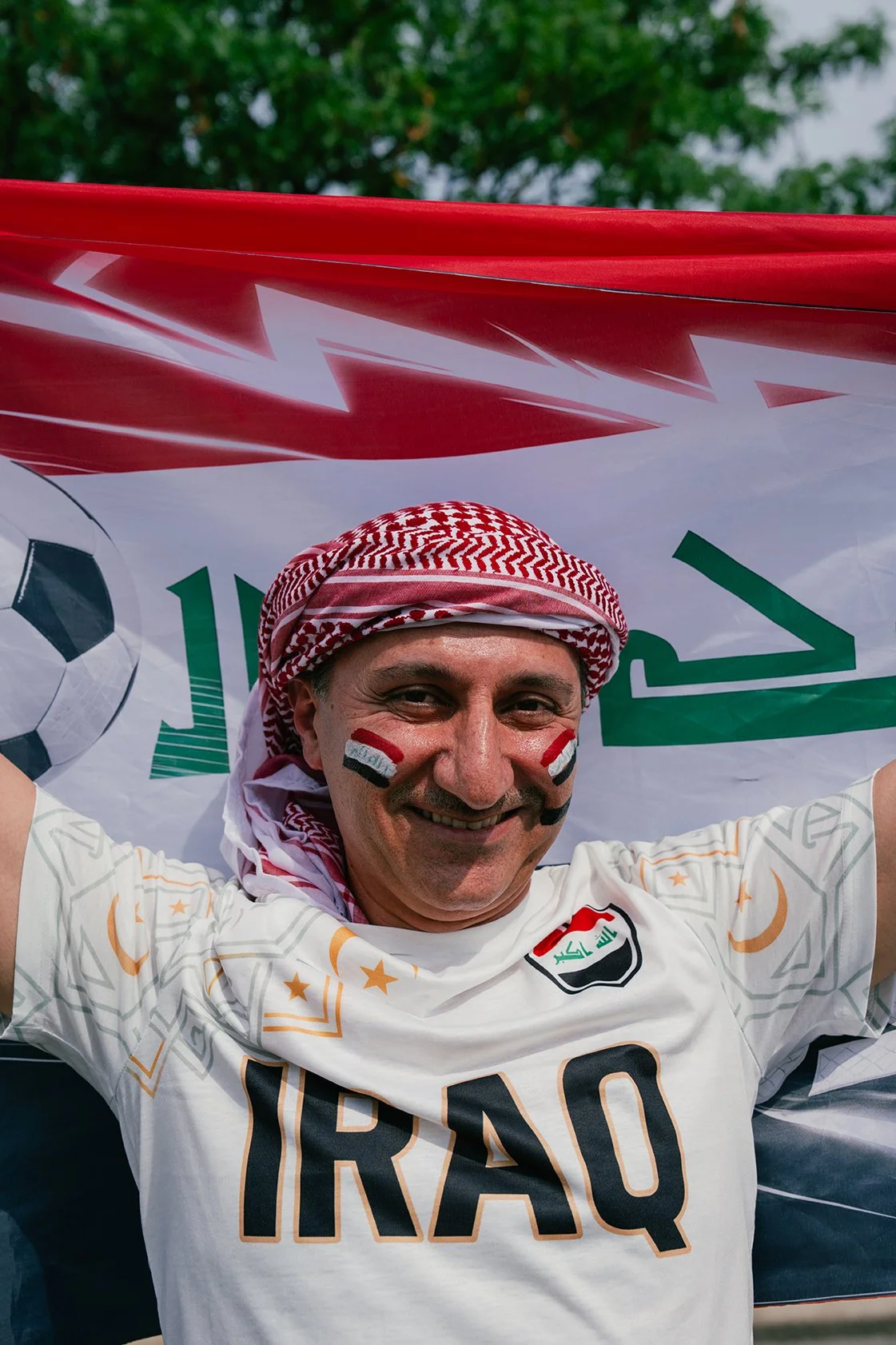
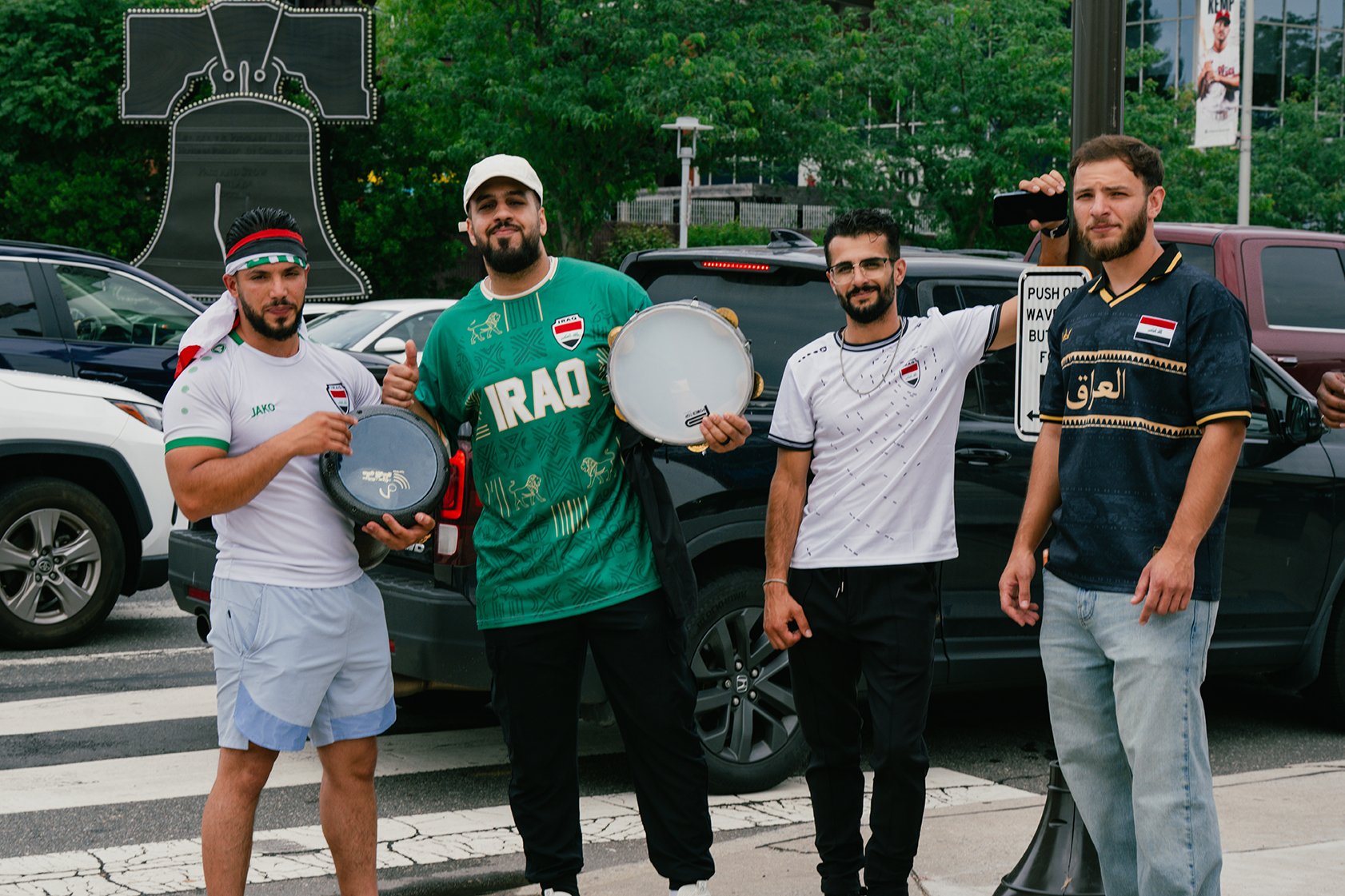
Iraqi fans came out to support in a big way. They brought flags and drums and sang chants and danced the Khigga and Baggiya while waiting to enter the stadium. It’s pretty hard to ignore that kind of excitement.
The city of Toronto didn’t want the magic to end when the matches did. They provided a FIFA Fan Festival and free public broadcasts of the remaining games at Nathan Phillips Square. The influx of out-of-town travelers gave host cities a much-appreciated economic boost. Airbnb saw record numbers, and Scottish fans bought (and presumably drank) all the beer in Boston.
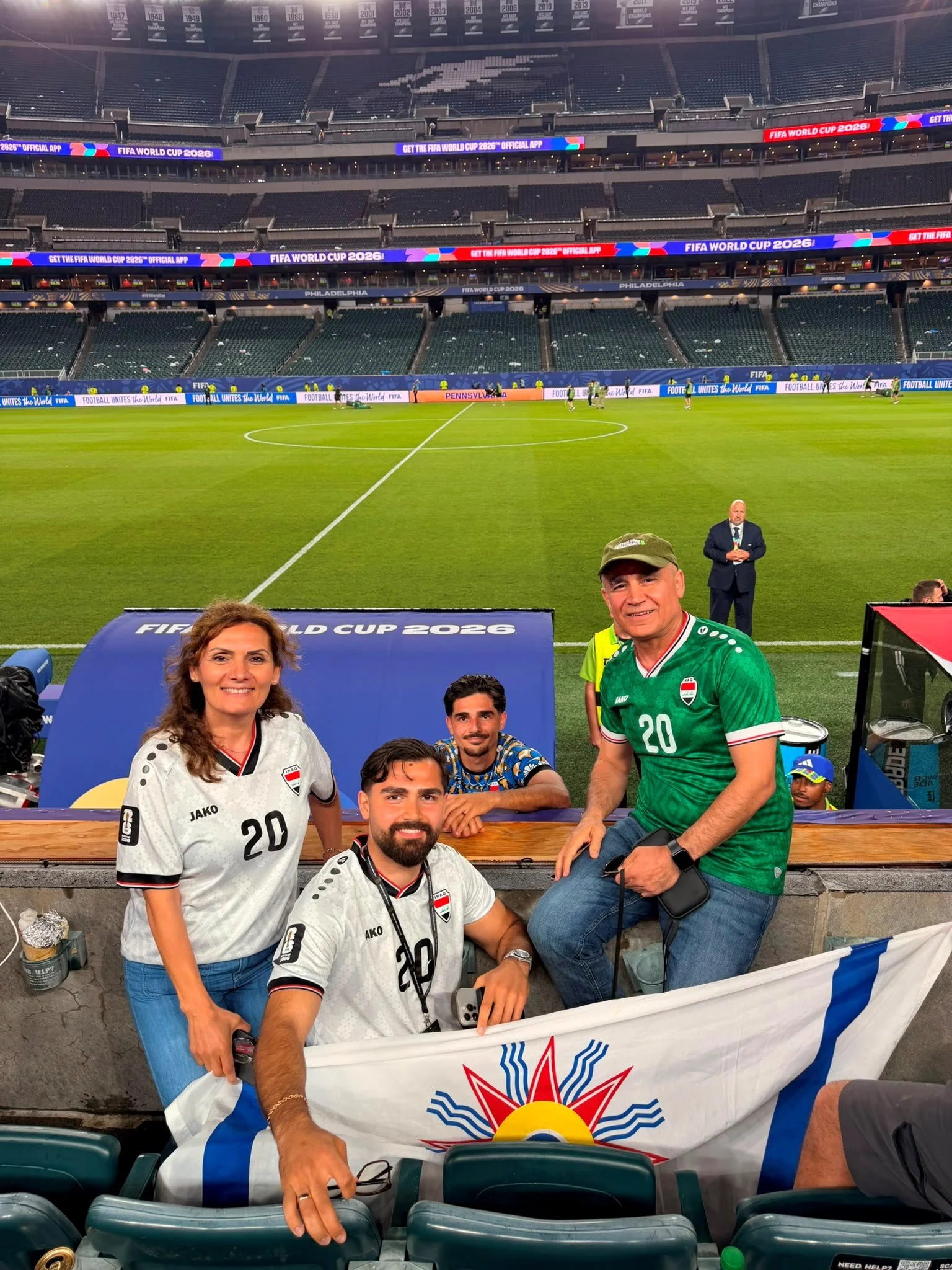
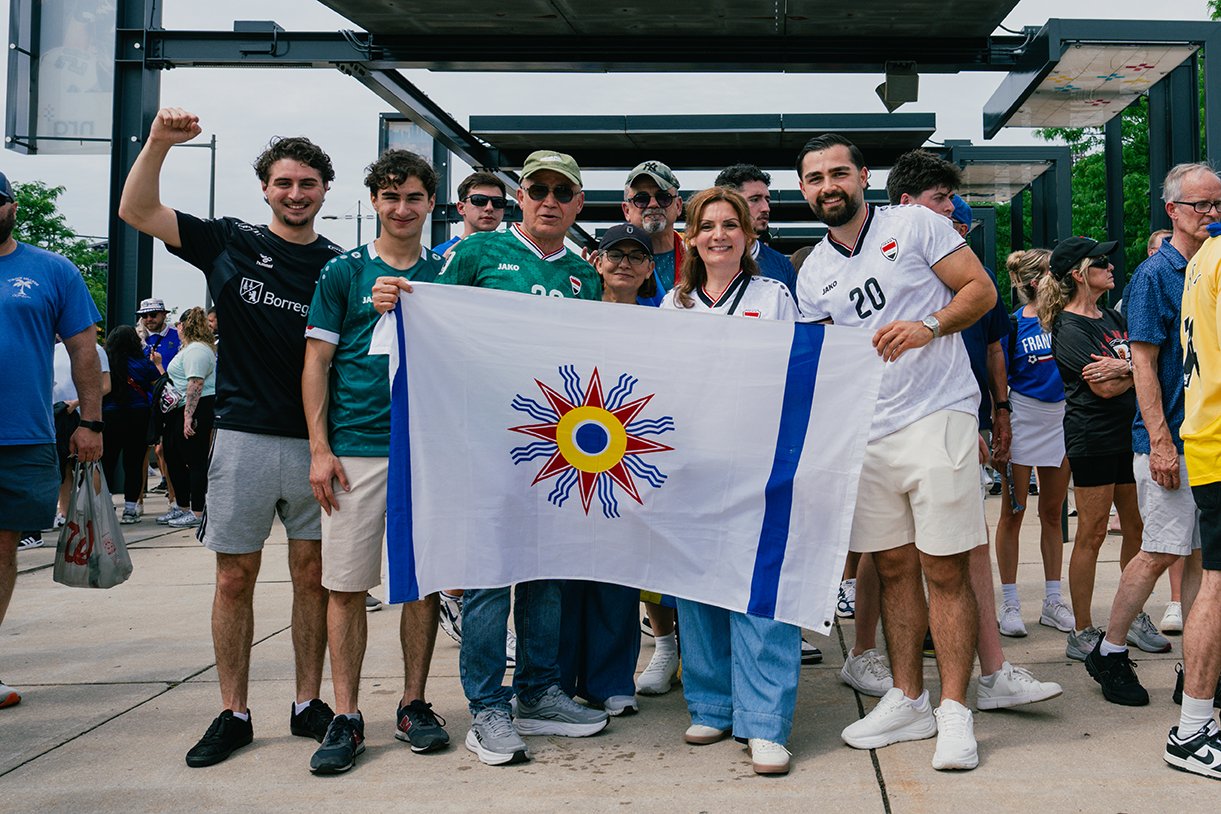
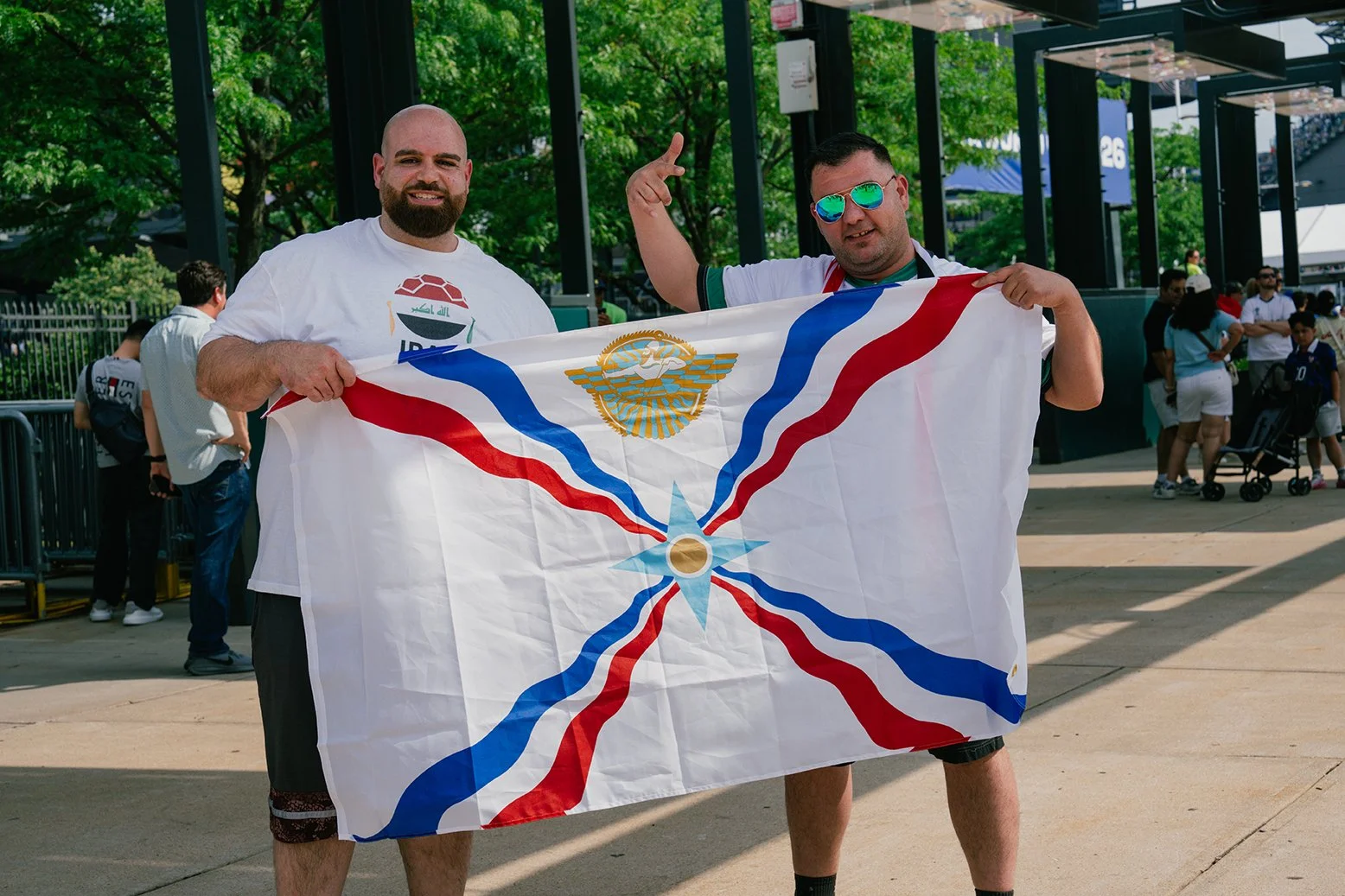
For fans gathered at local events—such as watch parties hosted by the Chaldean Community Foundation in Michigan—the tournament served as a powerful reunion and expression of national pride, allowing participants to celebrate their enduring heritage together.
Chaldeans/Syriacs/Assyrians account for less than 1% of the total population in Iraq, yet the four members on the Iraqi team constituted 15% of the team: Rebin Sulaka, originally from Ankawa; Frans Putros, who also has roots in Ankawa but was born in Denmark; Aimer Sher, who was born in Iraq and raised in Sweden; and Kevin Yakob, Swedish-born with deep ancestral roots in Nineveh (Mosul).
Unlike historical squads made up entirely of domestic league talent, modern Iraqi teams rely heavily on recruited dual-national players born or raised in the global diaspora (Sweden, Denmark, the Netherlands, and the U.S.). This shift has organically brought minority groups, including the Chaldean-Syriac-Assyrian community, back into the national conversation of Iraqi football.
For Middle Eastern countries competing on the global stage, the sense of national pride went extremely deep. Arab News reported on the sense of unity that connected all fans to their families, language and culture. They said the tournament offered something more: “A rare moment when Arab identity was visible, confident, and celebrated in public.” Although Chaldeans do not identify as Arabs, they are often grouped within the broader Middle East by international audiences.
The World Cup in America reminds us of what America is supposed to be: a nation that welcomes all people and celebrates the many cultures that make it special. Rather than a “melting pot,” the peoples and cultures of America are more like a stew, with each part retaining its own individual flavor while complementing the others.
As teams dropped out of the contest, fans kept their allegiance to their home teams even while rooting for the “next best” team.
Perhaps the best illustration of this is Norwegian fans. Although Norway was taken out in a heartbreaking overtime goal by England, more than 100,000 Norwegians turned out to welcome the team home. The celebration included the Royal Guard and Crown Prince Haakon leading the traditional “Viking Row” on the palace steps.
The Guardian reported that the Norway captain, Martin Ødegaard, told Norwegian broadcaster NRK, “The support we have received in the USA and here at home in Norway, has been beyond all expectations. It has been absolutely incredible to see.”
Yara, a Chaldean Catholic living in the US, shared with the media outlet The Pillar that seeing the Chaldean players filled such prominent roles on the world stage was “delightful and even hopeful,” emphasizing that soccer remains a rare, beautiful unifying force for all Iraqis.
Marsen Banni, another US-based Chaldean, expressed in the same article that the roster filled him with “hope, pride, and excitement,” stating that it “sends a powerful message that Iraqi Christians remain an integral part of Iraq’s story.”
The 2026 FIFA World Cup impacted culture. It temporarily halted daily routines around the world, drawing billions of viewers who shared identical moments of joy or heartbreak across different time zones. It united immigrant communities worldwide and allowed diaspora populations to publicly celebrate their heritage.
For Iraqis, and especially for the Chaldean diaspora, the World Cup represented something far greater than 90 minutes on a soccer pitch. It was a reminder that identity can endure across the generations and continents, that pride in one’s homeland can coexist with pride in one’s adopted country, and that, for a few unforgettable weeks, millions of people around the world spoke the same universal language—the beautiful game.