
The Weight We Carry
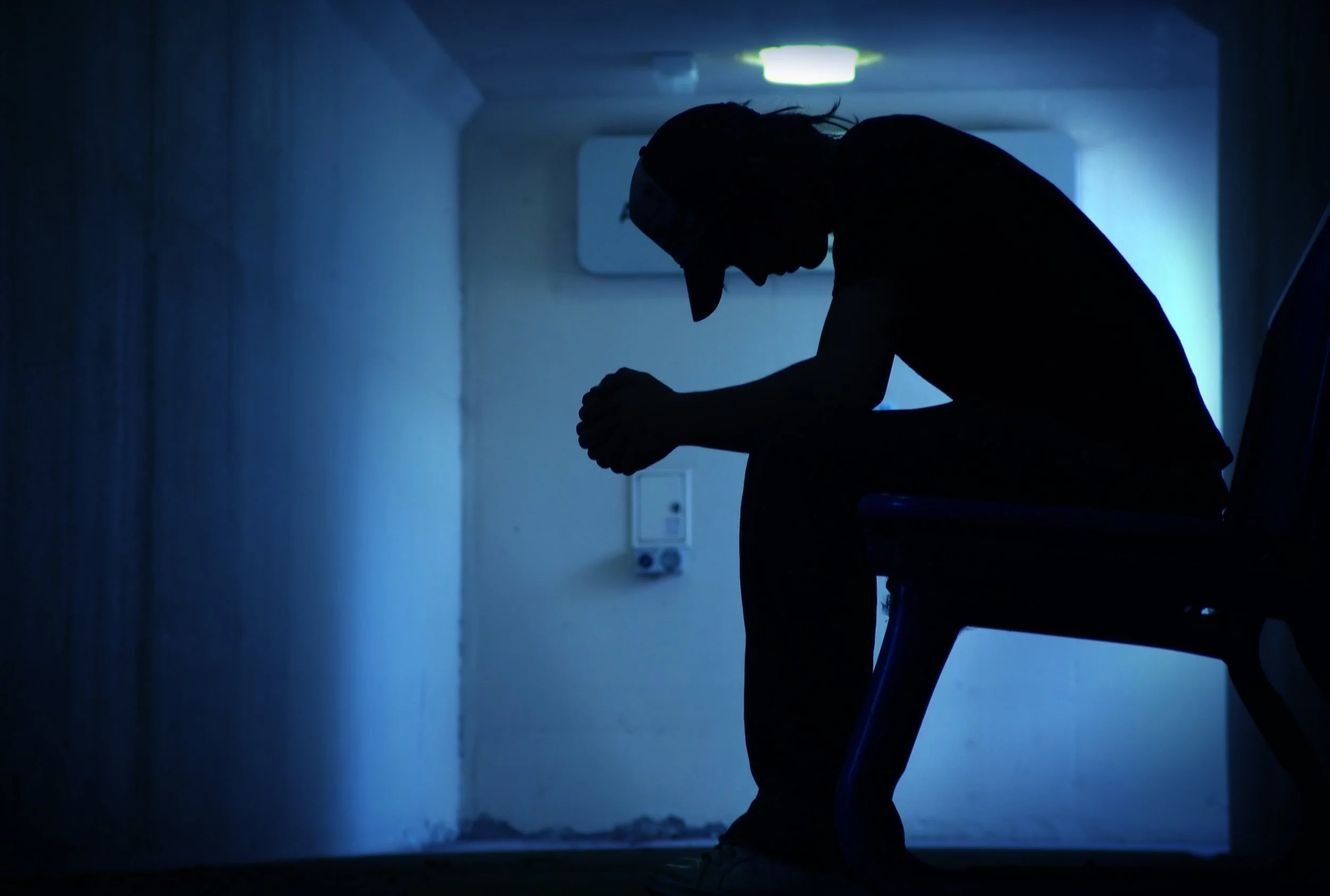
Mental health, silence, and healing
By Sarah Kittle
Somewhere in nearly every family, there’s a name people stop saying out loud. In mine, it’s my brother Dave’s.
Not because we don’t love him. Because loving him, and losing him the way we did, has always come tangled up with a silence nobody quite knows how to break. As a suicide loss survivor, I know that particular kind of grief—the grief of losing a sibling to suicide, and of learning, slowly, that most people around you would rather you didn’t bring it up.
In 1993, my favorite brother (one of six) drove to a car wash in the middle of the night and took his own life. He was 31. It was an act that would change my family forever, and one that ended the life of a brilliant, witty, funny, and kind man who would never see 32.
It’s been over three decades, and still not a day goes by that I don’t mourn that loss.
The Brother I Lost
Statistics paint a bleak picture: although suicide ranks as the 11th leading cause of death in the US, it jumps to 2nd place for those aged 10 to 34. According to the CDC, in 2023, there were over two times as many suicides (49,316) in the US as there were homicides (22,830).
In 2024, an estimated 14.3 million people in the US seriously thought about suicide, 4.6 million planned it out, and 2.2 million made the attempt to take their own lives.
A 2024 National Survey on Drug Use and Health reported that the prevalence of serious suicidal thoughts was around 12.6% for young adults aged 18-25. That’s an enormously high percentage rate for an age group that one hopes would be thinking about the future with excitement.
According to Jacqueline Raxter, MA, LMSW, LPC, Behavioral Health Program Manager at the Chaldean Community Foundation, “Suicidal thoughts by themselves are not dangerous, but how you respond to them can make all the difference.”
I know my brother Dave was not feeling much hope or excitement for the future on that cold day in January. He had been suffering for about 6 months with severe depression following a closed head injury, but honestly, he had exhibited suicidal tendencies his entire life.
I remember one time as a kid he fell off the roof of our two-story home, clowning around with no appreciation for the danger he was in. A foundation bush probably saved his life that day; he landed squarely in the middle of it.
Another time on a family vacation, my mom was reading the plaque dedicated to a priest and his two sons who were swept away to their deaths by “seemingly innocent rapids,” in a small roadside river, only to look up and see Dave on the other side. He had jumped rocks to get there, just like the priests and boys that drowned.
It was not the first (or last) time my mother would pray to Mother Mary for strength and patience.
But more than anything, I remember the way Dave made me laugh. On our annual family road trips, he would entertain us all by commenting on the “great race” we were taking part in. We were the “Motor City Mad Van,” (an homage to Ted Nugent) and he gave each passing car a moniker (Green Bean, Red Racer) before they wiped out (we were always in the lead).
He wrote scripts that we kids acted out and recorded on cassette tapes. As the only girl at home, I got all the female roles. My favorite long-running skit was “Sheer Luck Holmes,” with his partner “Dr. What, Son?” My mom would send these to her older brother in Maryland who shared them with his wife and kids. Dave entertained our entire large family.
Before Weird Al and his schtick became a thing, my brother was writing alternate verses for popular songs. My favorite was Yesterday: “Yesterday/the month’s end seemed so far away/Now it’s here and I’ve got bills to pay/They were all…due yesterday.”
His son Aaron, who inherited his talent, recorded Dave’s version of Fast Car—it’s called Junk Car. And our family cherishes a grainy video made a few years before his death we simply call “The Family Feud.” It is a mock game show with Dave as the host and me and some other family members as contestants. My dad and mom, no longer with us, were the cameraman and the audience, respectively. The video is a reminder of how much fun we had when we got together as a family.
We continue to have fun as a family, but the Dave-sized hole left after his death has never gone away.
Survivor Guilt
All survivors have their emotions as well as their memories. My overwhelming emotion is loss. I regret the future we never had. I ache for my brother and just want to hear him laugh. It is still an emotional gut punch nearly every day. I feel sorry for people who never had the privilege of meeting Dave.
Some of my kids, the oldest of whom were early elementary age at the time of his passing, have vague memories of Uncle Dave. My son Brian’s love of singing may have sprung from recording sessions where he was so small he had to stand on Dave’s bed to reach the microphone.
I have a video of 4-year-old Jason shyly singing the theme song to Teenage Mutant Ninja Turtles, urged on by his uncle who also admonished him, “Master Splinter says it is a wise turtle who knows not to jump on Uncle Dave’s bed.”
Daniel, who was only 3 when Dave left us, remembers running up to him and saying, “Uncle Dave, Uncle Dave! Got some gum?” (He always carried a pack of Wrigley’s Juicy Fruit).
Ash wasn’t born when Dave left us but almost feels like he knows him from all the stories he’s heard. I wish they could have met; I see so much of my brother in him and have no doubt Dave would have been his favorite uncle.
That is what hurts my heart the most. It’s not only all the things Dave has missed: his son’s graduation, the birth of his grandkids, the milestones, the birthday celebrations, family holidays, including our legendary family Christmases. It is also everyone else missing Dave.
Dave’s granddaughter Lila just graduated from high school with honors. He missed that. But Lila also missed out on having a grandpa who could have enriched her life enormously.
She doesn’t know about his encyclopedic knowledge of music, his wordplay, his compassion. She never saw him eat a hot dog in two bites (which horrified my mom) or his “fat/skinny” poses which cracked us up. He was the life of every party.
There May Be Signs
We don’t ask why he took his own life. We found out later that it wasn’t even his first attempt.
Many family members blamed themselves, but the fact is it was not their fault. Nobody forced him to make that choice, and even if that attempt had been thwarted, without treatment, he likely would have tried again.
That doesn’t mean there’s nothing we can do. Support is available. And if you’re concerned about someone who might be at risk of suicide, Raxter says, “This person is fortunate you are paying attention.”
She identifies some signs of concern, including talking about or making plans for suicide, expressing hopelessness about the future, and displaying severe or overwhelming emotional pain or distress.
“Show you care,” Raxter advises. “This may look different depending on who you are and your relationship to the person—but let the person know you have noticed something has changed and it matters to you. If appropriate, let them tell you how they are feeling and why.
“Ask the question,” she prompts. “‘Are you thinking about suicide?’ Asking this question as directly as this may be extremely helpful. It won’t put the idea in someone’s mind who is not already thinking about suicide.”
Dr. Denise F. Mansour, Psy.D., LLP, ABA, CTS—clinical psychologist and consulting neuropsychologist—is a certified trauma specialist who’s worked within the community for more than two decades. Although she believes that the numbers of those seeking professional help is increasing, she observes a lack of understanding that mental illness is a real thing.
“It’s also the shame or embarrassment or the question of a self-reflection of their families themselves,” that stop someone from seeking treatment, according to Dr. Mansour.
But there will likely be signs. “When a person starts having numerous areas of their life being affected by mental health,” Mansour says, “you may start noticing that their hygiene becomes poor. They tend to isolate. They’re in their room more often. They’re not as talkative.”
Or things can go the exact opposite way. “At the other extreme,” says Mansour, “they’re impulsive, overly excited; a behavior change. It starts off subtly sometimes, so question it. Question your kid, your loved one, your husband, your wife—whomever it might be.”
Raxter agrees and says that asking someone outright is often very reassuring to the person in crisis. They may already have someone in mind to talk to, like a therapist or a priest. You, or they, can also text or call the 988 Suicide and Crisis Line, or chat 988lifeline.org for 24/7 support.
Shame and Stigma
Still today, people get uncomfortable if I talk about Dave’s suicide. There’s an erroneous belief that “normal” families don’t have this problem.
“There is a difference between privacy and shame,” states Fr. Bryan Kassa. “No family should feel that a loved one’s suicide is ‘dirty laundry’ that has to be hidden, or that their loved one is somehow less deserving of our prayers, compassion, or remembrance because of the manner in which they died.”
According to a World Health Organization (WHO) article published in 2025, suicide rates are often higher among vulnerable groups who experience discrimination, such as refugees and migrants.
For immigrant communities like Chaldeans, it is also heightened by distrust of outside providers. Layered onto a faith tradition that, until recently, offered scant solace for a death like this, the instinct to stay silent runs especially deep.
For generations, Catholic teaching offered little comfort here—suicide was treated as a mortal sin, and families were sometimes denied even a funeral Mass for the loved one they’d lost, compounding grief with disgrace.
That has changed. The Catechism now explicitly recognizes that “grave psychological disturbances, anguish, or grave fear of hardship, suffering, or torture can diminish the responsibility of the one committing suicide,” and states that the Church “should not despair of the eternal salvation” of those who have died this way. [CCC2283].
Fr. Bryan adds, “The Catechism goes on to say that, in ways known to God alone, He can provide an opportunity for repentance, and that the Church prays for those who have taken their own lives.
“That distinction is extremely important pastorally,” states Fr. Bryan. “We should never reduce a person to the worst or most tragic moment of his or her life…Our Christian response should never be condemnation. It should be sorrow, compassion, prayer, and hope in the mercy of God.”
For Catholic families who’ve buried someone lost to suicide, that shift matters enormously—it replaces judgment with the possibility of mercy. I know it gave immeasurable comfort to my Catholic mother.
Seeking help takes courage and humility
“I often think about Jesus on the road to Cavalry,” Fr. Bryan shares. “He allowed Simon of Cyrene to help carry His Cross.” If He did that, Fr. Bryan surmises, “there should be no shame in admitting that ours has become too heavy to carry alone. Humility means being honest about what we are experiencing and allowing others to help us.”
The global pandemic affected almost everyone’s mental health, creating social connection issues and rising anxiety levels. For those with a green card or a visa rather than US citizenship, recent changes in immigration policy can also be major stressor.
Most mental health patients are being treated for anxiety and depression. Mansour states, “There needs to be a level of education in the community, teaching people the difference between severe and persistent mental illness as opposed to environmental or life stressors.
“We need to ask our family members, adults and especially children, on a regular basis, ‘How are you doing?’ ‘How are you feeling?’ You have so much more to lose if you don’t acknowledge there may be problems.”
Mansour also reiterates that mental health is medical health. “Your head is a part of your body.”
There are solutions available. Dr. John Draper, a suicide prevention expert, drafted a crisis response he calls the “3 Cs of Suicide Prevention.” They provide a framework for helping someone in distress feel understood, keeping them safe, and empowering them to find a path forward.
The first C is connection. Draper reiterates Raxter’s advice to initiate the conversation. Feeling heard rather than isolated makes a huge difference to a person’s psychological state.
The second C stands for collaboration—working together to identify immediate steps, like removing lethal means of harming oneself (drugs, firearms, etc.) from the household.
The final C stands for choice. Letting someone know they have options and that they are the decider empowers them to feel more in control. Working with them to build a path forward may help them see more clearly. Psychotherapy, especially dialectical behavior therapy (DBT) and cognitive behavioral therapy (CBT) can be very effective.
We aren’t helpless to provide help. It’s critical we don’t look away when the going gets hard.
There are things we can do besides relive every minute of your last exchange. It never crossed my mind that when I told my brother Dave, “See you later,” it would be in a coffin.
“We do not need to expose people’s private thoughts or struggles in order to create a culture in which asking for help is seen not as weakness or a lack of faith, but as an act of humility and courage,” states Fr. Bryan.”
Healing, hope, and unanswered questions
Everything above is about helping someone before a loss happens. But if you’re reading this as someone who has already lost a sibling, parent, child, or friend to suicide, none of that advice was written for you—and you deserve support built for exactly where you are.
Losing someone this way carries its own particular grief, tangled with guilt, unanswered questions, and often, as I’ve described, a silence other people don’t know how to sit with. If that’s you, you are not alone, and support built specifically for suicide loss survivors does exist.
The Church can and absolutely does help, sometimes recommending therapy or counseling. “That is not the Church pushing someone away,” emphasizes Fr. Bryan. “Spiritual care and mental-health care should not be competitors; they can work together in caring for the same human person.
“I try to remind people that we cannot heal by continually returning to a past we no longer have the power to change,” shares Fr. Bryan. “God is present to us now, in this moment, and this is where healing has to begin.”
“The community also needs discernment,” Fr. Bryan continues. “We can sometimes be overbearing because we want to help, or we become so uncomfortable that we disappear… Sometimes faith means entrusting what we do not understand to a God who understands completely.”
It took me years to find language for what I was carrying. It is my hope that no one else has to find it alone.
Resources for Survivors
• The American Foundation for Suicide Prevention (AFSP hosts an annual International Survivors of Suicide Loss Day each November—a day set aside specifically for people carrying this grief. Find a local group at afsp.org/find-support.
• Alliance of Hope for Suicide Loss Survivors (allianceofhope.org) offers an online community built entirely around this specific kind of grief, available any time.
• The 988 Suicide & Crisis Lifeline isn’t only for people in crisis—you can also call or text 988, or chat at 988lifeline.org, if you’re a loss survivor who needs to talk.