
The Telkaif Heritage House
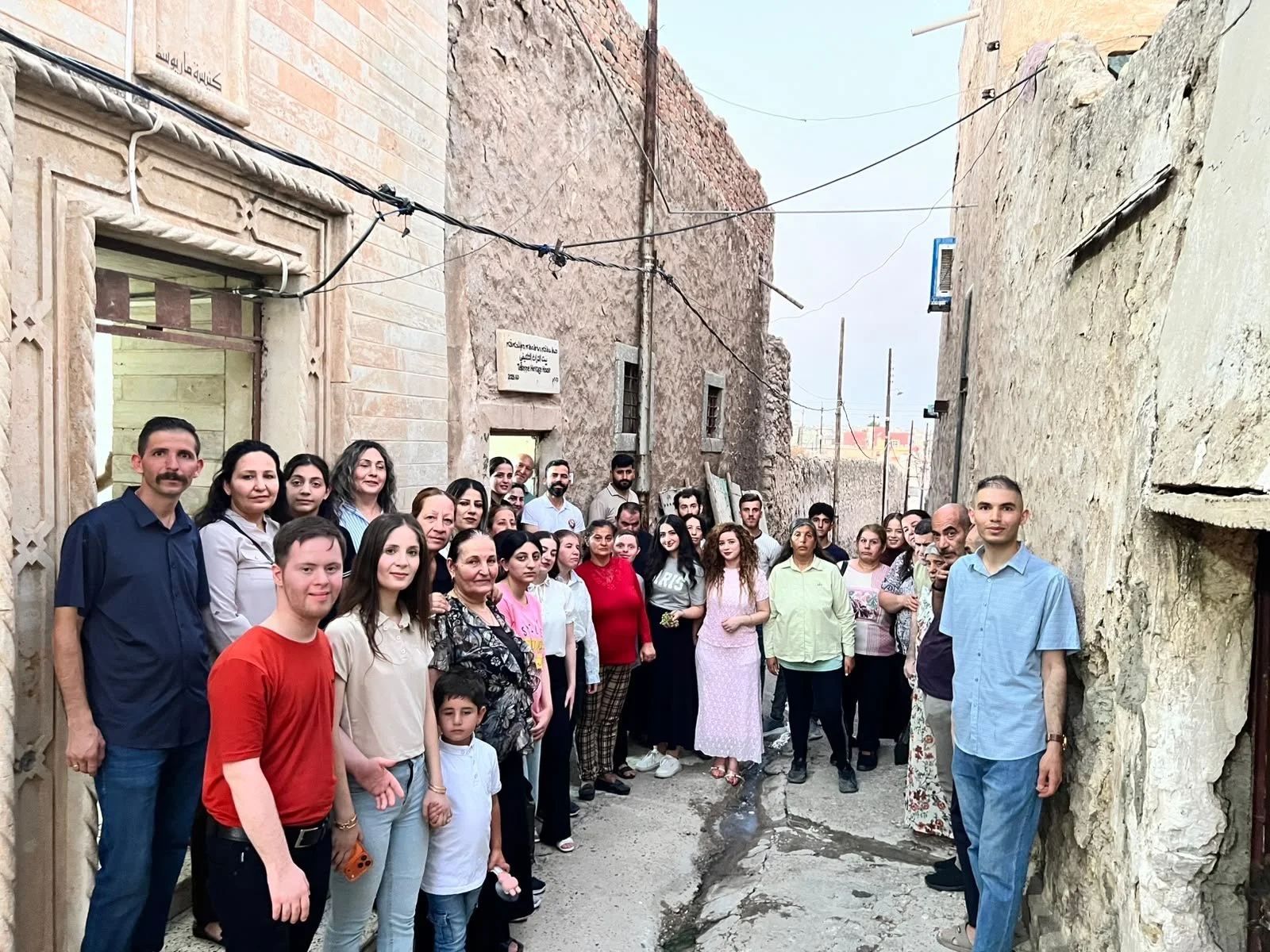
Families and organized groups enjoy touring the museum.
Artifacts calling out to their owners
By Ghazwan Alyass
The Telkaif (Telkeppe) Heritage House opened in the old city of Telkaif in 2025, marking the first heritage museum of its kind in the town. It stands as an initiative to preserve the city’s history and its cultural and social legacy—particularly in the wake of the hardships endured by its residents and the displacement the city witnessed in 2014.
The project was spearheaded by Omran Adnan Asofi Jarbou, an active and dedicated young man from Telkaif. Hailing from a well-known local family and remaining a resident of the city himself, he has maintained a deep connection to its collective memory, driving him to work on preserving its heritage at a time when many other residents have left for various other cities and countries.
The Genesis of the Idea
The concept of establishing the Telkaif Heritage House emerged about seven years ago but was delayed due to the lack of a suitable location. Once a fitting heritage building was secured, the project moved into the implementation phase, culminating in its opening to visitors in 2025.
The initiative was driven by the need to safeguard Telkaif (Tel Keppe)’s identity and collective memory—particularly in the wake of the events and displacement experienced by the town and its residents. Jarbou sums up his motivation with a single question: “If we do not preserve and protect our heritage now, when will we?”
After searching for a suitable location, Omran presented the idea to His Excellency Bishop Mar Michael Najeeb Michael, Bishop of the Chaldean Archdiocese of Mosul and Akra, who welcomed the initiative and encouraged him to implement it. At his request, one of the heritage houses owned by the Chaldean Sacred Heart Church in Tel Keppe was allocated for the project.
Prior to establishing the house, Omran had contributed—through the “Telkeppe Heritage” page—to documenting and sharing aspects of the town’s history and cultural legacy, efforts that eventually evolved into this museum project.
Preserving Memory
The Heritage House does not aim to replace the city’s absent residents with artifacts; rather, it seeks to preserve the memory of the place and prevent that absence from turning into the erasure of history.
In the founder’s view, heritage is not limited to old tools and houses; it encompasses the language, customs, trades, and details of daily life experienced by the people of Tel Keppe over generations. Photographs, documents, and artifacts serve as tangible evidence of the city’s history and its people—particularly given the migration and changes the region has witnessed.
The House plays a role in connecting new generations to their city—especially those born in the diaspora—by introducing them to the lives, customs, and livelihoods of their ancestors. Jarbou emphasizes that while a person may be displaced from their home, they should not be displaced from their memory.
Location and Collection
The Tel Keppe Heritage House is situated in the Kizi neighborhood—one of the town’s twelve historic districts. It stands adjacent to the Shrine of Saint Joseph, which houses the remains of victims from the 1949 Tel Keppe flood, and is located near the site of the town’s first secondary school and the ceremonial square. This location embeds the house within the local collective memory, making it more than just a venue for displaying artifacts.
The house features a collection of heritage items linked to the lives of Tel Keppe’s residents, as well as the town’s unique environment and customs. These include agricultural tools such as the gargara, jarjar, and winnowing fork (malkhawa), all of which reflect the agrarian lifestyle that played a pivotal role in the town’s history.
It also houses household tools once used for food preparation—such as the mortar and pestle (jawun and madakk) and the hand mill (jarusha or sta/khshula/grasta)—alongside serving trays (khwana) of various shapes and sizes.
The house also contains a number of earthenware items—including the talma, qukhaytha, sanda, and lina—which reflect aspects of the daily life and domestic customs that once prevailed in Tel Keppe.
The significance of these artifacts lies not merely in their antiquity, but in the stories and the social and cultural meanings they embody; each tool is linked to a specific lifestyle, trade, or custom that was once part of the townspeople’s lives, serving within the home as a testament to the details of the lives led by their ancestors.
Most of the items came from the founder’s family and relatives; they had been stored in the cellar of his grandfather’s house following the city’s liberation. Residents of Tel Keppe and neighboring villages also contributed a number of artifacts, while Omran purchased others due to their historical and social significance. The house also received a collection of items from the Shraga volunteer team operating in the area.
Jarbou notes that while an item donated by a local resident might originally be part of their family history, once it arrives at the house, it becomes part of the history of Tel Keppe as a whole.
Visitors and Development Plans
The house welcomes local residents and heritage enthusiasts, as well as delegations, guests, and visitors from outside the area. Its administrators aim to develop and refurbish the site to better accommodate visitors while preserving its traditional architectural character.
Future plans include improving how the collection is displayed and introducing modern methods for documentation, photography, and data preservation for each item, ensuring its legacy for future generations.
Jarbou’s vision extends beyond Tel Keppe; he hopes the project’s impact will reach surrounding villages—such as Batnaya, Baqofah, and others—that lack their own heritage museums to document their history and cultural legacy.
A Voluntary Initiative
The House relies primarily on voluntary efforts and contributions from individuals who have donated artifacts or provided support to the project. Its founder hopes to secure additional support to develop and upgrade the facility, preserve its collection, and expand its activities.
In his message to the people of Tel Keppe and our community, Omran emphasizes that cities do not live by stone alone, but also by their memories. While houses and alleyways may change, and people may move far from their hometowns, heritage remains a testament to the history and lives of the city’s inhabitants.
Thus, the Telkeif Heritage House is not merely a museum; it is a space that unites the town’s people around their shared memories and serves as a window for the Telkeif diaspora to connect with their roots, identity, and family histories.
An Undying Memory
While the Heritage House cannot bring the people of Telkeif back to their homes, it preserves an aspect of the town where they once lived, keeping its memory alive for future generations. Every photograph, artifact, and document within its walls tells a part of the story of the town and its people, affirming that a person’s physical absence from their hometown does not mean its disappearance from memory.
The Telkeif Heritage House is not merely a museum; it is an effort to preserve the remaining memory of a city and to safeguard the bond it shares with its people, wherever they may be.
Those behind the House extend their gratitude to the Chaldean News for its interest in the heritage of our cities and the memory of our people, and for providing this platform to introduce the project and the history of the city of Telkaif (Tel Keppe).