
The Mighty Date Palm
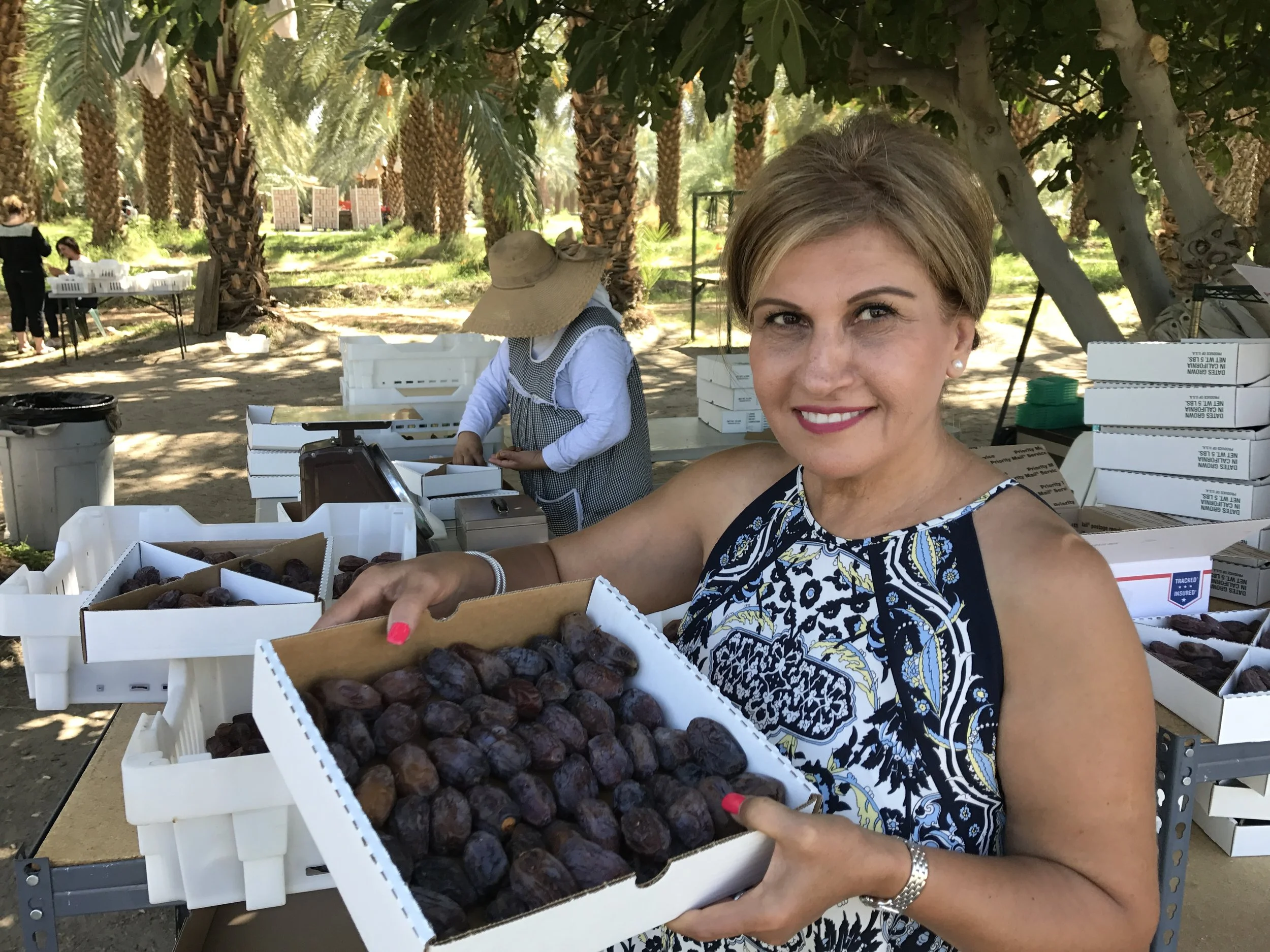
Anne Bacall showing her freshly picked Medjool dates in Thermal, California.
One of the world’s oldest cultivated fruits prospers in California’s Coachella Valley
By Jacob Bacall
For more than 6,000 years of recorded history, dates have nourished civilizations and occupied a place of honor throughout the Middle East. The date palm has sustained generations with its sweet fruit and remarkable ability to thrive in some of the world’s harshest climates.
A Family Farm, Four Generations Deep
During one of my visits to Southern California, a dear family friend arranged an unforgettable tour of a boutique date farm, Fresh Dates by Anderson, in Thermal, California. Operated by the Anderson family for four generations, from great-grandfather to great-grandson, the farm stands as a living tribute to family tradition, agricultural excellence, and one of the planet’s most revered fruits.
My host, Lee Anderson Jr., whose father, Lee Anderson Sr., established the family’s date farm in 1919, invited me to climb aboard his tractor for a tour of the 25-acre oasis he inherited from his father. As we slowly made our way through rows of magnificent date palms, Lee shared the remarkable story of how this ancient fruit journeyed from the cradle of civilization to the deserts of California.
From Mesopotamia to the Mojave
The date palm traces its origins to Mesopotamia—modern-day Iraq, before eventually reaching the United States in the early twentieth century. Southern California, particularly the areas of Palm Desert, Indio, and Thermal, proved to be the perfect new home. Its scorching summer temperatures, low humidity, abundant sunshine, and dependable irrigation create ideal conditions for producing some of the world’s finest dates.
The Anderson farm is home to hundreds of date palms representing several distinctive varieties, each with its own unique flavor, texture, and character. Among them are Medjool, Zahidi, Khadrawi, and Halawi—classic Iraqi date varieties, including several introduced to the United States as gifts from King Faisal II of Iraq. Other varieties include Deglet Noor, Amir Hajj, Khalas, and Abada, which is recognized as one of California’s New World varieties.
The Tree of Life
For the Chaldean people, and indeed for all the people of Iraq, the date palm has long been celebrated as the “Tree of Life.” Every part of the tree served a valuable purpose. Families enjoyed its sweet fruit, harvested its tender buds, drank its nourishing sap, wove baskets and rope from its fibers, and even used the pits as fuel. More than a crop, the date palm became a symbol of life, prosperity, and survival in a demanding environment.
The fruit’s importance remains deeply embedded in Iraqi history and culture. The graceful image of the date palm has appeared on Iraqi currency, including several denominations of the dinar and numerous coins, honoring a tree that has nourished the nation for millennia.
One of the World’s Oldest Sweeteners
Among the date palm’s greatest gifts is date honey, a rich, dark syrup known as Silan in Chaldean and Hebrew and Dibis in Arabic. Long before refined sugar became available, this natural sweetener was a staple throughout Mesopotamia and the Middle East.
Produced by slowly extracting and concentrating the juice of ripe dates, Silan is prized for its deep caramel flavor, natural sweetness, nutritional value, and exceptional versatility. Traditionally, it is drizzled over Gaymer, the rich Iraqi marshland water buffalo’s milk, as well as yogurt and soft cheeses.
Dates have long been transformed into a variety of delicious dishes and recipes. Combined with walnuts, almonds, sesame, cinnamon, and cardamom, they can be enjoyed in salads, pastries, and hearty stews.
Dates and their juice are equally treasured in baking, particularly in traditional Chaldean Kolache—a beloved pastry filled with dates and walnuts, passed down through generations and typically made during the Christmas and Easter holidays. If unexpected guests arrive, one simply serves what is at home, often dates and walnuts or just Kolache and chai.
As my visit to the Anderson farm came to an end, I reflected on the remarkable connection between two distant lands. A fruit born in the fertile valleys of ancient Mesopotamia has found a thriving second home in California’s Coachella Valley, where dedicated farming families continue a tradition that spans continents and thousands of years.
Recipe Corner
Signature California Medjool Date Salad
Serves 6
The natural sweetness of California-grown Medjool dates blends beautifully with crisp greens, creamy blue cheese, savory prosciutto, and a refreshing citrus vinaigrette. Add grilled chicken or salmon for a complete entrée.
Salad Ingredients
8 oz mixed greens or baby spinach
6 California Medjool dates, pitted and sliced
4 oz blue cheese, crumbled
3 oz prosciutto, torn into bite-size pieces
2 oz red onion, thinly sliced
1 avocado, sliced
4 oz dried cranberries or raisins
Jalapeño, thinly sliced (optional)
Walnut halves for garnish
Optional: One 7-ounce grilled chicken breast, sliced, or one 7-ounce grilled salmon fillet
Citrus Vinaigrette
3 tablespoons extra-virgin olive oil
1½ teaspoons red wine vinegar
½ cup fresh orange juice
2 teaspoons fresh lemon juice
Salt and freshly ground black pepper to taste
Preparation
Whisk together the dressing ingredients until well blended. Combine the greens, Medjool dates, blue cheese, prosciutto, onion, avocado, cranberries (or raisins), and optional jalapeño in a large salad bowl. Drizzle with the citrus vinaigrette and toss gently. Garnish with walnuts and top with grilled chicken or salmon.
The rich caramel flavor of Medjool dates beautifully complements the tang of blue cheese and the brightness of citrus, creating an elegant salad that celebrates one of California’s most treasured agricultural products.