
Halloween Safety
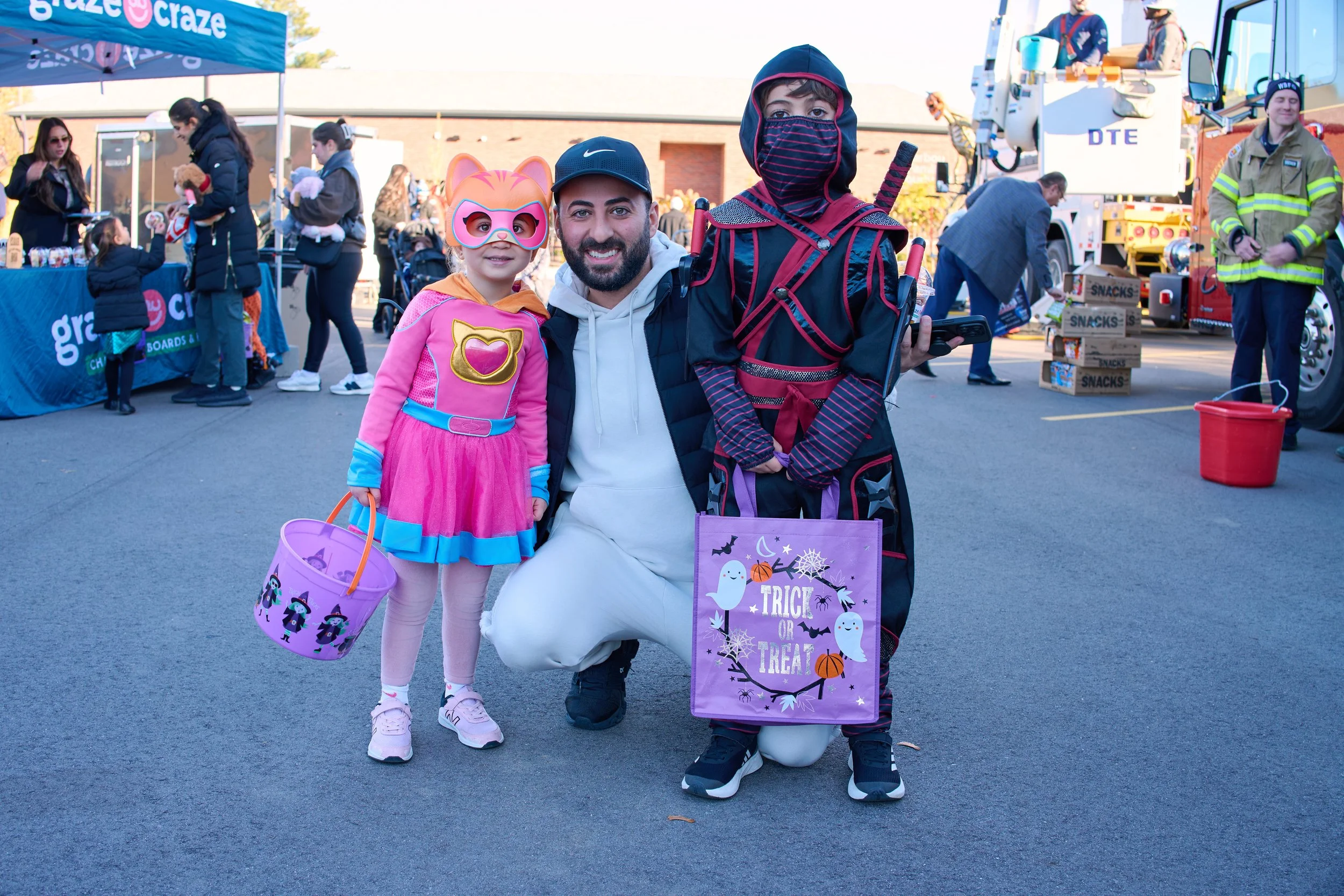
CCF West’s Trunk or Treat in 2025 was a big hit with families.
A few simple reminders for a safe night
BY CN STAFF
Halloween is one of the most anticipated nights of the year for children, with neighborhoods filled with costumes, candy, and families out enjoying the evening together. But with more pedestrians, vehicles, and distractions on the roads, a few simple precautions can help make the night safer for everyone.
“The biggest concerns we have on Halloween night are related to traffic and pedestrian safety,” said Officer Zena Dailey of the West Bloomfield Police Department’s Community Relations/Crime Prevention Unit.
Many trick-or-treaters wear dark costumes or lack reflective gear, making them hard for drivers to spot, and Dailey urges drivers to slow down in subdivisions and residential areas, stay off their electronics, and watch for children who may dart into the roadway. Anyone planning to drink should arrange a designated driver or rideshare rather than get behind the wheel.
In West Bloomfield, official trick-or-treating hours are 6 to 8 p.m. on Oct. 31. Police advise children to clear the neighborhoods promptly after 8 p.m. Families visiting neighboring communities should check local schedules, as hours vary: Bloomfield Hills and Commerce Township run 6 to 8 p.m.; Waterford is 6 to 7 p.m.; and Farmington and Farmington Hills have no set hours.
Families who prefer organized Halloween activities have several options before Oct. 31. West Bloomfield Parks & Recreation’s annual Trick-or-Treat Trail takes place Sunday, Oct. 25, from 3 to 5 p.m. at Marshbank Park, offering children a chance to collect treats along a paved trail from costumed characters and local businesses. Registration is required and the event is expected to sell out; families can register at wbparks.org/event/trick-or-treat-trail.
Commerce Township’s CarnEvil 2 at Glenlore Trails offers a family-friendly, illuminated walk through the forest, running now through Nov.1, while Trunk or Treat at Zap Zone in Waterford will feature candy stations, carnival games, and costume contests on Oct. 25.
Dailey’s top safety recommendations for trick-or-treaters: stay in groups, look both ways before crossing the street, stay alert to your surroundings, keep to sidewalks whenever possible, and examine all treats before eating them. Avoid shortcuts through yards, alleys, or private property.
Children should travel in small groups, ideally three to five people, and younger children should be accompanied by a responsible adult. There’s no law setting an age at which a child can trick-or-treat alone, Dailey noted, so parents should use their own judgment.
She suggests weighing whether a child is mature and responsible enough to be on their own, whether they have a way to reach a parent in an emergency, how familiar they are with the area, whether the parent knows who they’ll be with and where they’re headed, and whether they understand basic rules like staying with their group and never entering a stranger’s home or vehicle.
If kids are heading out without an adult, Dailey recommends they map their route ahead of time so parents know where to find them. Adults and older children should keep phones and other devices put away while walking so they stay alert to traffic.
Dailey also worries about children becoming separated from their families. She recommends a simple trick: write your name and phone number on a piece of paper and tuck it in your child’s pocket. That way, if a child gets separated and finds a trusted adult or police officer, that contact information can help reunite the family.
Children should also understand they should never leave the area with someone they don’t know—even if that person claims to be helping them find their parents.
Costumes should be fun, but safety-focused. Dailey advises checking that a costume fits well so it doesn’t cause tripping, and that a child can see and breathe comfortably if wearing a mask—face paint is a good alternative. Choose flame-resistant, light-colored materials when possible, and add reflective tape, a glow stick, or a flashlight so kids are visible to drivers. Costume props should be soft materials like foam or flexible plastic; realistic replica firearms should never be carried.
Some children get overwhelmed by the crowds, costumes, and noise of the night. Dailey suggests preparing kids ahead of time: walk the neighborhood during daylight so it’s familiar (keeping in mind it will look and feel different after dark), let your child choose a costume they’re comfortable in, start out while it’s still light, and remind them it’s okay to skip a house that feels too scary.
Teenagers should follow the same basic rules as younger trick-or-treaters, Dailey said, but independence brings added concerns. Teen drivers should slow down and stay alert for pedestrians in residential areas and never drive under the influence.
Parents should know where teens are going to any parties, who they’ll be with, and how they’re getting home—and if alcohol or drugs are present, teens should have a safe way to leave rather than ride with an impaired driver. Pranksters should keep it fun and respectful, since what feels harmless can sometimes lead to injury, property damage, or criminal charges. Dailey also recommends setting a check-in time and an expected time home.
Once children return, an adult should inspect all candy before anything is eaten. Discard treats with torn, punctured, or loose wrappers, and only accept homemade treats or fresh fruit from people the family knows and trusts. Candy should be accepted from the front doorway—children should never enter a stranger’s home to receive a treat.
Homeowners can help too. Keep porches and walkways well-lit and free of cords, decorations, and other tripping hazards. If you’re not handing out candy, turn off your outdoor lights.
Halloween is stressful for pets, too, Dailey said, with the constant doorbell ringing and stream of costumed visitors. Keep pets indoors in a comfortable, secure area so they can’t slip out the door, and make sure they have identification—a collar or microchip—in case they do get loose. Keep candy and treats out of pets’ reach; chocolate, raisins, and sugar-free treats containing xylitol can be highly toxic to dogs and cats.
Dailey also encouraged residents not to hesitate to contact police if something feels wrong. Call 911 for a fight or physical altercation, someone being threatened or assaulted, an attempted break-in, a person actively committing a crime, a dangerous or impaired driver, a serious crash or injury, or a lost or missing child.
For non-emergencies in West Bloomfield—like reporting property damage discovered after the fact or a suspicious circumstance that’s no longer occurring—use the non-emergency line at 248-975-9200. “If you are unsure whether a situation is an emergency, it’s okay to call 911 and explain what you are seeing,” Dailey said.
Her bottom-line message for the night: “Drivers, slow down and stay alert! Trick-or-treaters, make sure you’re seen—use reflective gear or a flashlight.” And her closing reminder for anyone heading home from a Halloween gathering: never drink and drive and never get in the car with an impaired driver.
Halloween is meant to be a night of fun and community. Taking a few extra precautions can help ensure that the only surprises families bring home are the good ones.