
Klodia Hanna
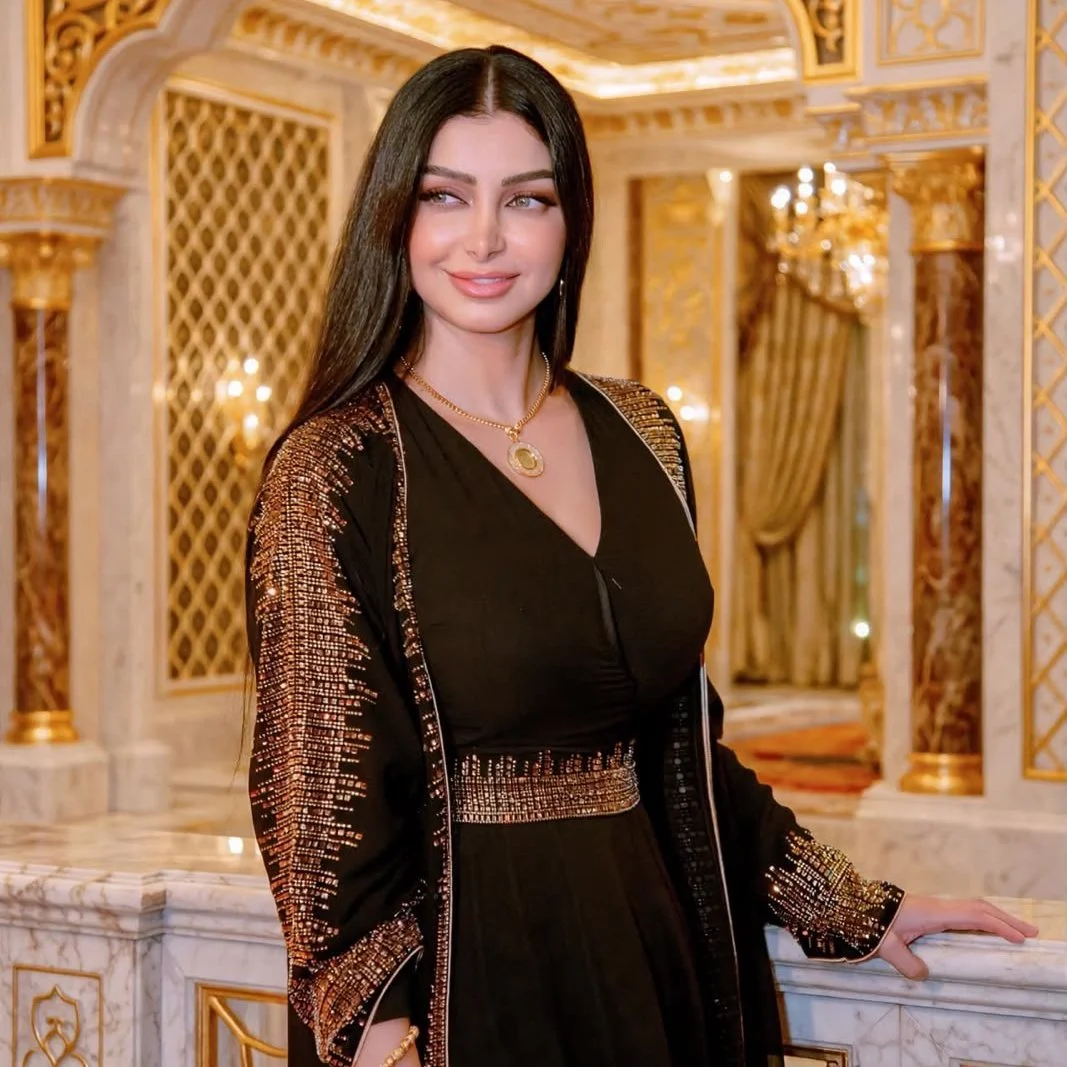
Klodia Hanna was named Guest of Honor at the Dhofar International Theatre Festival.
A Chaldean voice on the Arab stage
By Hanan Qia
Amidst the corridors of Arab entertainment and the glow of stardom, artist and former Miss Arab World Klodia Hanna stands out as a unique Mesopotamian voice. She has successfully carried her Chaldean identity and rich cultural heritage into the widest artistic and media arenas.
From a childhood in Baghdad steeped in memories of the villages of Batnaya and Teleskof, to migration, resettlement, and academic training across Egypt’s theaters and screens, Klodia has remained firmly grounded in her ancestral traditions and mother tongue—staunchly believing that art is a message, and honoring one’s roots is both a duty and a legacy.
In this exclusive conversation with the Chaldean News, the Iraqi-Chaldean star opens her heart to reflect on her journey, early memories, and an unwavering sense of belonging.
Between Batnaya and Teleskof: The Call of the Roots
CN: Let us begin with your roots. Tell us about yourself, your family, where you were born and raised in Iraq, and the most prominent memories that environment etched into your character and life.
Klodia: I am Klodia Najah Zeya Hanna Hangulla—Chaldean to my very core. My father is from the village of Batnaya, and my mother is from Teleskof (from the Bayt Jajjo family), and the name “Hangulla” also means Hanna in our Chaldean language. I was born in the capital, Baghdad, and my fondest childhood memories take me back to those warm family visits to my village of Batnaya and to Teleskof.
That environment left an indelible mark on my personality. Even though we left Iraq when I was young, our household remained deeply anchored in authentic Chaldean traditions. We spoke our native Chaldean language at home every day, preserved our customs, prepared our traditional cuisine, celebrated our feasts, and upheld every aspect of our identity wherever we went.
The Language of Christ and the Pride of Heritage
CN: What does being Iraqi and Chaldean mean to you? How do you express pride in Iraq and in your Chaldean heritage and culture, especially as a well-known figure across the Arab entertainment industry?
Klodia: Being Chaldean is a source of immense pride and boundless honor. We, the Chaldeans, built a magnificent civilization that taught the world, and from our land came our father, Abraham. I cherish my Chaldean language because it is the language of Jesus Christ.
I always strive to be an ambassador for my heritage; in every Arab cultural forum and media appearance, I hold my head high and proudly declare: “I am Chaldean.”
Even in my musical work, I released a track blending the Chaldean language with the Egyptian dialect to introduce the wider Arab public to our culture and melodies. I undertook all of this purely through personal effort and perseverance, without external backing, driven by the conviction that our presence is a duty—especially since our Chaldean community was scattered across the diaspora during turbulent decades, long before the digital age made global connection effortless.
First Steps into the Limelight
CN: How did your journey into art, media, and modeling begin? What was the breakthrough moment when you felt this path could evolve from a passion into a professional career and stardom?
Klodia: My journey began after we left Iraq; I spent my early years moving among Lebanon, Syria, and later Jordan. I initially worked in modeling and fashion shows. Distinct Chaldean features certainly played a role; historically and today, Chaldean women are celebrated for their elegance, striking presence, and grace.
From modeling, I moved through several transitions until I was crowned Miss Arab World in 2006. That title served as a gateway to Egypt and marked the start of my professional career in music and acting.
A Multifaceted Journey: From Commercials to Stage and Screen
CN: Tell us about the key milestones in your artistic path—from modeling to acting, media presentation, and singing. Which projects or experiences had the deepest impact on you?
Klodia: Modeling in Lebanon and Syria provided the foundational groundwork, followed by television presenting on Iraqi broadcast channels based in Jordan, alongside commercial work. When I relocated to Egypt after winning the beauty title, numerous roles were offered to me, but I was determined to refine my artistic identity.
I ventured into singing with genuine passion, releasing tracks that resonated widely with the public, most notably the hit song “Eshtighalat” and the track combining Egyptian lyrics with the Chaldean language.
Afterward, I dedicated myself to formal acting training; I studied at the Higher Institute of Theatrical Arts and trained at the Artistic Creativity Center at the Cairo Opera House under director Dr. Khaled Galal.
I went on to star in Egyptian television series and feature films, received industry awards, and served as a jury member at several international Arab festivals. My constant motivation has been to elevate the presence of the Iraqi-Chaldean artist across the Arab world and the diaspora.
The Beauty Crown and Iraqi Memory
CN: Winning the title of Miss Arab World was a defining milestone. What do you recall from that experience, and how did it shape your career and open new doors in art and media?
Klodia: Being crowned Miss Arab World in 2006 was the true breakthrough and catalyst for my career. The experience opened every door across art and broadcasting, bringing me into direct contact with audiences in Egypt and across the region.
The amusing part is that despite my extensive work in acting, singing, and hosting—well known to regional audiences—the Iraqi public back home still predominantly associates me with that initial milestone, often referring to me simply as “Klodia, Miss Arab World.” That crown remains deeply etched in their memory as the symbol of my debut.
Between a Passion for Law and Artistic Defiance
CN: Beyond art and fame, tell us about your education and the role your family played in shaping your personality. Were there specific people or circumstances that influenced your choice of path?
Klodia: Academically, I studied acting, theatrical directing, and improvisation. Earlier in life, my personal ambition was to study law and practice within criminal justice. However, regulatory barriers requiring domestic citizenship to practice trial law prevented me from pursuing that career path, as I had no desire to work merely as a corporate legal consultant behind an office desk.
As for my family, while they came to offer their love and support later on, they were not encouraging of a career in the arts at the outset; they preferred that I pursue business administration or law.
Choosing this path was entirely my own decision, fueled by my independent nature and a fascination with art that began in my childhood in Iraq. I was captivated by the creative world and resolved to take on this challengeon my own and with full conviction.
A Message to the Diaspora and Future Generations
CN: In closing, what message would you like to share with our Chaldean brothers and sisters across America and the world, and especially with the younger generation, regarding Chaldean identity, Iraq, your journey, and your future aspirations?
Klodia: I want to tell our Chaldean community across America and the world: Take deep pride in your roots and your ancient heritage; our Chaldean identity is an honor. My special appeal to the younger generation is to hold tightly to our beautiful Chaldean language and preserve it inside your homes.
I am extraordinarily proud of our people. Wherever they settle, they leave a positive mark—diligent, cultured, distinguished by refinement, high values, and genuine integrity, excelling in every sector of life and work. We are a people who carry civilization in our very DNA. I thank you from the bottom of my heart for your continued love and support. My enduring ambition is to strengthen ties with our Chaldean diaspora everywhere and to consistently represent Iraq and our great Chaldean heritage with dignity.