
Michigan’s Moment
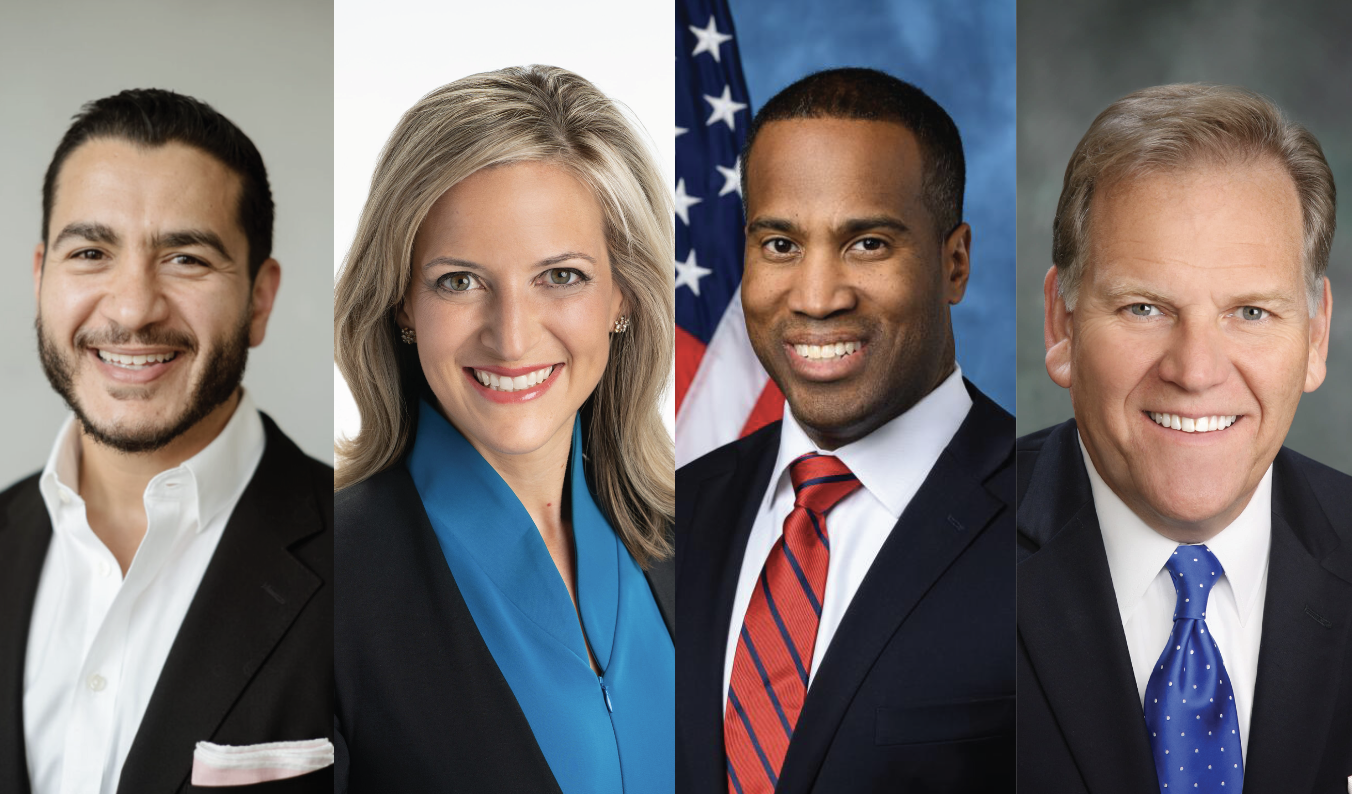
Candidates make their case to Chaldean voters
The eyes of the nation will be on Michigan this November 3rd.
With an open U.S. Senate seat and a closely watched race for governor, Michigan’s 2026 midterm election carries implications that reach far beyond the state’s borders. The outcome will help determine who leads Michigan at a pivotal time for the state, while the Senate race could have consequences for the balance of power in Washington.
These races also represent an opportunity to understand where the candidates stand on the issues that affect families, businesses, and communities—from the economy and education to public safety, foreign policy, and America’s relationship with Iraq and the broader Middle East.
In the governor’s race, voters will choose between Democratic Secretary of State Jocelyn Benson and Republican U.S. Representative John James. In the U.S. Senate race, Democratic candidate Abdul El-Sayed and Republican candidate Mike Rogers are seeking the seat being vacated by Senator Gary Peters.
As Michigan takes center stage, Chaldean News asked the candidates to share their priorities, their vision for the state and country, and their perspectives on issues important to Michigan’s Chaldean American community. Here is what they had to say.
Jocelyn Benson
Jocelyn Benson, Michigan’s Democratic gubernatorial candidate, wants to “make Michigan the small business capital of the country.”
Her office has reported reducing average Secretary of State (SOS) office wait times from hours down to about 20 minutes, installing more than 160 self-service renewal kiosks across the state, and doubling the availability of transactions and services accessible to residents online.
Benson says her approach would emphasize streamlining processes, adopting best practices, and investing in infrastructure. To that end, once elected, she wants to bring high-speed rail to Michigan, making it easier for both natives and tourists to travel the state. She also plans to modernize LARA (Michigan’s Department of Licensing and Regulatory Affairs) and cut out the red tape and delays that businesses face.
“Michiganders have the talent, the ideas, and the ingenuity to lead the world in everything,” says Benson, “but it’s up to government to create an environment where that’s possible.”
As governor, she would invest in small businesses, cut costs, and make it easier to start and grow a small business. She wants to turn Michigan into “the economic engine of the Midwest.”
On energy, Benson’s campaign plan argues that Michigan families pay some of the nation’s highest utility bills while enduring frequent outages. She proposes banning rate increases she says only pad utility profits, tying utility returns to reliable service, increasing outage credits, reforming appointments to the Michigan Public Service Commission, barring regulated utilities from political spending, and requiring data centers to cover the energy costs they create.
On public safety, Benson calls preventing gun violence a top priority and supports stricter rules on how automated license plate readers collect and store residents’ data.
“Michigan is a place that builds and solves problems,” says Benson. “We don’t wait for permission to lead and, right now, we’re sitting on exactly what the twenty-first century needs most: a home for research and innovation, natural resources and geographic advantage, and a history of growing and building things.”
Benson points out that Michigan is home to four leading research institutions and says that the University of Michigan is currently beating Stanford and MIT in new startup launches.
Education is also central to her platform. Her campaign’s five-pillar education plan aims to make Michigan a top-10 state for education, setting a $60,000 minimum starting salary for teachers, expanding pre-K to all 3- and 4-year-olds, creating a statewide strategy to reduce chronic absenteeism, and establishing a “Michigan Education Guarantee” so that a high school diploma signals college or career readiness. Benson is the child of public-school teachers who were also strong advocates for their students and their colleagues.
Following in their footsteps, Benson served as an associate professor and associate director of Wayne State University’s (WSU) Damon J. Keith Center for Civil Rights and served as dean of WSU Law School from 2012 to 2016, making her, according to WSU, the youngest woman in U.S. history to lead a top 100 accredited law school.
That path—from Montgomery, where she investigated white supremacist and neo-Nazi hate crimes, to Selma, to clerking for Judge Damon Keith in Detroit—she says instilled in her “a deep sense of responsibility” to carry forward the work of those who marched at the Edmund Pettus Bridge.
Asked what values from her own life have shaped her leadership, Benson points to family as much as public service. Her husband’s military service, she says, showed her firsthand “the lack of resources and support our military families are given”—which is why she founded Military Spouses of Michigan. “Government should be a helping hand to our families,” she says, “not another obstacle.”
On what the Chaldean American community brings to Michigan, Benson points to her own administration as a model. “I’m proud that, as Secretary of State, my administration has the most diverse staff in the executive office in decades,” she says, adding that she believes “the most effective solutions come from those closest to an issue.”
She sees the same principle applying statewide: “The Chaldean American community contributes unique perspectives, solutions, and skills to their communities and our state as a whole—and we’re better off because of it.”
Asked about religious freedom and vulnerable communities abroad, Benson says, “I believe the moral responsibility of the next Governor is to raise wages, bring down costs, and protect the freedoms and safety of all Michiganders…protecting Michiganders’ rights to practice their religion and safeguarding their freedom from religion.”
John James
John James, the Republican candidate for governor, represents Michigan’s 10th Congressional District. A graduate of the U.S. Military Academy at West Point, he spent eight years on active duty as a Ranger-qualified Army aviation officer, leading two Apache helicopter platoons in combat during Operation Iraqi Freedom.
After leaving the military in 2012, he joined his family’s Detroit-based company, James Group International, eventually serving as its president and as CEO of Renaissance Global Logistics, a supply-chain management firm. He also earned a master’s degree in supply chain management from Penn State and an MBA from the University of Michigan.
He says his years running the family business gave him firsthand experience with excessive regulation, bureaucratic red tape, and high taxation. If elected, James says, “On Day One I will begin implementing an immediate fiscal cleanup of state government, starting with a comprehensive statewide audit to eliminate waste, fraud, and abuse, as well as unnecessary rules and duplication.”
As a U.S. representative, James points to several projects and investments he says have benefited the residents in his district. “I have delivered real results for my constituents,” says James, “having secured crucial funding for the expansion of military operations at Selfridge Air National Guard Base and for critical upgrades of the Mound Road corridor”—both, he notes, significant to daily life for many of his Chaldean American constituents.
As governor, James’ top priorities will include economic growth and reducing the cost of living. He plans to eliminate Michigan’s personal income tax through a phase-out, reform property taxes, cut the corporate tax, and reduce the regulatory burden on businesses. James states, “I will also work to reduce the cost of energy and utilities by reversing the costly ‘green energy’ mandates and replacing the Michigan Public Service Commission utility regulators that have approved runaway rate increases.”
He adds that he sees room for the Chaldean community to take an even larger role in the state’s economic strategy, pointing to organizations like the Chaldean American Chamber of Commerce and the Ark Angel Fund as partners in “new pathways to entrepreneurship and investment.”
James seeks to completely overhaul the Michigan Economic Development Corporation, implementing a new strategy that shifts the focus from luring hyperscale projects to retaining the businesses that already exist. “My objective is to create a new culture in state government—one that is customer service-obsessed, honest, and responsive to residents and business owners alike,” says James.
Education is a priority for this candidate. James would opt Michigan into the new federal Education Freedom Tax Credit and would shift funding away from administrative bureaucracy and into the classroom. Public safety is also important to his campaign. “I’ll appoint rule-of-law judges that will restore order and keep repeat offenders in jail where they belong,” says James.
James, who grew up near Detroit’s historic 7 Mile Chaldean neighborhood, points to faith as the primary value that sustains him. “Without faith, nothing else matters,” he says, citing Philippians 4:13.
On Iraq’s Christian minority specifically, James speaks from both his military and congressional experience. “It is devastating to see how the Christian population in Iraq declined,” he says. As governor, he says he’ll “continue to raise my voice against tyranny and persecution as I have done in Congress,” while also working with Chaldean American community leaders “to explore economic opportunities through trade and other investments to support the communities in their ancient lands while benefiting the people of our state.”
“Time-honored truths and traditions have eroded over the past few decades,” says James. “Families have broken down, people have less faith, and they seem to have forgotten the importance of history and tradition.” He calls the Chaldean community “an oasis of light, truth” against that tide.
Abdul El-Sayed
Abdul El-Sayed, the Democratic candidate for U.S. Senate, is running on a platform anchored by Medicare for All—a policy he frames as a pocketbook issue as much as a moral one.
“Medicare for All is about finally putting our healthcare dollars to work for us, not for insurance companies,” he says. He argues most Americans, aside from “the ultra-rich,” would end up paying less for more: no more premiums, copays, deductibles, or surprise bills eating into family budgets.
El-Sayed, born in Rochester Hills to Egyptian immigrants, was raised by his father and stepmother, a Michigan native. After captaining three sports teams at Bloomfield Hills Andover High School, he graduated Phi Beta Kappa from the University of Michigan in 2007 and gave the student commencement address, after which Bill Clinton encouraged him to consider public service.
El-Sayed began medical school at U of M, where he led a medical mission to Peru and organized support for a local free clinic. He then earned a Rhodes Scholarship and a doctorate in public health from Oxford. He earned his medical degree from Columbia in 2014 and pursued a career in research and public health rather than clinical practice.
El-Sayed taught epidemiology at Columbia and served as director of Wayne County’s Department of Health, Human, and Veterans Services from 2023 to 2025; he brings that public-health lens to how he talks about the economy more broadly.
He argues Washington treats healthcare “as an isolated industry focused solely on acute, bedside interventions,” ignoring how poverty, unstable housing, and food insecurity drive most illness in the first place. “Poor health and poverty fuel each other in a toxic cycle,” he says, “making it nearly impossible for families to achieve economic mobility or stability.”
Money in politics is another central plank. El-Sayed says he won’t take money from corporate PACs, dark money groups, or fossil fuel interests, and wants to overturn Citizens United, pass the DISCLOSE Act, ban congressional stock trading, and close the revolving door between government and lobbying.
“Our democracy should belong to the people,” he says, “not to corporations or billionaires trying to buy power.”
On housing, El-Sayed’s campaign platform calls for a federally funded building boom and streamlined local regulations, along with banning large corporations from speculating in the housing market, outlawing algorithmic rent-setting software, and creating a federal renter bill of rights. On education, he supports universal childcare and pre-K, a $60,000 minimum teacher salary, full federal funding for special education, and tuition-free paths to college or apprenticeship, and he opposes school vouchers.
Asked directly how he’d balance advocating for Michigan’s Chaldean Americans at home with their concerns for Iraq’s shrinking Christian minority, El-Sayed points to both economic and diplomatic commitments. “I have long been committed to being a champion for Michigan’s Chaldean American community, which is a cornerstone of our state’s economic, cultural, and civic life,” he says.
In the Senate, he says he’d work to empower Chaldean-owned small businesses by “tackling corporate monopolies, expanding access to capital, and lifting health care burdens,” while pushing “a diplomacy-first U.S. foreign policy that protects religious minorities around the world, including Iraq’s Christian minority”—through diplomatic oversight, human-rights enforcement, and restored humanitarian and refugee programs.
He has also called for an immediate and permanent ceasefire in Gaza, an end to U.S. military aid to Israel, and Palestinian-led rebuilding with full humanitarian access.
On small business specifically—an area where Chaldean Americans are heavily represented in grocery, food, hospitality, and service industries—El-Sayed points to many of the same policy levers: Medicare for All to relieve small owners of health-cost burdens, breaking up monopolies, expanded federal lending and procurement access, closing corporate tax loopholes, ending the employer-side payroll tax, and passing the SAFER Banking Act.
“These are the steps we need to take,” he says, “to build an economy that works for working people, keeps wealth in our neighborhoods, and empowers the next generation of entrepreneurs.”
Mike Rogers
Mike Rogers, the Republican candidate for U.S. Senate, is making his second consecutive bid after narrowly losing Michigan’s 2024 Senate race to Elissa Slotkin.
Rogers brings a background in the military, law enforcement, and federal government. Raised in Livingston County by a father who was a teacher, coach, and vice principal and a mother who led the local chamber of commerce, he graduated from Adrian College, served in the U.S. Army as a lieutenant from 1985 to 1989, and then spent five years as an FBI Special Agent working organized crime and public corruption cases in Chicago.
Seeing that corruption up close, he says, is what led him to run for the Michigan State Senate in 1994 and then Congress in 2000, where he served until 2015 and chaired the House Intelligence Committee. He says he was among the earliest voices in Congress warning about the economic and security threat posed by China, including efforts to steal from industries like Michigan’s auto sector. His wife, Kristi, worked with the Department of Defense and later U.S. Customs and Border Protection, and their son, a Naval Academy graduate, is a Navy officer, the fourth generation of the family to serve in the military.
Reflecting on his career, Rogers says, “That experience taught me that putting the state and country ahead of everything else, ahead of politics, ahead of party, is the only way actually to deliver for the people you serve.” If elected, he says he’ll focus on three priorities: literacy in schools, bringing manufacturing jobs back to Michigan, and affordable housing.
On breaking with his own party when Michigan’s interests are at stake, Rogers points to his record. “Michigan comes first, period,” he says, citing his vote against the Wall Street bailout—a break with his own party’s president at the time—as an example. “When the national party’s priorities line up with what’s good for Michigan, I’ll support them. When they don’t, I’ll say so and fight for our state instead.”
On Social Security and Medicare, Rogers frames the programs as commitments the government is obligated to keep. “Social Security and Medicare are promises our government made to the people who paid into them their whole lives, and I intend to keep those promises,” he says, pointing to a 2025 tax law that created a temporary additional deduction for seniors, reducing or eliminating federal income tax on Social Security benefits for many recipients.
Asked how he’d advocate for Michigan’s Chaldean Americans in the Senate while addressing concerns about Iraq’s Christian minority, Rogers points to relationships built over years in the district and his national security background. “The Chaldean community’s resilience, faith, and entrepreneurship have made Michigan stronger,” he says, and pledges to keep “standing with Chaldean-owned businesses and making sure your voice is heard on the issues that matter to Michigan families.”
On the situation in Iraq specifically, he points to his time chairing the House Intelligence Committee: “I understand the security and humanitarian realities facing Iraq’s Christian minority, and I know that real change comes from sustained pressure. I intend to use my relationships in the national security community to keep pushing for that, at home and abroad.”
On the Middle East, Rogers describes himself as a lifelong friend of Israel and says Iran must be denuclearized and its proxies, including Hezbollah and Hamas, defeated before a peaceful resolution can follow.
On the cost of living, Rogers’ plans center on housing and healthcare pricing. His housing plan would cut regulations he says drive up building costs and create tax-free savings accounts to help families save for a down payment. On healthcare, he wants more transparency in drug and hospital pricing “so patients know what things actually cost instead of getting blindsided by their bills.”
Conclusion
As Michigan’s Chaldean American voters weigh these races, the candidates’ responses reveal both common ground and real divides—on healthcare, taxes, and the role of government itself—alongside a shared recognition that the Chaldean community is a vital part of Michigan’s economic, civic, and cultural fabric.
In the governor’s race, for example, both candidates criticize rising utility rates and call for changes at the Michigan Public Service Commission, though they differ sharply on clean energy and how to get there. Both Senate candidates want to cut regulations that make building harder, though El-Sayed also calls for major federal investment and restrictions on corporate landlords.
Whether voters are focused on small-business growth in Southeast Michigan, the future of Iraq’s Christian minority, healthcare, education, or the role of government, the candidates have offered distinct approaches to issues that matter to Michigan and its Chaldean American community.