
Wedding Trends 2026
Tradition meets personal expression
By Sarah Kittle
When it comes to Chaldean weddings, the celebration has always extended beyond a single day. Layered with faith, family and detail — from the rings exchanged at the altar to the flowers carried down the aisle and from the invitation to the reception — 2026 wedding trends lean further into personalization and intentional design. Couples planning to wed this year are finding meaningful ways to blend modern aesthetics with time-honored traditions.
Across the industry, weddings are becoming less about rigid formulas and more about storytelling. For Chaldean couples, that shift feels natural. Their celebrations have long been rich with symbolism and deeply personal touches — now expressed through a contemporary lens.
Memories in Resin
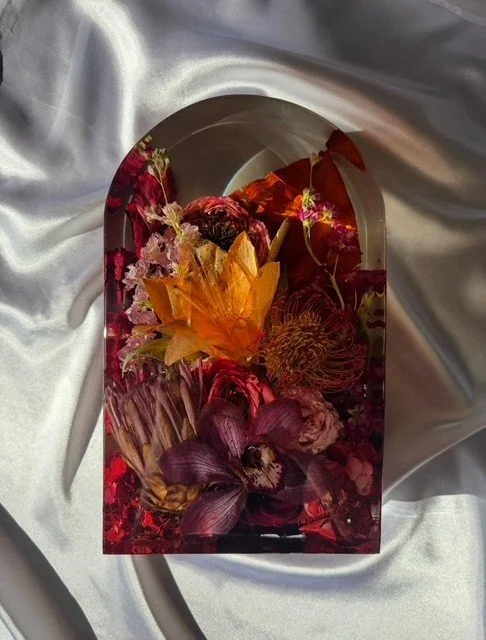
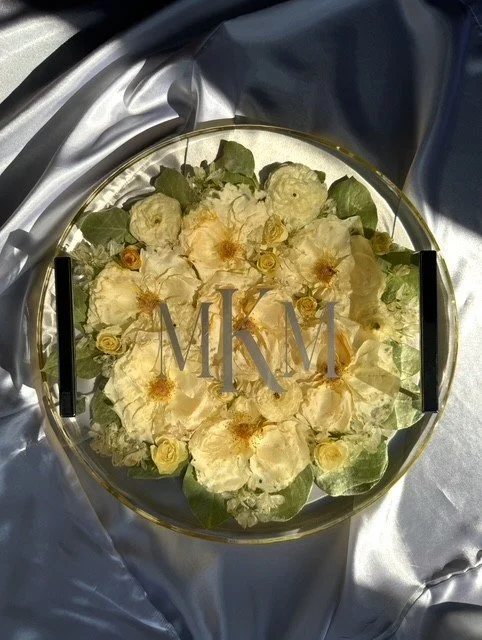
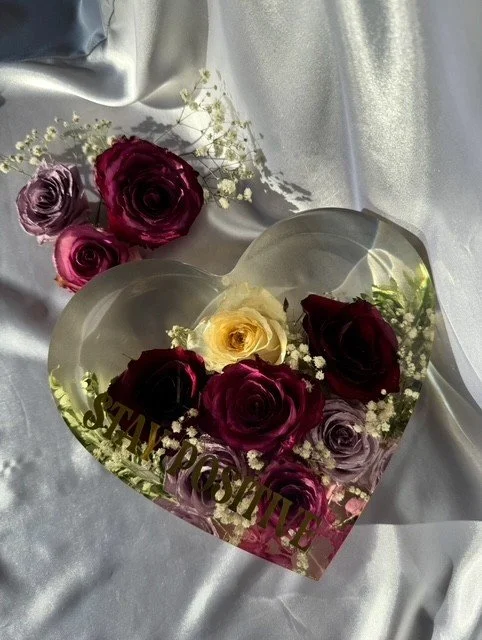
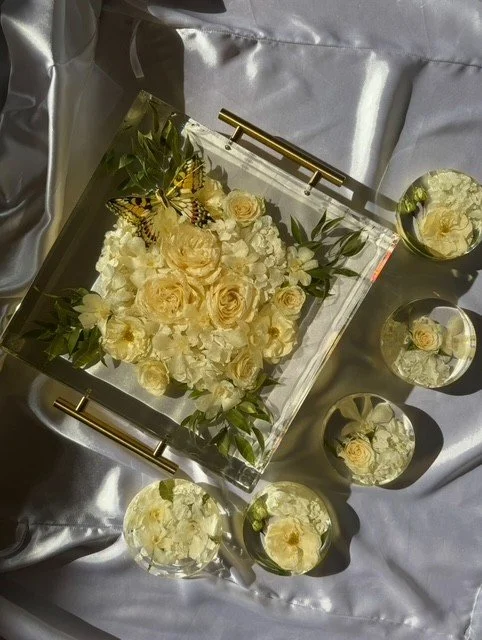
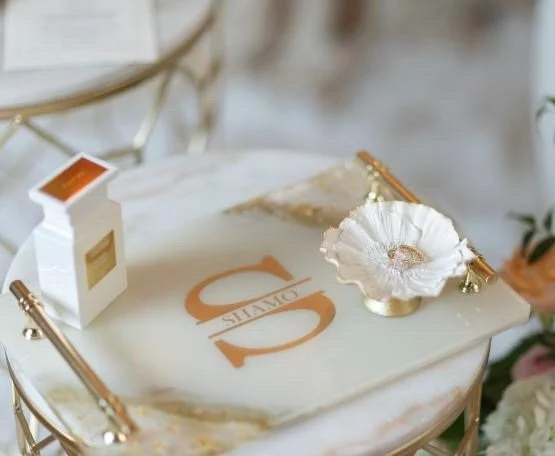
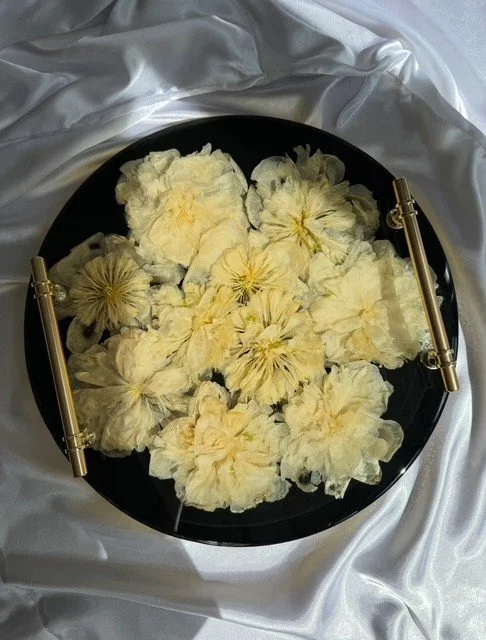
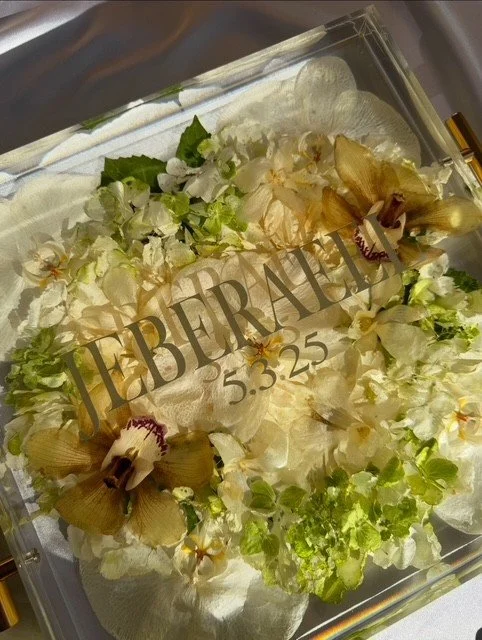
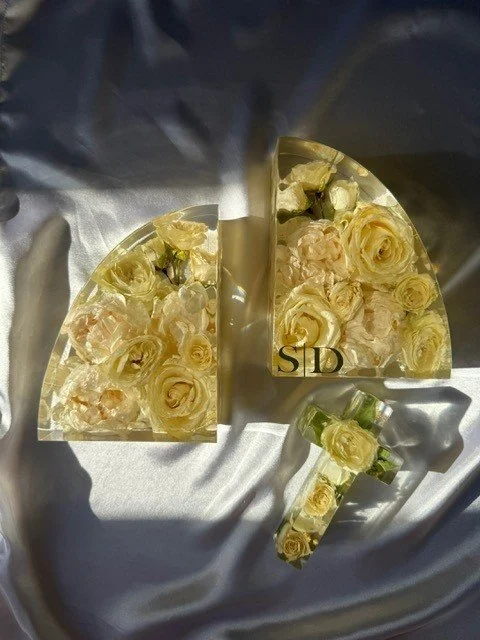
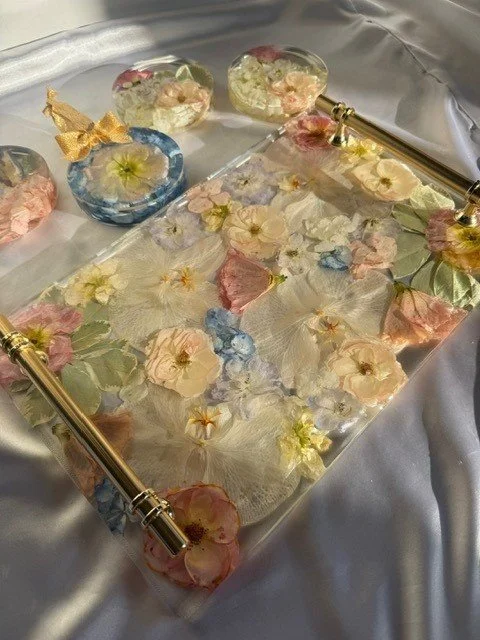
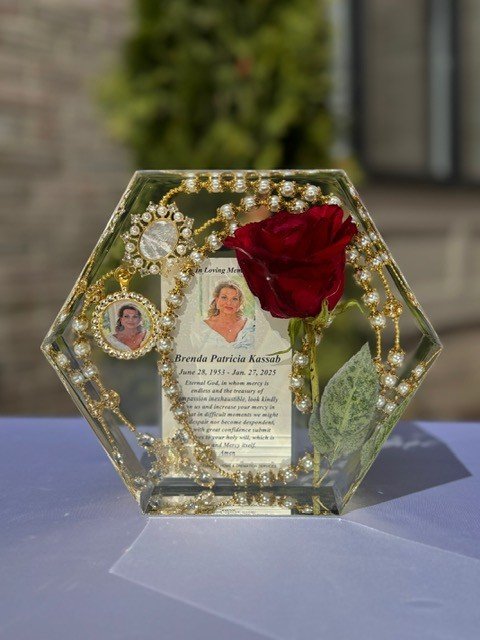
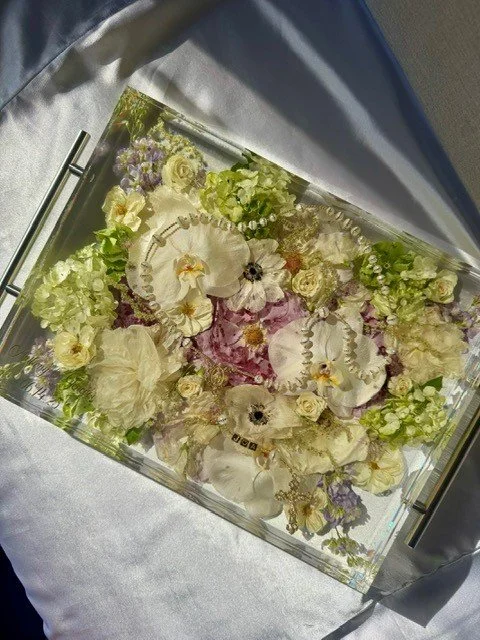
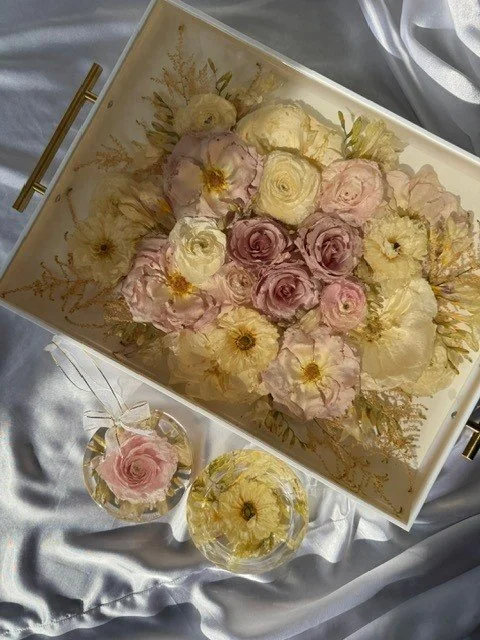
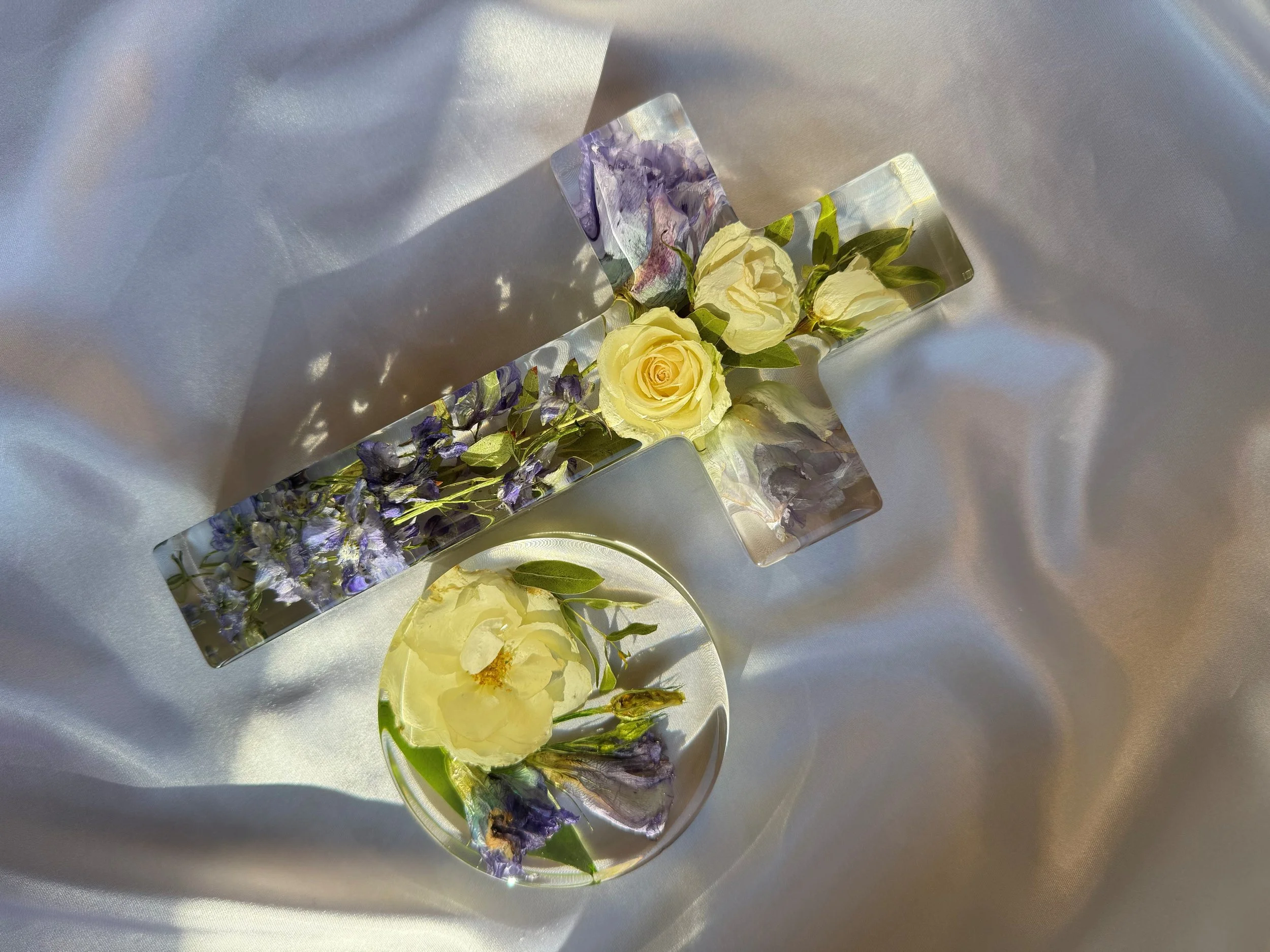
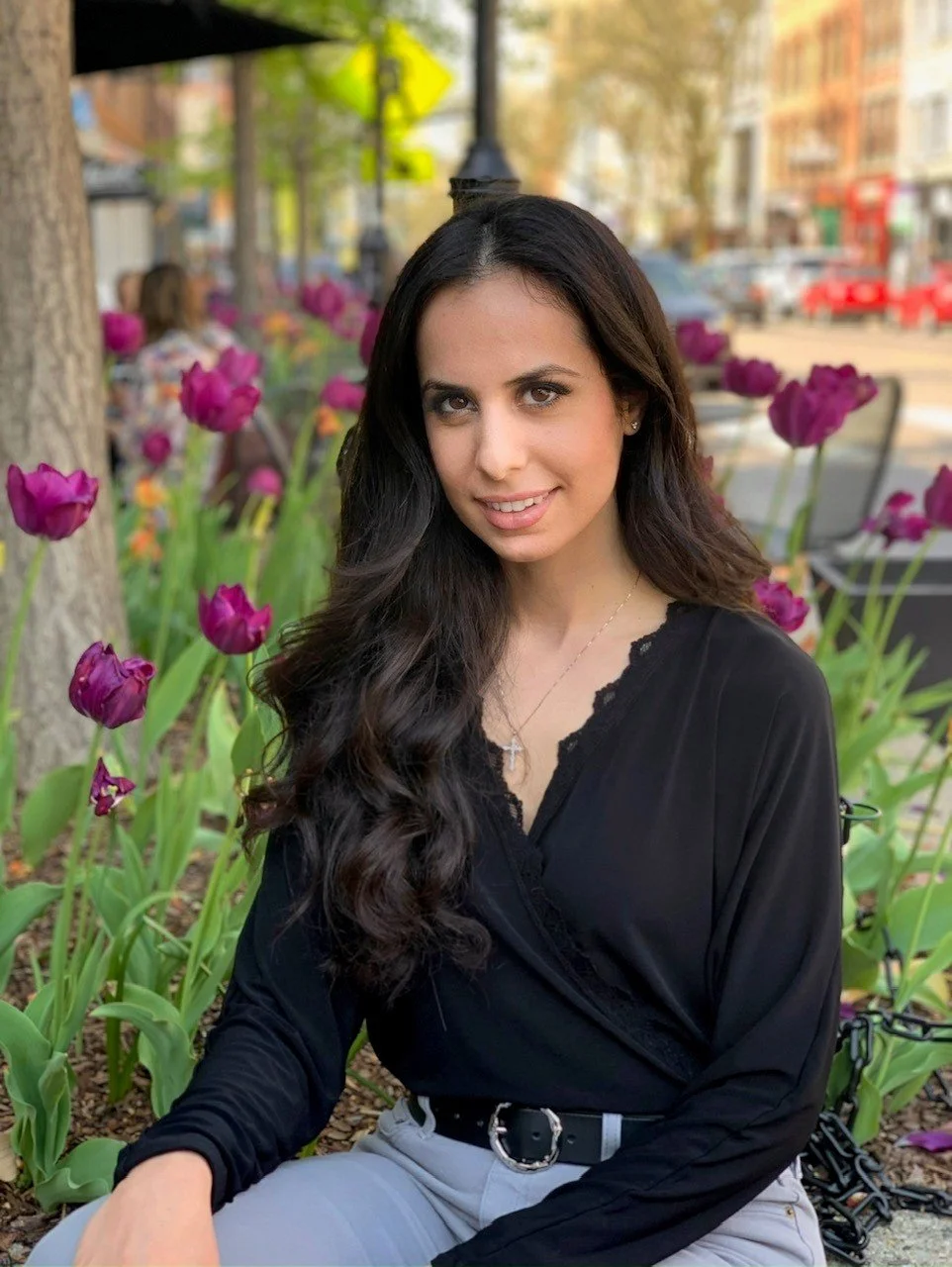
For many brides, the wedding day is a fleeting, magical moment—full of joy, love, and memories that pass in the blink of an eye. Valerie Dado, a West Bloomfield-based dental hygienist turned resin artist, has found a way to capture those moments and make them last forever. Through her bridal-focused resin pieces, she transforms flowers, invitations, and keepsakes into lasting mementos that tell the story of a couple’s most cherished day.
Valerie’s journey into resin art began unexpectedly. “I was pregnant with my third child and scrolling on Instagram when I came across resin projects,” she recalls. “I became obsessed, watching videos and reading about it. I didn’t even know I had this artistic side until I tried it myself.” She began experimenting with small decorative items—trays, keychains, and coasters—but her first foray into wedding preservation came at the request of a friend: a bridal bouquet she could preserve as a keepsake.
“It was my first real attempt at flower preservation,” Valerie explains. “I had to learn new techniques and even find the right type of resin. But when it came out beautifully, I knew I had found a direction I wanted to pursue.” Today, flower preservation forms the core of her business, though she still creates a variety of resin items for her clients.
Valerie emphasizes that her work is more than just a craft—it is a delicate balance of artistry, storytelling, and technical precision. Each piece begins with a careful design process, where she visualizes the layout and composition of the preserved flowers, ensuring the finished piece is both beautiful and meaningful. “You can throw flowers in a mold and preserve them, but the way I design them, I want it to look like art and tell the story of the day,” she says.
Her clientele largely reflects the Chaldean community in West Bloomfield, Sterling Heights, and nearby areas. Valerie has preserved countless bridal bouquets, invitations, and even rosaries, tailoring each piece to reflect the individual tastes and cultural traditions of her clients. “Chaldean brides often include unique touches in their bouquets, and I try to incorporate those elements whenever possible,” she says.
The process is meticulous and time-consuming. After receiving a bouquet, Valerie dries the flowers for about a month before beginning the resin pouring process, which can take several additional weeks. The final result is a memory frozen in time—a striking reminder of a day that will never come again.
Instagram plays a pivotal role in her business, allowing Valerie to showcase her finished work and connect directly with clients. “Instagram is essentially my business,” she says. “I love surprising brides with the finished piece and seeing their reaction—it’s the best part of what I do.”
Valerie’s work ranges from small keepsakes, like coasters or keychains, to showstopping creations, such as a 16-inch side table crafted entirely from resin and preserved flowers. Pricing is flexible, making it accessible for a wide range of budgets—from $10 ornaments to $1,000 custom tables.
For brides considering preserving their wedding flowers, Valerie advises planning ahead. “Contact me in advance so I can prepare materials and ensure your flowers are at their freshest,” she says. “It makes the whole process smoother, and you get the most beautiful result.”
What started as a hobby fueled by curiosity and creativity has blossomed into a thriving business, one that combines artistry, storytelling, and the preservation of precious memories. For Valerie Dado, each resin piece is more than just a work of art—it’s a tangible connection to life’s most treasured moments.
Timeless Jewelry in a Trend-Driven World
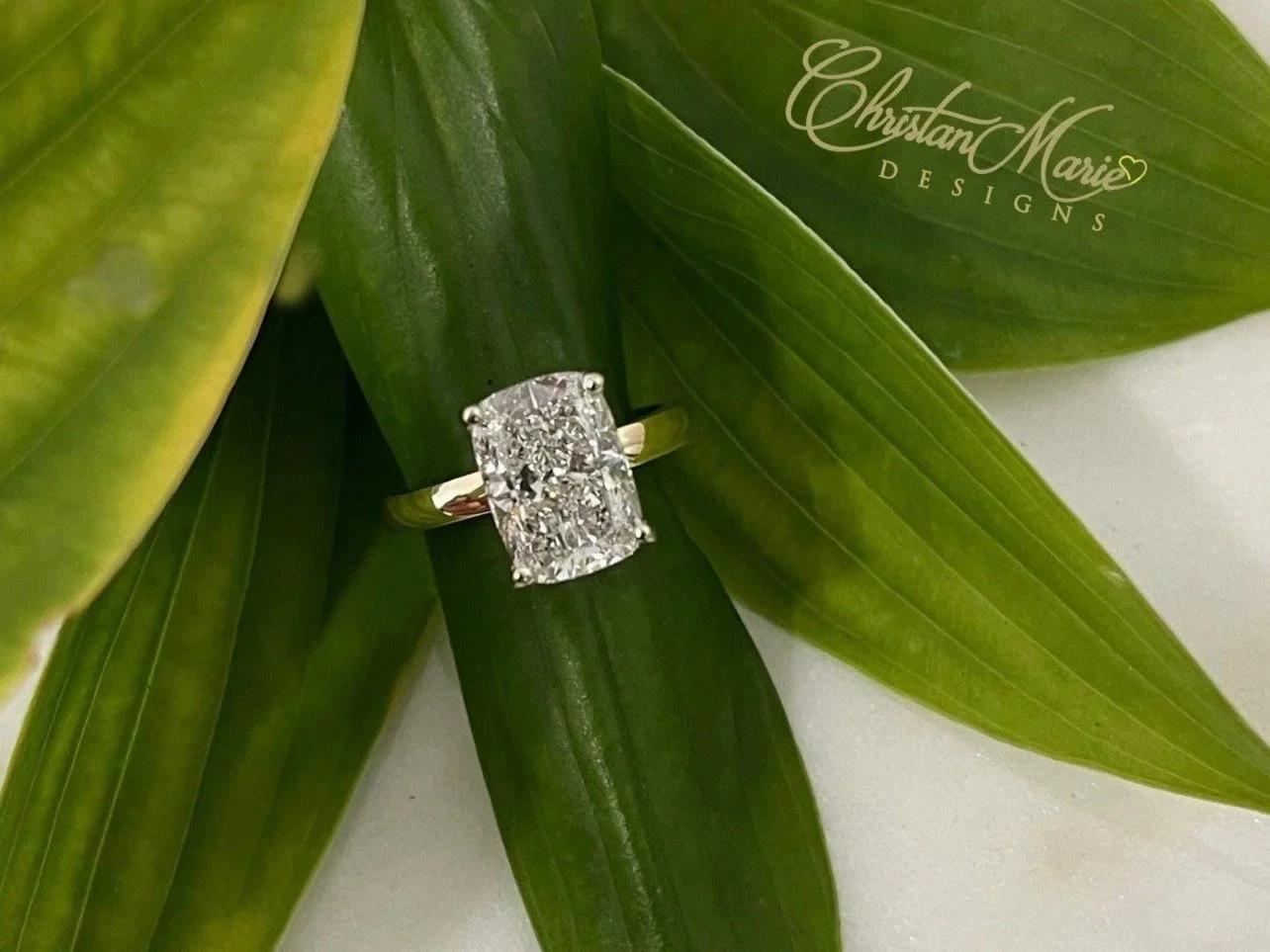
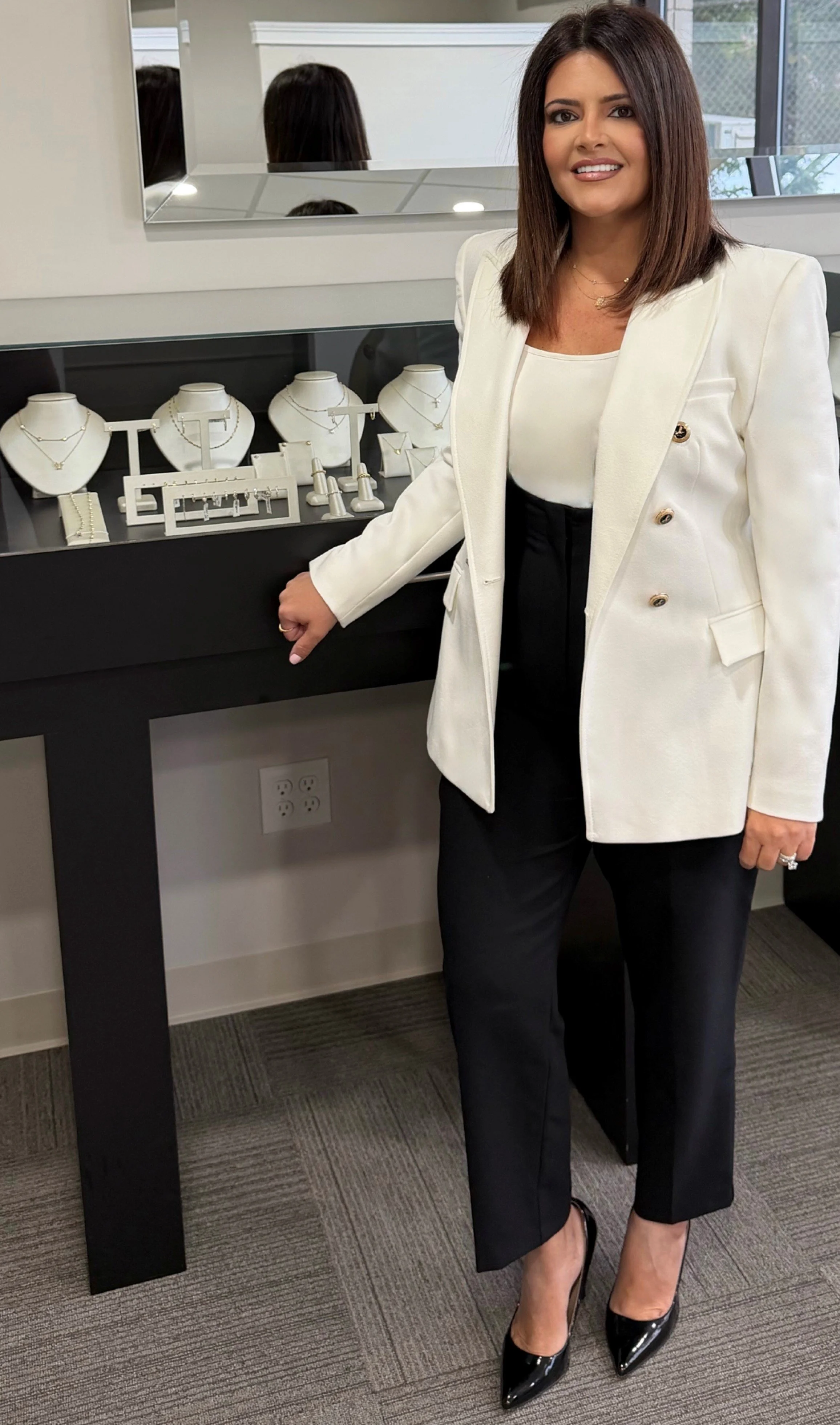
By the time a bride slips on her engagement ring, the piece has already lived a journey of intention, craftsmanship and emotion. For Christan Marie Designs, that journey is never just about metal and stones — it is about legacy.
With more than 30 years in the jewelry industry and seven years under her own name, Christan Marie has become a trusted designer for couples seeking wedding jewelry that feels timeless, personal and enduring. Her work reflects some of the strongest bridal trends of 2026: customization and a return to classic elegance.
“Trends come and go, but timeless design never does,” she says. “My best advice is to choose something you know you’ll love 50 years from now.”
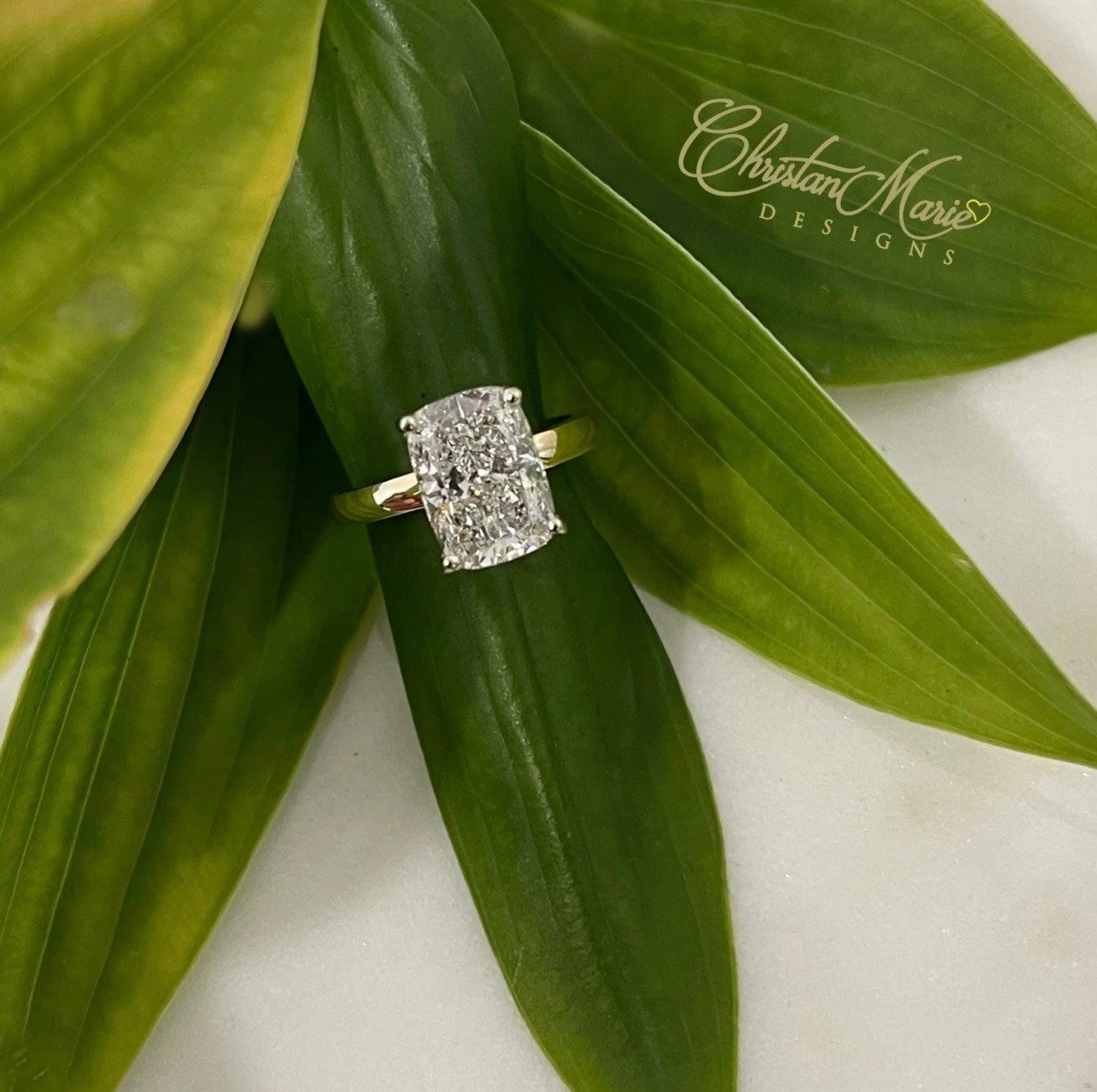
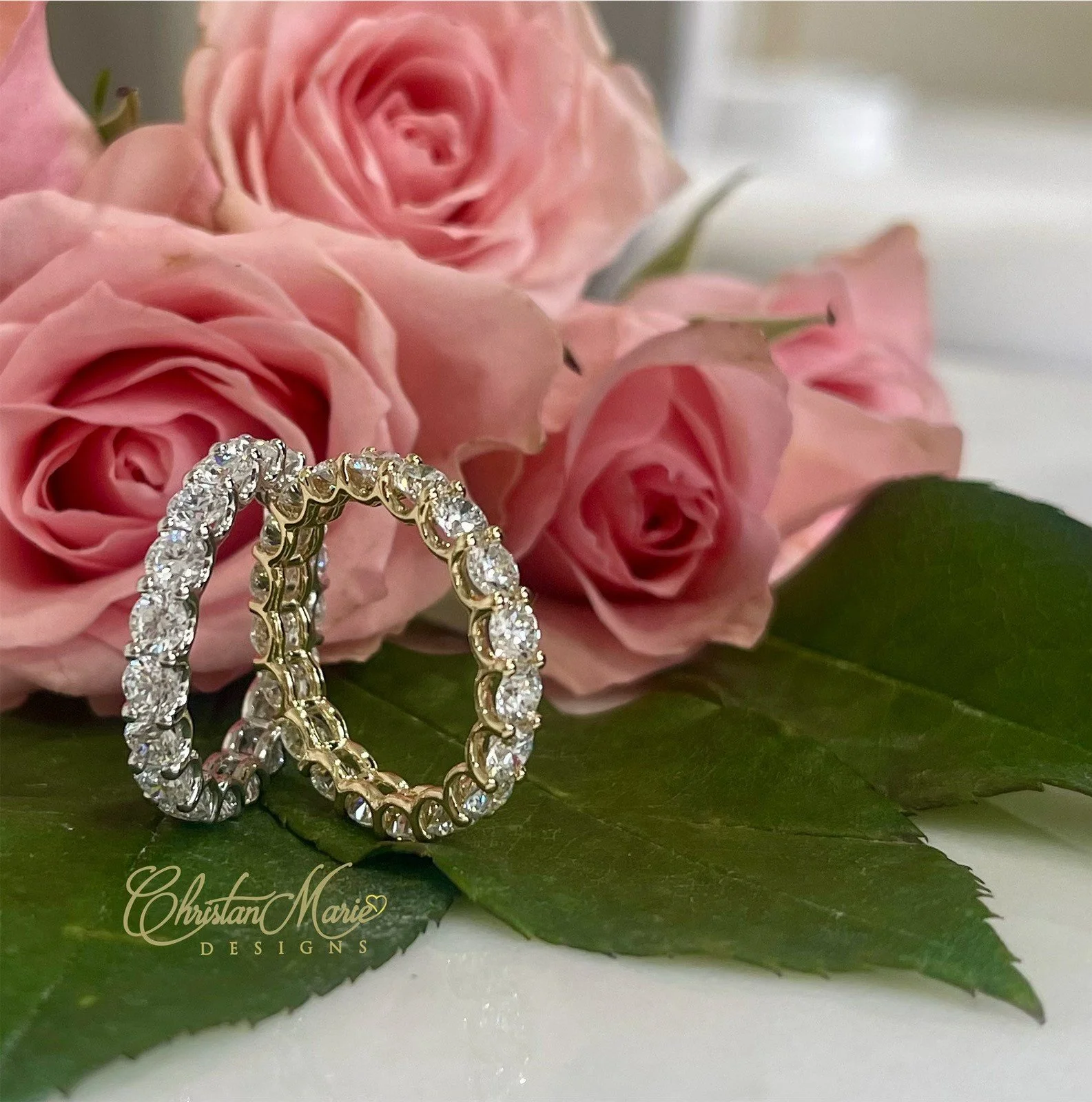
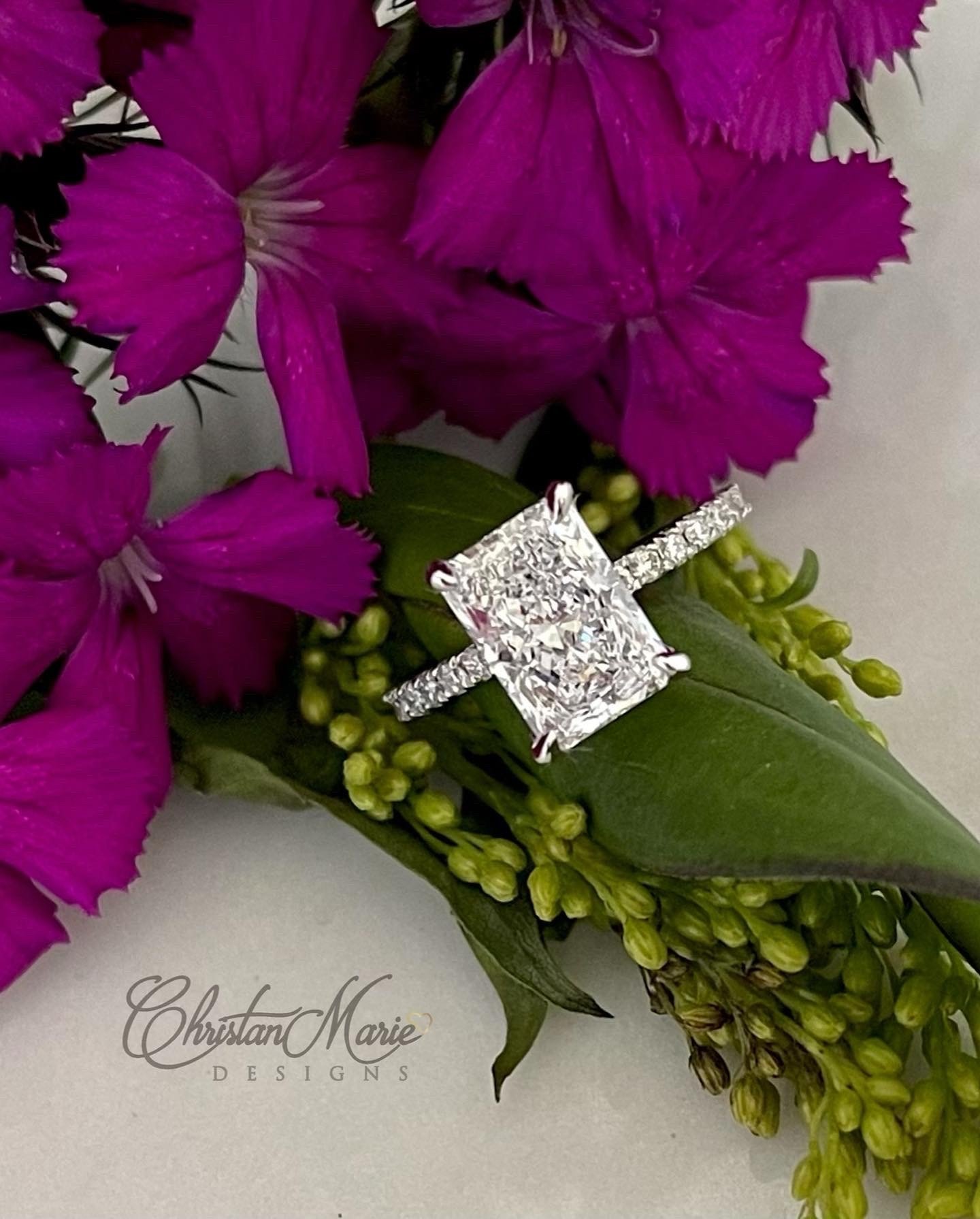
While weddings themselves are becoming more creative and immersive, engagement rings are moving in the opposite direction — toward simplicity. Plain solitaires paired with eternity bands dominate.
Yellow gold, once considered dated, has made a full comeback, often paired with white gold or platinum in two-tone designs. Mixed metals, Christan Marie notes, are especially popular among Chaldean brides who want versatility without sacrificing tradition.
“I love this trend,” she says. “Two-tone pieces let you mix and match. They’re so versatile.”
She shared a story of a customer who was picking out earrings for his wife as a Christmas present: “Initially, he said, ‘I’ll take the yellow ones.’ I informed him that white and gold were all the same earring and the day after Christmas, he sent a message that said, ‘She went crazy over the earrings!’ That’s what I love to hear!”
Custom design remains central to her work, particularly for families passing down heirloom diamonds or gold. Resetting a grandmother’s stone into a modern solitaire is increasingly common — a perfect example of how Chaldean couples are honoring the past while embracing the present.
Recently, Christan Marie had a client who wanted his grandmother’s ring reset. “It was a very old diamond — a marquis,” she remembers. “It was very pretty.”
When she first started in the industry, they didn’t have computer aided design (CAD). “It was all wax models, which were carved by a designer,” she explains. These days with modern tools, the process is much shorter — about two weeks — unless the design is totally new.
Christan Marie once had a client who requested a design for a pendant for his horse-loving wife. The designer had questions: “Do you want it 3-dimensional? Do you want stones? Will it be engraved?” A design like that could take up to a month.
Another recent industry change is the introduction of lab-grown diamonds. “They are an attractive option because you can get a bigger stone for less money,” says Christan Marie. “The difference is that the natural stone is always going to hold some type of value.”
The designer is also seeing more 21-karat gold in place of 14K or 18K for Chaldean clients. The purity is higher, but the metal is softer. With the price of gold at more than $4,500 per ounce, she offers this advice: “Right now, I would say platinum is the way to go.”
Over the years, her firm has developed relationships with families. It’s meaningful to her because she gets to be part of their personal story.
“You’re not just buying a ring,” she says. “You’re creating a piece that tells your story.”
The Bigger Picture: How 2026 Weddings Are Evolving
Beyond bouquets and rings, 2026 weddings are defined by experience. Couples are shifting away from overly formal, tightly scripted celebrations and leaning into immersive, guest-focused moments — something Chaldean weddings have long excelled at.
Welcome tables are becoming curated arrival experiences with drinks, small bites and personalized signage. Décor is increasingly art-inspired, with sculptural florals, textured linens and bold color palettes replacing safe black-and-white schemes. Jewel tones, sunset hues and mixed metals are everywhere — even influencing engagement rings through emeralds and colored sapphires.
Lighting has become a statement element, transforming ballrooms with chandeliers, lantern clusters and dramatic draping. Photography continues its move toward editorial candids and film-style nostalgia, capturing weddings as living, breathing stories rather than staged checklists.
Couples are also rethinking traditions. Some are skipping bridal parties altogether. Others are opting for private cake cuttings, shared cocktails instead of dessert ceremonies, or interactive entertainment in place of expected moments like bouquet tosses. The common thread is intention.
Where It All Comes Together
For Chaldean couples, these trends don’t feel like departures — they feel like refinements. Jewelry that honors generations. Flowers preserved long after the music fades. Celebrations designed around connection rather than performance.
“You’re part of a sacred covenant in people’s lives,” Christan Marie says. “You don’t just work with one couple — you work with their children, their grandchildren. You become family.”
That sense of continuity is what defines Chaldean weddings, no matter how styles shift. As 2026 approaches, the most meaningful trend of all remains unchanged: creating beauty that lasts long after the wedding day ends.
Valerie Dado can be found on Instagram @valdresin.
Contact Christan Marie at christanmariedesigns.com.