
The Heart of Knowledge
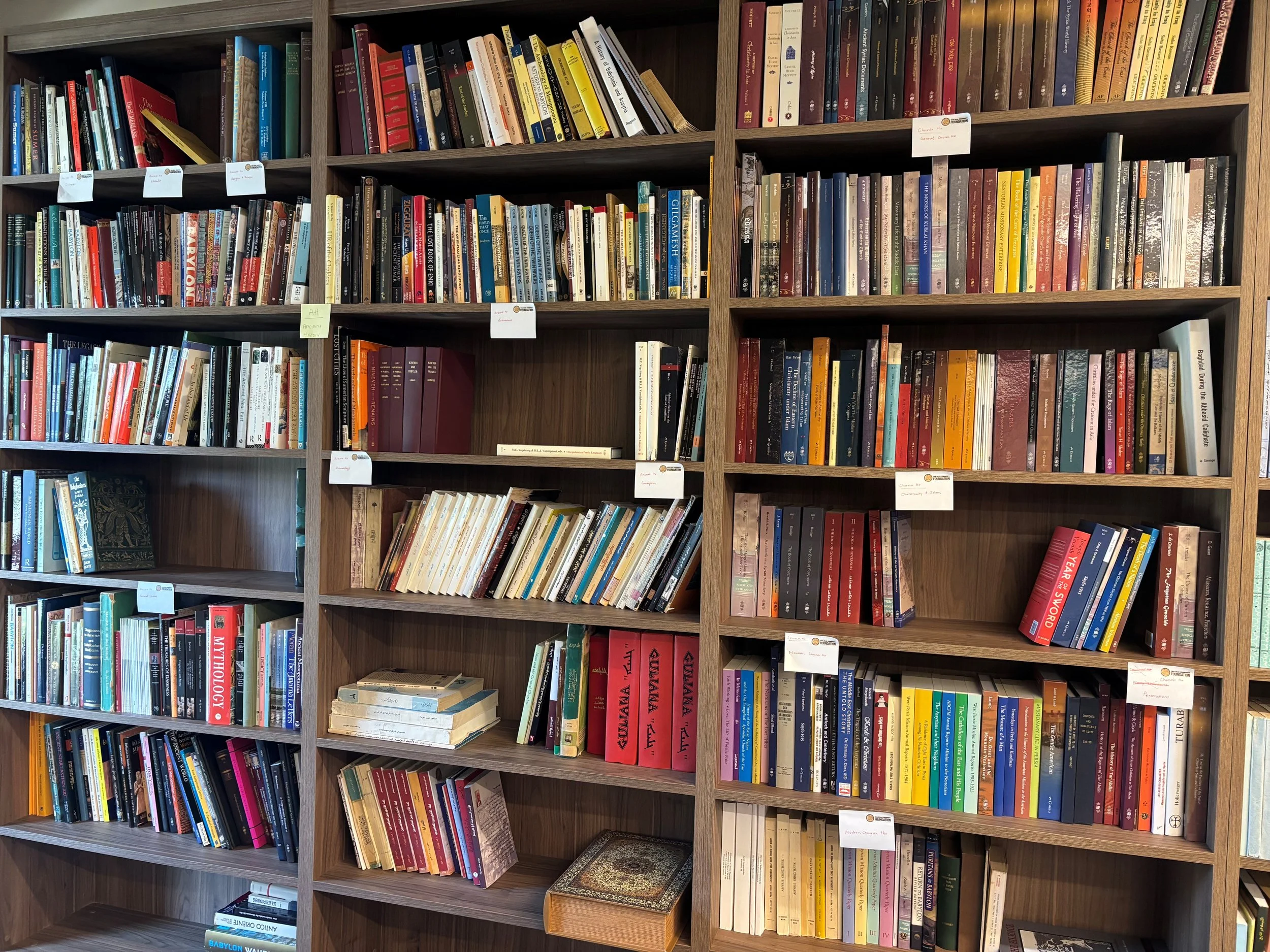
Book donations are coming in from the community.
Inside Bishop Ibrahim’s Library
By Adhid Miri, PhD
It is often said that “the library is the community; the community is the library.” Libraries are trusted spaces where people of all backgrounds can connect, learn, and build a shared future. They serve as safe, neutral environments outside of home and work, where everyone is welcome regardless of socioeconomic status.
Beyond books, libraries are no longer simply repositories of knowledge. They have become vital community hubs that provide internet access, educational resources, programs, and events. They also serve as a safety net for students and teachers, fostering reading, self-learning, and academic growth—yet many people remain unaware of the full range of services they offer.
The heart of the community
At the heart of the community, libraries continuously adapt to meet the evolving needs of their patrons. By offering access to essential information, language resources, cultural and historical materials, and opportunities for social connection, they play a critical role in modern society.
By making books, magazines, online databases, and educational tools readily available, libraries provide diverse pathways to knowledge. In doing so, they promote literacy and empower individuals to learn, grow, and thrive.
Libraries make a significant impact on the communities they serve. They are crucial places for knowledge and information access, function as vital centers for their local communities, strengthen community bonds, host events, offer services like language classes, address issues for the betterment of the community. Increasingly, they also offer critical social and civic services like voter registration, citizenship and language classes, history and culture sessions and more.
By continuing to innovate and expand the scope of their services, libraries remain pillars of inclusiveness, the heart of lifelong learning and community support. Their role transforms these spaces into hubs of opportunity, empowerment and belonging for everyone they serve.
Bishop Ibrahim’s vision
People of vision shape the world around them. For years, Bishop Ibrahim Ibrahim envisioned a vibrant, inclusive community hub—one that would foster lifelong learning while preserving precious archives and historic church documents. His goal was to create a welcoming space for connection, cultural preservation, and intellectual freedom.
That vision, sustained by years of determination, has now come to fruition with the establishment of the Bishop’s Library at the new Chaldean Community Center in West Bloomfield. This is not a typical library; it is a living archive of faith, language, and identity.
The library occupies approximately 3,000 square feet within the 41,000-square-foot CCF West building, which offers a wide range of amenities for the community. Supported by private donors, the space includes a children’s area, individual study rooms, a dedicated manuscripts and archives room, a reading lounge, and expanded shelving for library materials. Its collection is thoughtfully organized into three primary sections: Aramaic/Chaldean, Arabic, and English.
The library officially opened to the public in February 2026. In just its first few weeks, it has been met with overwhelmingly positive feedback and has already welcomed its first registered patrons.
The Historic Archives section
The archives room houses an extraordinary collection of manuscripts, some more than 400 years old. Preserving these fragile works will require careful digitization and collaboration with leading institutions such as the University of Pennsylvania, the British Museum, the Pergamon Museum in Germany, the Vatican, and UNESCO.
Similar preservation efforts offer a valuable model. In Erbil, Iraq, Bishop Mikhael Najib Michael—Archbishop of Mosul—has led a groundbreaking initiative to digitize Chaldean archives and share them with the world. Many of these manuscripts had been housed in the library of the Dominican monastery in Mosul since 1750. Beginning in 2007, as violence against Christians and other minorities intensified, they were relocated for safekeeping.
That same year, Archbishop Najeeb and his team undertook the urgent task of rescuing and protecting these historic texts from likely destruction at the hands of ISIS extremists. Since then, more than 8,000 previously unpublished manuscripts, dating from the 10th to the 19th centuries, have been preserved through digitization. This effort stands as a powerful example—and a valuable resource—for similar work on the Bishop’s collection in the United States.
Father Marcus Shammami and Deacon Khairi Foumia serve as the curators, experts, and managing directors of the Bishop’s Library, overseeing both its preservation efforts and its continued growth.
The Arabic section is the largest in the library, serving as a gateway to a rich and diverse collection of Arabic-language works. Centrally located, it anchors the library’s mission of accessibility and cultural preservation.
The collection spans more than fifty subject categories, including the Chaldean Church (with both Arabic and Aramaic texts), Chaldean/Assyrian/Syriac studies, the towns of the Nineveh Plain, Arabic language and literature, poetry, religion, politics, philosophy, sociology, culture, business, and history—with particular emphasis on Iraq and its turbulent years. It also features a dedicated collection on Baghdad, along with works by renowned Chaldean, Assyrian, and Syriac authors.
This extensive collection has been made possible through the generosity of community donors, including Adil Bacall, the family of the late Fouad Misho, George Mansour Makhay, Zuhair Garmo, Fouad Manna, and others. Together, they have contributed books across a wide range of disciplines—from literature and history to business and politics—helping to preserve and share the depth of Arabic intellectual and cultural heritage.
Library partners
Partnership is essential to the success of any library. One of the reasons libraries remain so vital is their role as community connectors—working with local, regional, and national partners to create initiatives that might not otherwise exist.
By collaborating with community organizations, nonprofits, and state and government agencies, libraries expand their reach, share resources, and better align services with the needs of the people they serve. Just as importantly, they stay connected to the broader community—keeping families engaged, informed, and invested as both partners and supporters. Library leadership plays a key role in ensuring the institution remains an active participant in community conversations and initiatives.
Beyond books, libraries offer a host of opportunities and literacy programs, teen spaces, and professional development resources. They create social capital by hosting events like book clubs, classes, makerspaces, workshops, voter registration, community meetings, round table discussions, book of the month events, author meet and greets, and educational programs on local issues. These programs help participants connect with neighbors, build skills, shape how community issues are approached and solutions are addressed, and foster a sense of belonging.
The community is strong and resilient when its members work together and are weak and brittle when they work alone. We encourage everyone to learn more about the bishop’s library. We ask our community partners to celebrate the contributions and leadership the library brings to metro Detroit and the state of Michigan.
Library hours
The library welcomes visitors for short walkthroughs of the main reading room and its collections. Public viewing hours are Tuesday, Wednesday, and Friday from 9:00 a.m. to 3:00 p.m. We encourage guests to review library policies in advance to ensure a smooth and enjoyable visit.
Tours are limited in size, and visitors are asked to follow all bag policies. For information about book donations, hours, tours, and programs, please contact the Chaldean Community Foundation at 248-851-1200 or visit www.chaldeanfoundation.org
As we highlight the importance of Bishop Ibrahim’s Library, it is essential to recognize that libraries are a vital part of our Chaldean social infrastructure—alongside churches, schools, social clubs, and community organizations.
As champions of lifelong learning, libraries serve as spaces to spark curiosity, access knowledge, and explore new ideas, hobbies, and careers. Bishop Ibrahim’s Library is community-oriented, offering a welcoming environment where patrons can meet friends, discuss current events, engage in meaningful dialogue, and build new connections.
Through book clubs, workforce programs, and community events, libraries remain at the forefront of community growth—creating spaces where people connect across differences. They strengthen civic engagement, support advocacy efforts, and serve as extensions of larger cultural and educational initiatives.
Let us continue to promote and preserve the library’s mission by supporting its role in personal enrichment, cultural and educational programming, and community partnership development.
Community members are encouraged to support the library by donating books, visiting, and celebrating Bishop Ibrahim’s Library at the CCF-West facility.