
Preserving Our Culture
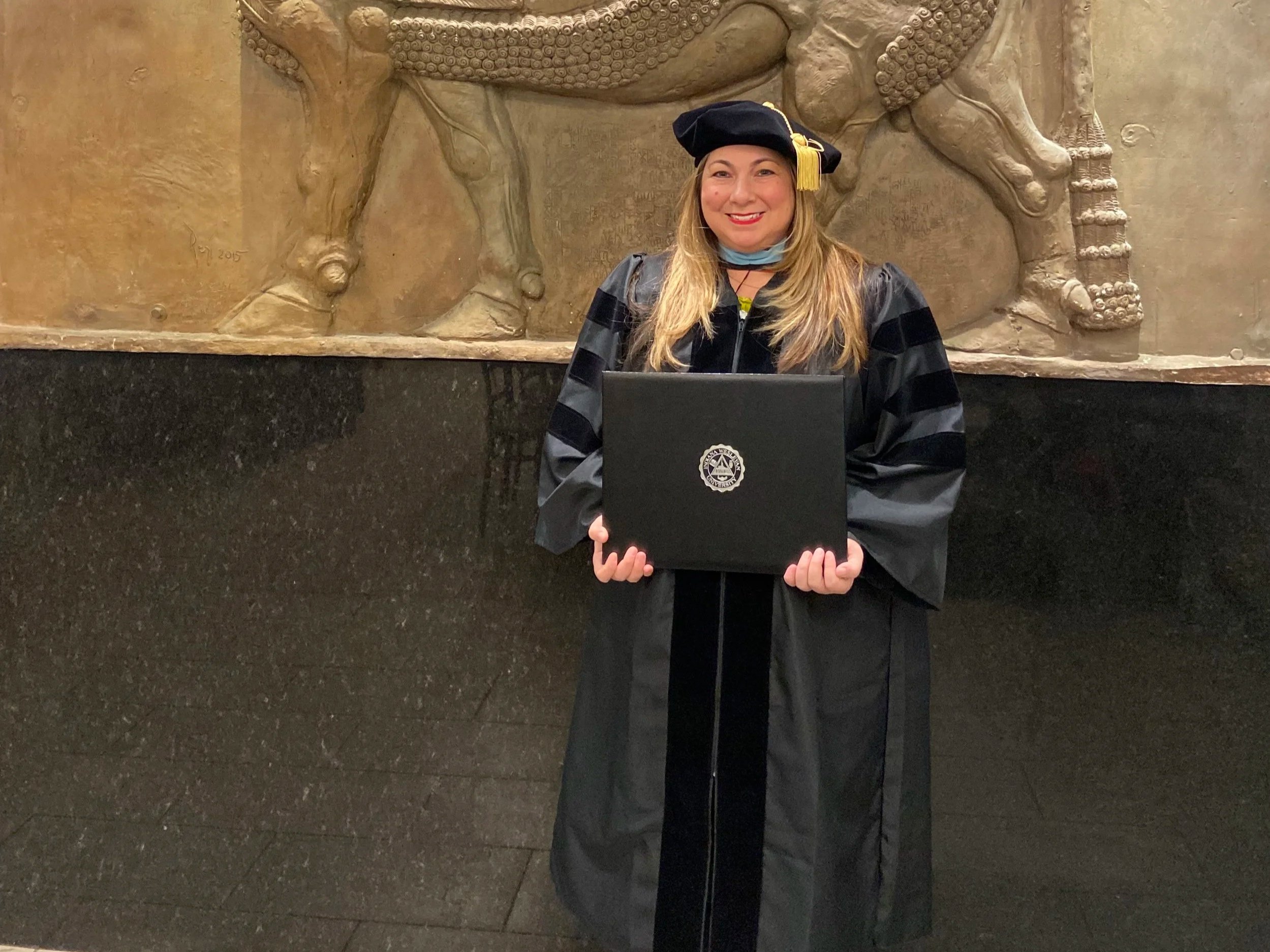
Dr. Crystal Kassab’s thesis focused how Chaldean youth understood their culture.
The ethnic identity development of our youth
By Crystal Kassab, Ed.D.
When I was in third grade, my teacher didn’t believe I was Chaldean or that my parents were Iraqi. She told me to ask them again and let her know the next day. When I went home and told my dad, he was miffed—but also understood that she may have had a different frame of reference when it came to people from the Middle East.
With my brown hair, alabaster skin, and eyes the color of grape leaves, I probably didn’t fit her understanding—or the stereotype. So he taught me about our people.
Baba drew two blue lines on a napkin. “This is the Tigris, and this is the Euphrates,” he began, then scribbled more. “This is Iraq. This is where we come from.”
I stared at the napkin, blankly but intently.
“You know, Jesus spoke Sureth,” Baba said. “Just like you.” He smiled. “In English, it’s called Aramaic.”
I was fascinated.
From that moment on, I loved learning about our Chaldean heritage, and I have been proud to be Chaldean ever since. It was only natural for me to turn to this identity in my doctoral research, but I quickly realized there was a gap: little to no academic work focused on how Chaldean youth understand their culture and how that shapes their experiences.
There was some research on acculturation and school relationships, but nothing specific to what I was looking for. As a result, I had to study other ethnic groups and draw comparisons in order to better understand the Chaldean experience.
The purpose of my mixed methods research was to understand what children in the diaspora—specifically in metro Detroit—know about being Chaldean, so that we, as elders, can provide opportunities for them to grow into and sustain their culture before it is lost.
In addition, I examined how school context, immigrant generation, and gender influenced their ethnic identity development. I was especially interested in whether attending an “enclave school”—defined as a school with 20% or more Chaldean students—made a difference in children’s understanding of their Chaldean culture.
To explore this, I adapted a new survey instrument called the EIMCY (Ethnic Identity Measure for Chaldean Youth), developed focus group questions, and assembled a team of Chaldean experts to review and approve the tools. I also reached out to several school districts and church groups for support.
This process took about seven months, largely due to waiting for approvals. Ultimately, I secured participation from one district on the west side and one on the east side, both located within the two major “ethnoburbs”—suburban areas with large Chaldean populations. Two Chaldean churches on the west side also agreed to participate through their youth groups. (I am unable to publicly name any of these locations.)
In total, I collected data from 70 Chaldean middle and high school students, and I made a concerted effort to keep the sample as balanced as possible. However, there were slightly more girls than boys, and a significantly higher number of second-generation participants compared to first- or third-generation students. (Second-generation students are those with at least one parent who is an immigrant.)
There were also more middle school students and west-side participants, largely due to my role as a middle school teacher and my proximity to the west side, which gave me greater access to students, their friends, and their extended networks.
Through this research, I found that Chaldean students in enclave schools tend to have more Chaldean friends and speak Sureth more fluently than students in non-enclave schools. This is largely because they have more opportunities to use the language and build relationships within their peer group, unlike Chaldean students who attend schools with few other Chaldean students. In those settings, most of their friends are non-Chaldean, which limits daily exposure to the language and culture.
However, students in non-enclave schools (those with smaller Chaldean populations) demonstrated a stronger sense of cultural understanding and slightly higher church attendance than students in enclave schools. This appears to stem from their increased awareness of being “different” in school, which often prompts them to seek out cultural knowledge more intentionally. In addition, because they have fewer cultural peers in their schools, they tend to rely more heavily on the church as a primary source of cultural connection and reinforcement.
All first-generation students reported speaking Sureth, as they were immigrants who grew up in bilingual or trilingual households and learned English alongside their parents. Among second-generation students, Sureth fluency varied depending on family immigration history and levels of acculturation. Some resembled first-generation students in that they learned English alongside their parents and maintained stronger fluency in Sureth, while others were not fluent because English had already become the dominant language in their homes.
None of the third-generation students spoke Sureth fluently. While they knew some common words, phrases, and prayers, they were not able to hold full conversations in the language.
The only notable difference I found between boys and girls was that girls tended to participate more in cultural activities than boys. This pattern also appeared in the research participation itself, as more girls volunteered than boys—a trend that is common in broader American contexts as well. This may reflect the fact that girls are often more engaged in nurturing and communal roles and are frequently the ones who help transmit cultural knowledge within families and communities.
It is also important to note that the statement students most strongly agreed on was, “My faith in God is the most important thing to me.” In contrast, the most inconsistent response was to the statement, “I can speak Sureth (Aramaic/Chaldean) fluently.” This suggests that while faith formation remains strong and well preserved across generations, there is clear room for growth when it comes to maintaining fluency in Sureth.
The focus group interviews yielded five major themes: faith, family, belonging, image, and Sureth language fluency. These themes were raised by nine second- and third-generation students from both ethnoburbs. Most of these findings were not surprising. Faith and family are central pillars of Chaldean culture, and themes of belonging, identity, and external perception are also widely documented in youth development literature.
What did stand out, however, was the emphasis on Sureth. Although research often shows that language serves as a key vehicle for cultural transmission and helps youth connect to their ancestry, I did not anticipate the level of concern students expressed about language loss. In fact, all three third-generation participants in the focus groups expressed regret about not knowing Sureth and, in some cases, placed responsibility on their parents for not teaching it to them.
Among second-generation participants, experiences varied. One student had a speech impediment in childhood, and his parents—along with a speech therapist—prioritized English-only communication. Other second-generation students reported being proud to speak Sureth, and some were also fluent in Arabic, attributing their language skills to the influence of parents and grandparents.
Taken together, these findings suggest that while Sureth—the language historically associated with Jesus Christ—remains present within the community, it is increasingly vulnerable. At the same time, there is a clear awareness among youth of its importance, underscoring both the urgency and the opportunity to preserve it within the largest Chaldean diaspora in the world, here in the United States.
In conclusion, if we want to keep our culture alive, we must focus on the youth. It is essential to recognize that the church, family, and ethnoburb communities all play a significant role in shaping Chaldean children’s sense of identity. These institutions serve as the primary agents of cultural transmission and will be central to preserving our heritage for generations to come.
I am proud of this work and hopeful about what it represents. I also look forward to continuing this line of research and to seeing other scholars contribute to building a stronger academic presence for Chaldean-American studies within education and related fields.
The dissertation, Ethnic Identity Development of Chaldean American Youth in the Ethnoburbs, is available through Google Scholar and ProQuest.
For additional information, please contact: drcrystalkassab@gmail.com.