
Meet the Returnees
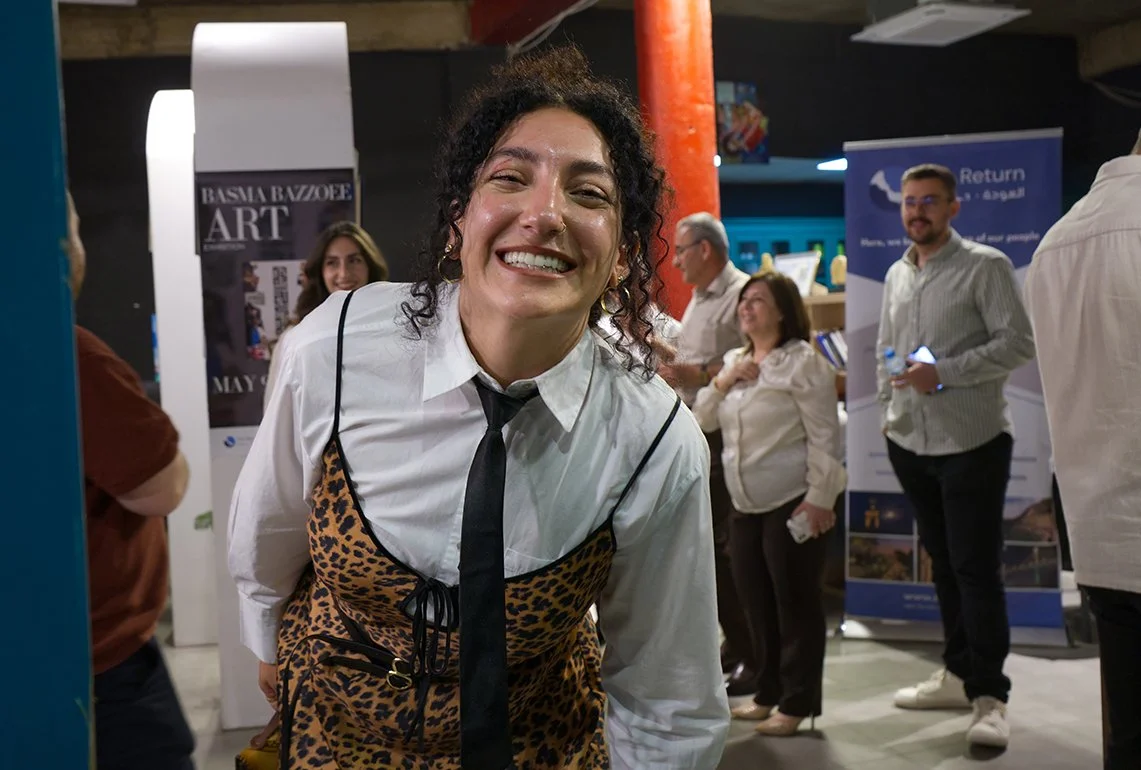
Melinda Khubiar is planning to stay in Iraq for good.
Rebuilding ties to the ancestral homeland
By Christian Youhana
As the sun was setting over Ankawa, locals, expats and returnees gathered at the Space, where an art exhibition by a young artist from Mosul was being held. The visitors reflected the diverse membership of this coworking space, founded by the NGO ”The Return”, which supports the ongoing return movement in Iraq.
In recent years, indigenous Chaldeans, Assyrians and Syriacs, who numbered 1.4 million in Iraq back in 1987, but have since declined to an estimated 150,000, are returning from the West. Their reasons vary.
For the young adults born and raised in the diaspora, it can be the longing for something they never got to experience.
“I was very lost in America,” Melinda Khubiar, a 36-year-old US-born entrepreneur, said. ”I knew I wasn’t from there, didn’t belong there and I always felt very misplaced.”
Melinda Khubiar has roots in Urmia, Iran, which once had a large Assyrian and Chaldean population. She visited northern Iraq for the first time in 2013 with Gishru, who organizes trips to the homeland for members of the diaspora. She immediately felt a sense of belonging.
“I remember walking across the street and crying for myself, like Oh My God this is where my kings and queens used to walk,” she said.
She has made around 20 trips back and forth between the US and Iraq since then. Between 2018 and 2022, she lived in Iraq and eventually launched her own Mesopotamian-inspired clothing brand, called Original Ancient, which she ran as a hobby at first but now focuses on.
In a few months she is going to the US again. Next year, however, she is getting married to a local man and settling down in the village of Bekhetme near Duhok.
“It was hard for me to connect with people in the West when it came to marriage,” she said. ”I have known him for a couple of years, got to know him better last year and it just kind of clicked. So my fairytale is coming true.”
Another returnee connected to the Space is Ornina Ochana, a 30-year-old from Canada with roots in Khabour, northeastern Syria. She has spent most of the past two years in Iraq. Like Melinda Khubiar, her introduction to the Iraqi part of the homeland was through Gishru in 2023 and 2024. She experienced a “whirlwind of emotions” during the trips.
“You come here for two weeks and halfway through you don’t want to leave. Everyone tells you living here is different and that it’s just a fantasy or just a trip,” she said over a cup of tea at a café across the street from the coworking space.
Back in Canada, she missed the chaos in Iraq, such as jaywalking. Eager to return, she applied for various jobs. Her experience in childcare eventually landed her a job as a teacher.
“I was terrified,” she said about moving across the world, but she thought she could always try it out for a month. ”If worst comes to worst, I lose some money. But if I don’t do it, it’s an experience I’ll always think about, like what if I’d gone.”
Now she spends ten months in Iraq and heads to Canada in the summertime to be with her family.
The Space may be a hub for returnees, but not all of them are found there. In fact, there are plenty of cafés and restaurants across Ankawa, owned mainly by people who have returned from Sweden.
In addition, there is the Syriac Heritage Museum, which lies a five-minute walk from the coworking space. Archeologist Bernard Yousuf Ashour, 45, who serves as its director, returned from Sweden in 2012.
“My case was special, I didn’t move back because I consider Iraq to be better than Sweden,” he said as Arabic coffee and chocolate was served in his office.
It is clear that he is very fond of Sweden, its structured system and its cooler weather. He has kept up his Swedish, despite the fact that he only lived there for five years. What made him return was the love of his life, whom he eventually married.
“As soon as I hear visitors at the museum speaking Swedish, I invite them in for coffee,” said the father of three.
Unlike Melinda Khubiar and Ornina Ochana, Bernard Yousuf Ashour did not really face any challenges moving back. For him, it was rather the psychological aspect of leaving the Swedish nature and calm people and returning to the heat, dust and lack of order.
The two women, however, faced a language barrier when moving here, as they only speak Sureth and neither Arabic nor Kurdish.
“It was quite hard learning to rely on so many people because I couldn’t do much in the beginning. But now it’s so easy,” said Melinda Khubiar.
The city of Erbil, where Ankawa is situated, is modernized, and it is common to hear English being spoken by the locals.
“When you are born in Western society, it is easier living in Ankawa or Erbil than in other parts of the country, because a lot of the amenities we are used to can be found here,” said Ornina Ochana.
When reflecting on whether the return movement is a lasting trend, the answers among the returnees differ. As of today, the number of Chaldeans, Assyrians and Syriacs migrating is higher than the number returning, Bernard Yousef Ashour noted. And when the war between Iran, Israel and the US broke out earlier this year, it became a reminder of the instability of the region.
At the same time, people who grew up in the diaspora and are not traumatized by wars, persecution or other hardships are likely more open to visit the homeland.
“As long as we have relative stability here, I see people coming back,” said Ornina Ochana.
Melinda Khubiar encourages people to at least come and see the homeland for themselves.
“Life is nice here. I’m thriving,” she emphasized.