
PAC vs. Policy
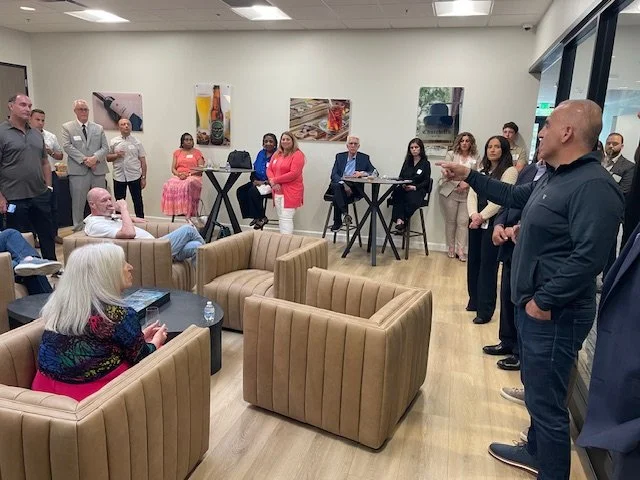
PAC Chair Kevin Denha addresses the attendees at a May 19 event at CCF West.
Expanding the CACC’s civic role amid rising concerns over township permitting process
By Renah Daoud
The Chaldean American Chamber of Commerce PAC has steadily expanded its role in local civic life in recent months, positioning itself as a growing voice for increased transparency, accountability, and resident participation in township decision-making across West Bloomfield.
That effort took a visible step forward on April 13, when the PAC helped convene a town hall meeting that brought together residents from diverse backgrounds to raise concerns about township leadership, communication practices, and transparency. Speakers included business and civic leaders such as Martin Manna, alongside other community representatives, including the president of Shenandoah Country Club.
Attendees also discussed permitting and zoning concerns affecting both residents and local institutions, including challenges involving Shenandoah Country Club itself, demonstrating broader frustrations with how township processes are applied across different applicants.
According to information provided by Shenandoah representatives, the club spent more than two years navigating the township approval process for a stormwater infrastructure project intended to maintain, replace, and improve existing detention pond systems on the property. The project involved replacing clogged discharge pipes and improving stormwater flow conditions connected to two main detention ponds.
Representatives said the proposal underwent multiple rounds of township review involving the Planning, Engineering, and Environmental departments, including seven separate engineering reviews. While the project received the necessary permits from the Oakland County Water Resources Commission (OCWRC) without significant difficulty, Shenandoah officials said additional concerns raised by the township’s Environmental Manager delayed the process from advancing to the Environmental Commission for consideration.
According to Shenandoah’s engineering consultant, the project was eventually brought before the Environmental Commission despite those objections and received unanimous approval. The Planning Commission also unanimously approved the proposal, which supporters say raised questions about whether earlier concerns and delays were warranted.
Since the April town hall, the PAC has continued its push to broaden civic engagement, with a particular focus on voter outreach and encouraging higher participation in local elections. As part of that effort, the CACC PAC has chosen to support Omar Kallabat for West Bloomfield Trustee and Jonathan Landsman for West Bloomfield Supervisor.
Landsman, a longtime West Bloomfield resident, is running for Supervisor on a platform centered on improving township responsiveness, restoring public trust, and streamlining permitting and administrative processes. Kallabat, a small business owner and community member, is running for Trustee with a focus on increasing transparency, improving communication between residents, business owners, and township departments, and ensuring more consistent and accessible decision-making.
Both candidates entered the race after expressing frustration with what supporters describe as inconsistent township procedures and a lack of clarity in how regulations are applied.
Their campaigns have unfolded against a backdrop of heightened community attention to zoning and permitting practices in West Bloomfield Township, particularly following a series of disputes that have drawn local and regional scrutiny.
One such case recently detailed by the Detroit News involves Andrew and Natalie Main, a West Bloomfield couple who have spent nearly two years attempting to secure approval for a residential fence. According to reporting and a related federal lawsuit filed in May, the family says they incurred significant expenses navigating township requirements, hiring multiple consultants and attorneys, yet still have not received approval.
The Mains’ request, they say, was driven in part by safety concerns for their child with autism, who they described as at risk of wandering. (Incidentally, the same situation Landsman found himself in). Their complaint alleges that the permitting process escalated into a complex dispute involving environmental classifications, woodland and wetland buffer rules, and repeated revisions to compliance requirements.
The lawsuit also describes interactions with township staff, which the family says were distressing and contributed to the breakdown in communication. The township has declined public comment on the litigation, citing pending legal proceedings.
Adding to the general public discussion, Sharkey Haddad of the Chaldean American Chamber of Commerce issued a detailed letter calling for “modernization, reform, and common-sense leadership” in West Bloomfield Township. In his statement, Haddad argued that residents are being burdened by outdated ordinances, excessive bureaucracy, and inconsistent enforcement, noting that some regulations date back decades and may no longer reflect modern community needs.
His letter called for clearer standards, more predictable timelines, improved communication between departments and applicants, and stronger accountability within township administration.
The cases have become part of a broader community conversation about how local regulations are applied and communicated, and whether residents and organizations are receiving clear and consistent guidance when navigating township processes. For many residents and civic leaders, the disputes have reinforced longstanding concerns about accessibility, consistency, and responsiveness in local government.
Within this context, the Chaldean Chamber PAC has framed its expanded civic engagement efforts as part of a push to ensure residents feel heard and represented. Supporters of the candidates say they hope Landsman as Supervisor and Kallabat as Trustee will prioritize modernizing ordinances, improving permitting clarity, and ensuring township decision-making is more predictable, transparent, and responsive to residents’ needs.
As West Bloomfield enters another election cycle, increased community engagement, ongoing concerns surrounding local policy decisions, and growing civic participation have brought renewed focus to the relationship between township leadership and its residents. In response, many community members are becoming more involved through advocacy efforts and participation at the ballot box.